 Sports

Top ten securities firms hold $10.6 billion in margin loans
1.
Esports has grown rapidly in Việt Nam over the past decade, with Vietnamese players and teams emerging as regular contenders at international tournaments while building an increasingly strong cultural following among fans worldwide.
In November 2025, then-Prime Minister Phạm Minh Chính signed Decision 2486 approving Việt Nam’s Cultural Industries Strategy to 2030, officially recognising software and entertainment games as one of the country’s 10 key cultural industries.
The industry now appears to be entering a defining period. South Korea’s top gaming league, the League of Legends Champions Korea (LCK), staged its first regular-season matches outside South Korea in Hà Nội from May 8 to 10, while GAM Esports was announced as the only Vietnamese organisation selected as an official club partner for the Esports World Cup 2026.
Against that backdrop, Việt Nam News reporters spoke with three leading figures in the industry about the opportunities and challenges shaping the future of Vietnamese esports.
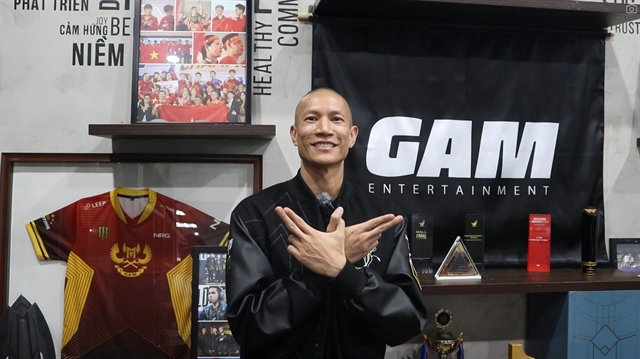 |
| Anthony 'TK' Nguyễn, CEO of GAM Entertainment and owner of GAM Esports. VNS Photo Vương Linh |
Anthony 'TK' Nguyễn, CEO of GAM Entertainment and owner of GAM Esports:
For years, many Vietnamese parents did not believe esports was a real career. We were not just building a team. We were building legitimacy for an entire generation of kids whose dreams looked suspicious to their families.
But that perception is changing. In November 2025, then-Prime Minister Phạm Minh Chính signed Decision 2486 approving Việt Nam’s Cultural Industries Strategy to 2030. Software and entertainment games were officially recognised as one of the country’s key cultural industries.
That is a historic moment. Gaming and esports are now sitting alongside film, music and the performing arts as part of Việt Nam’s cultural future.
It tells our players, our staff, our fans and most importantly, our parents: this is real. This matters. This is Việt Nam’s next chapter.”
Việt Nam has emerged. The market is telling us what we have been saying for years. When the biggest names in global esports start placing real bets on this country, that is not a trend. That is a signal. We have 54 million gamers, one of the most passionate fan bases in the world and a new Tier 1 league. The numbers do not lie. The rest of the world is finally catching up to what we already knew.”
A foreign brand can open an office in Hà Nội. They can sign a Vietnamese player. They can run a marketing campaign. What they cannot do is buy 10 years of being Việt Nam’s home team. International organisations are renting space in a market we helped build. That is not a problem. That is a compliment. But trust is not for sale, and 10 years of showing up for Vietnamese fans is not something you can launch.
Here is the truth I have championed for years: we cannot do this alone. "Rise As One" is not just a slogan for our team; it is how I see this entire industry. The publishers, the esports organisations, the brand partners, the media, the fans. Everyone has a role to play in building what comes next.”
So to DRX, T1, Gen.G and everyone else who sees what we see in this country, welcome. The market is real. The fans are real. The opportunity is real. Việt Nam has room for all of us. The more we Rise As One, the bigger the stage gets for everyone. That is how a generational industry gets built; not by one team, but by a movement.
 |
| Can Yang, chief executive officer of KIWOOM DRX (KRX). Photo courtesy of Can Yang |
Can Yang, chief executive officer of KIWOOM DRX (KRX):
In hosting the first-ever LCK match outside South Korea, Hà Nội was not just a choice; it was a priority. We have seen the incredible passion of Vietnamese fans through our digital channels and LCK viewership for years. But the deciding moment was seeing the "LazyFeel phenomenon". When we saw how strongly this city rallied behind its own talent, we knew Hà Nội was the only place to bridge the LCK with the global stage. It is a city that breathes energy, much like the spirit of KRX.
What surprises me most is the depth of emotional investment. Vietnamese fans do not just watch; they live every play with us. It has changed the way I work by making me realise that KRX is no longer just a local team; we are a global community. My job is no longer just about managing a team locally, but about building a home for fans in Hà Nội, HCM City and beyond.
In five years, I hope KRX will be seen as a cultural icon, not just a gaming team, but a brand that represents an unbreakable spirit. As for the industry, the healthiest version is one where the Homefront model becomes the norm. I want to see a sustainable ecosystem where regional pride and international competition coexist, moving away from a local-centric model towards a truly global league.
The pipeline is about opportunity without borders. With LazyFeel, Trần Bảo Minh, Chika and Võ Lê Nhân, we proved that if you have the unbreakable spirit, KRX will find you. To young players in Việt Nam, Thailand and Indonesia, the path is now open. We are investing in local scouting and academy systems to ensure the next world champion could come from a PC bang, or internet café, in Hà Nội. The path is realistic because we are making it our mission to find you.
People would be surprised by how much we operate as a psychological support system and media house, rather than simply an esports team. We manage the dreams and mental wellbeing of very young, highly talented individuals. They would also be surprised by the sheer scale of collaboration required to deliver an event like this. It is not just about five players on a stage; it is about a massive ecosystem working in perfect harmony.
Vietnamese esports is growing quickly, and many people here are trying to build organisations of their own. Focus on your "why" before your "who". Do not just chase the best players; build a brand that stands for something. In the early days, I wish someone had told me that failure is just data. Do not be afraid of technical glitches or a slow start; focus on the fans. If you take care of the community, the business will eventually take care of itself.
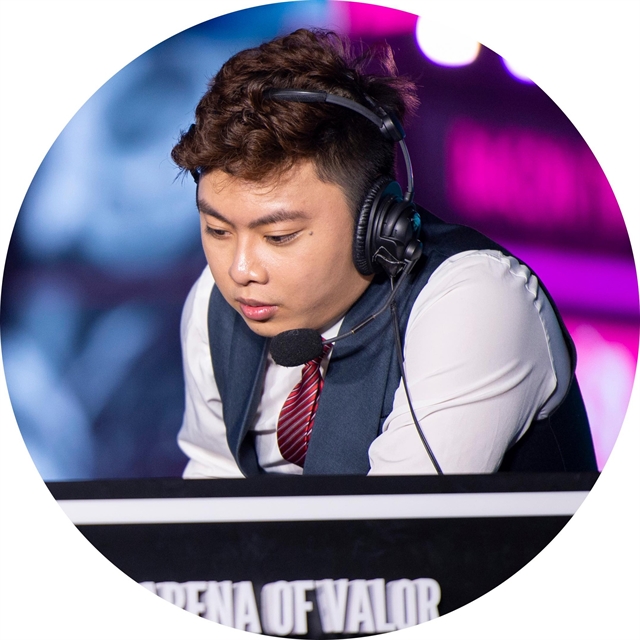 |
| Nguyễn Vũ Hoàng Dũng, head coach of GAM Esports' Arena of Valor team. Photo courtesy of GAM Esports |
Nguyễn Vũ Hoàng Dũng, head coach of GAM Esports' Arena of Valor team:
Having spent many years working in esports, I personally believe esports in Việt Nam is growing stronger every day. A great deal of data reflects this; the number of players across esports titles continues to rise. This is true not only for strategy games, but also for shooters, which now attract a very large player base.
We can also see hundreds, even thousands, of esports tournaments being held each year, and the audiences following them continue to grow — into the tens of thousands, hundreds of thousands, and in some cases reaching one million concurrent viewers. That is clearly an enormous figure for a developing country like Việt Nam.
With such a large audience and player base, many young talents are naturally passionate about esports and want to contribute to Vietnamese esports as professional players or in other roles. That is clearly a positive sign for the years ahead, suggesting Vietnamese esports can continue to grow stronger, achieve better results internationally and win more championships.
Because once the word "sport" is attached to it, what matters most are the results. The more international titles our players win, and the higher they climb in world rankings, the more other countries and regions will look towards Việt Nam and hold Vietnamese people in high regard.
Throughout my years in esports, I have been fortunate enough to experience many different roles and meet many different people — senior figures with extensive experience not only in esports but in the gaming industry as a whole. As esports developed, young people also gained more opportunities to compete and travel — you could even call it tourism — while exploring different parts of the world. Some have travelled across Europe, the Americas, North America and Asia. It was then that perceptions of esports began to change.
Speaking about the potential of young people in Việt Nam, we Vietnamese have one very strong quality: diligence. They can play for many hours a day, many hours a week, even for months at a time, focusing entirely on one thing: the game itself. That is a very positive quality.
However, after such a long period, and with so many new esports titles emerging globally, I believe Việt Nam also needs to bring greater professionalism to these young players. Not everyone fully understands esports, and not every parent or family supports their child pursuing that path, even when those players are highly skilled.
“Beyond that, focusing too heavily on gaming can cause players to miss out on important soft skills. As a result, their teamwork, communication with the outside world, treatment of one another and professional conduct may not be as developed as those of foreign organisations or esports teams in other parts of the world. I believe young people will need to do more than simply improve their professional level, they will also need to develop their soft skills if Vietnamese esports is to continue growing in the future.” — VNS
Sports
 Sports
 Sports
 Sports
 Sports
 Sports
 Sports
 Sports
 Sports
 Sports
 Sports
 Sports
 Sports
 Sports
 Sports