 Society

Việt Nam's top leader sends condolences to Spain over deadly train accident
1.
|
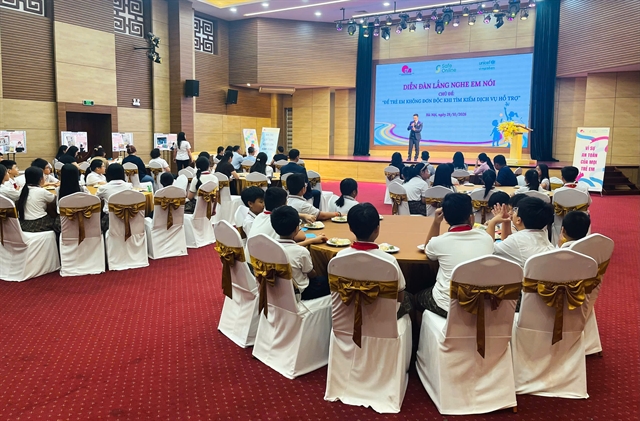
| Experts and children gather at the Children’s Listening Forum organised in Hà Nội on October 29. — VNS Photos Thu Trang |
HÀ NỘI — The Children’s Listening Forum on the theme “Ensuring children are not alone when seeking support services” was launched on Thursday in Hà Nội.
The forum was organised by the Centre for Women’s Development (CWD) and the United Nations Children’s Fund (UNICEF) in Việt Nam.
Speaking at the event, Dương Thị Ngọc Linh, director of the CWD, said that children had the right to live in a safe and respectful environment, to be protected from all forms of violence and abuse, and to receive support when needed.
“This is not only a moral requirement and a responsibility of families and communities, but also a responsibility enshrined in the State’s legal and policy framework,” she said.
Over the years, the Party and the State of Việt Nam have consistently worked to improve the system of policies and laws on the protection, care and education of children.
Many laws have been enacted, and these documents have contributed to strengthening an important legal foundation for realising children’s rights, from receiving information and assessing risks to developing support plans, as well as preventing and intervening in cases involving children at risk of, or affected by, abuse and violence.
Children and families have sought help through channels such as the National Child Protection Hotline 111, competent authorities, child protection service providers and social organisations.
“These are important platforms for protecting children from the risks of violence and abuse. However, there remains a gap that needs to be examined between policy, hotlines, information-receiving channels and service providers on the one hand, and children’s actual access to support services on the other,” said Linh.
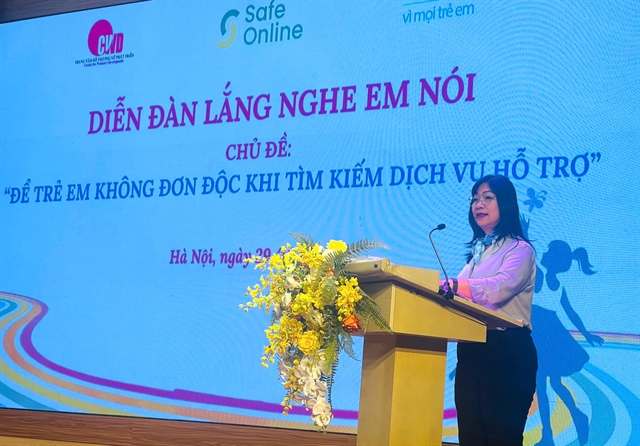
|
| Dương Thị Ngọc Linh, director of the Centre for Women’s Development, says children have the right to live in a safe and respectful environment. |
According to the National Child Protection Hotline 111, nearly six million calls have been received since 2019, and more than 11,000 cases of children experiencing abuse or violence requiring intervention have been recorded.
Among these, there were 4,901 cases of violence against children and 2,635 cases of sexual abuse. Notably, as many as 58 per cent of children aged 10 to 14 have experienced at least one form of physical or emotional violence or discipline within the family, while only around six per cent of them have accessed support services.
“These figures give us much to reflect on. Behind every case of a child experiencing violence or abuse are injuries that may last a long time. Behind every cry for help that goes unanswered may be fear, shame, a lack of confidence, or barriers that prevent children from finding a place where they can receive support and protection,” said Linh.
Therefore, the question is not only how many support services exist, but whether those services truly reach children and whether they are sufficiently child- and women-friendly.
“To build services that genuinely meet children’s needs, we must listen to and understand the difficulties they face. In doing so, children’s own voices will help shape the most practical and effective support solutions,” she said.
Tightly connected system
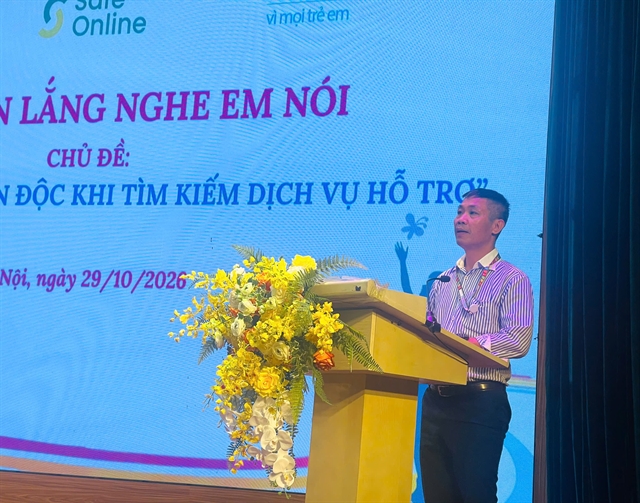
|
| Nguyễn Ngọc Anh, a child protection specialist at UNICEF in Việt Nam, affirms coordination needed to better protect the children. |
Nguyễn Ngọc Anh, a child protection specialist at UNICEF in Việt Nam, remarked that “When children experienced violence and abuse, adults often advise them: ‘Speak up, seek help’. But, for a child, this is by no means simple. They must overcome fear, shame, the worry of being blamed, and sometimes a lack of trust. They may not know where to seek help or whom to turn to, and, most importantly, whether anyone will truly listen to them, believe them and stand by them when they speak up.”
Therefore, simply ‘having’ services is not enough; those services must truly reach children. When children need help, they must be able to access services safely, be listened to and respected, and be connected to support in a timely manner.
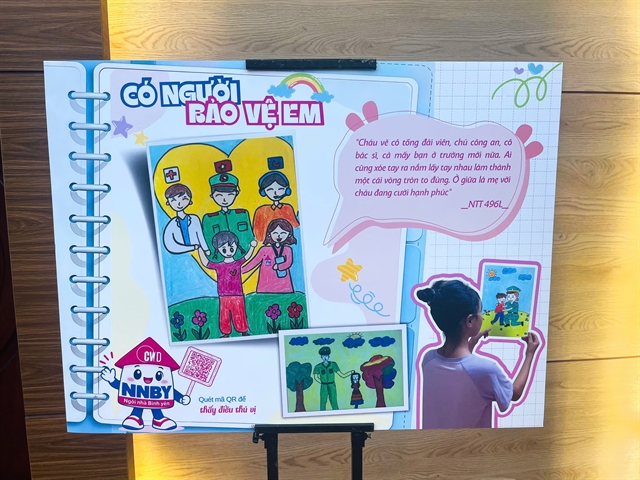
|
| Drawings by children from the Peaceful House, on the theme ‘My dreams’, are on display at the forum. |
In particular, when children gathered the courage to say, ‘I need help’, from that moment on, the responsibility lay with adults – Government agencies, organisations, service providers and the entire child protection system, Ngọc Anh said.
“An effective child protection system is not merely a collection of services operating in isolation. It must be a tightly connected system across sectors – social welfare, health, education, the police, justice and the community – working together to prevent, detect early and provide continuous, comprehensive support for children,” he noted.
Without coordination, children who have experienced violence or abuse may have to retell their painful stories many times to different agencies and through multiple procedures. That journey to seek help can make them even more afraid and cause deeper harm.
“UNICEF believes that a good system must be simple for children. They should not have to understand which agency is responsible for what; the only thing they need to know is that when they come forward, they are not alone,” said the UN specialist
Sharing opinions at the forum, delegates affirmed that children were not only recipients of services; they were citizens with rights. They have the right to receive information, express their views, be listened to, and participate in decisions that affect them. — VNS
Society
 Society
 Society
 Society
 Society
 Society
 Society
 Society
 Society
 Society
 Society
 Society
 Society
 Society
 Society