 Society
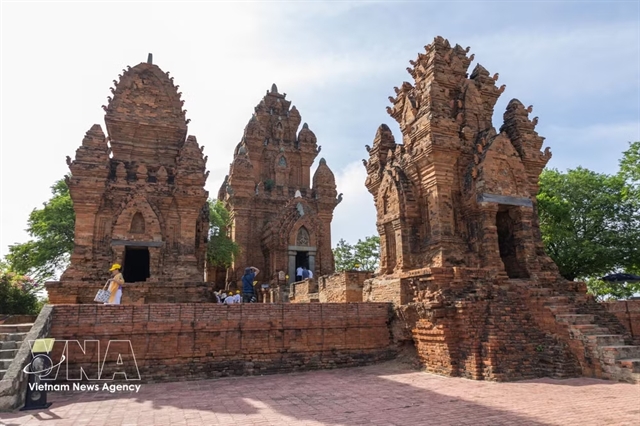
Po Klong Garai: Chăm towers preserving centuries of history
1.
|
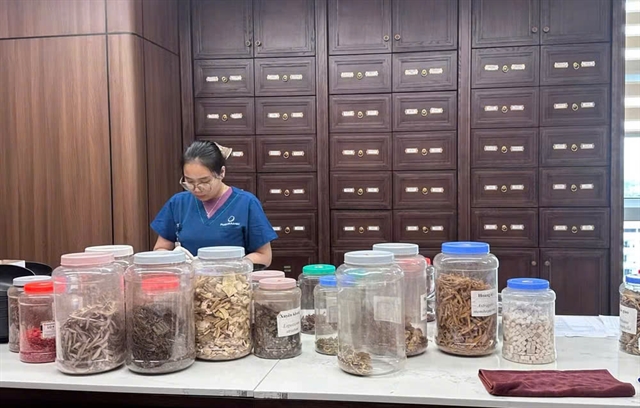
| A medical worker checks different traditional medicines. Việt Nam envisions a traditional medicine sector that preserves national identity while achieving advanced regional and global standards. — VNA/VNS Photo Thùy Giang |
HÀ NỘI — Việt Nam aims to develop a comprehensive, modern and science-based traditional medicine sector with stronger international integration, making it an important part of the national healthcare system by 2030, according to a newly-approved national strategy.
Deputy Prime Minister Phạm Thị Thanh Trà signed Decision No 1976/QĐ-TTg on Tuesday, approving the national strategy for traditional medicine development through 2030, with a vision to 2045.
The strategy seeks to develop a coordinated system covering medical examination and treatment, training, scientific research, technology, medicinal materials and the medicinal materials industry. It also aims to create a traditional medicine economy with high valued added, support health tourism, help enhance the national soft power, and build Việt Nam’s national brand in traditional medicine.
By 2030, all provinces and cities are expected to have traditional medicine hospitals, with at least 70 per cent of these hospitals having 300 beds or more. All geriatric hospitals must have traditional medicine departments, while geriatric departments in provincial-level general hospitals are expected to integrate traditional medicine into elderly care and rehabilitation.
Setting targets for traditional medicine services, the strategy expects treatment combining traditional and modern medicine to account for at least 10 per cent of services at specialised-level facilities, 20 per cent at basic-level facilities and 30 per cent at primary-level facilities. All commune-level health stations are expected to have the capacity to provide traditional medicine services.
Health insurance spending on examination and treatment using traditional medicine is targeted to at least double from its 2025 level.
Việt Nam also aims to ensure self-sufficiency for at least 20 per cent of domestic demand for medicinal materials, while the output value of the medicinal materials, traditional medicines and herbal medicine industries is expected to grow by at least 10 per cent annually. Exports of these products are also hoped to increase by an average of at least 10 per cent a year.
The strategy calls for an annual increase of at least 15 per cent in scientific research, technology and innovation projects in traditional medicine. Biotechnology-related research into medicinal materials and their products is expected to account for 20 per cent of these projects.
By 2030, at least 90 per cent of commune-level health stations should have at least one staff member trained in traditional medicine, and 20 per cent should have a traditional medicine doctor. All undergraduate programmes in health-related fields must include traditional medicine modules.
Việt Nam also aims to digitise at least 70 per cent of its traditional medicine knowledge that has been surveyed, collected and verified while researching, standardising and applying at least 30 traditional remedies, treatment methods or bodies of knowledge in healthcare or product development. National brands are to be developed for 30 products made from medicinal materials, traditional medicines and herbal medicines.
Five integrated service and product lines combining traditional medicine and healthcare are also planned for tourists, linking health services with the preservation and promotion of traditional culture and indigenous knowledge.
By 2035, at least 90 per cent of provincial-level traditional medicine hospitals are expected to have 300 beds or more, and each socio-economic region should have at least one specialised traditional medicine hospital.
The target shares for traditional medicine services that include treatment combining traditional and modern approaches will rise to 15 per cent at specialised-level facilities, 25 per cent at basic-level facilities and 40 per cent at primary-level facilities.
Domestic production is expected to meet at least 25 per cent of demand for medicinal materials. All commune-level health stations should have at least one staff member trained in traditional medicine, while 30 per cent should have a traditional medicine doctor.
By 2045, Việt Nam envisions a traditional medicine sector that preserves national identity while achieving advanced regional and global standards. Traditional and modern medicine is expected to become closely integrated in mainstream healthcare, supported by science, technology, digital transformation and a highly qualified workforce.
The strategy outlines nine groups of measures, including improving policies, strengthening traditional medicine across all stages of life, developing the medicinal materials industry, promoting research and digitalisation, training skilled personnel, preserving traditional knowledge, protecting intellectual property, expanding markets and international cooperation, raising public awareness, and strengthening inspection and supervision.
It also calls for upgrading infrastructure and equipment at traditional medicine hospitals and departments, encouraging investment in high-quality facilities, improving services at grassroots healthcare facilities, and developing pilot models of non-drug healthcare at the commune, ward and special-zone levels.
Nationally standardised professional guidelines and technical procedures combining traditional and modern medicine will also be developed for consistent application across healthcare facilities. — VNA/VNS
Society
 Society
 Society
 Society
 Society
 Society
 Society
 Society
 Society
 Society
 Society
 Society
 Society
 Society
 Society