 Society
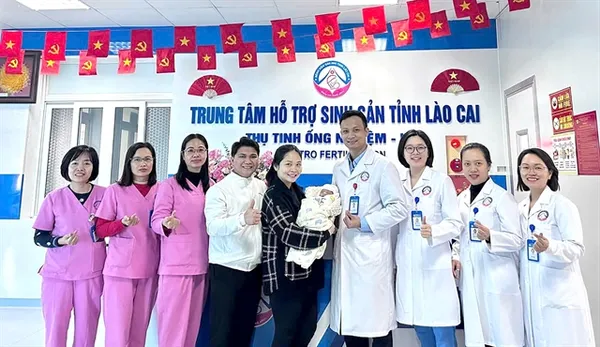
Doctor brings hope to infertile couples in Lào Cai
1.
|
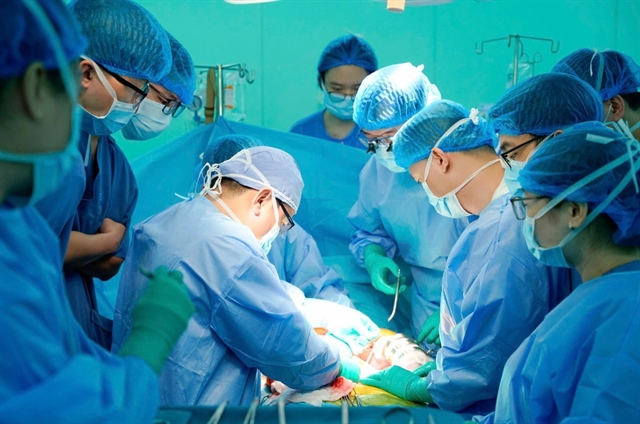
| Surgeons perform an organ transplant in Việt Nam on February. — VNA/VNS Photo |
HÀ NỘI — Organ transplants, tuberculosis screening and maternal health care are among the areas where research honoured with the Hồ Chí Minh Prize has moved from the laboratory into routine practice, according to the Ministry of Science and Technology.
The ministry’s Science and Technology Communication Centre highlighted three prize-winning bodies of medical research. Each contributed in a different way.
One laid the foundation for an entire specialty, another linked advanced diagnostics with disease management in the community, and a third focused on parts of the country where health care remains limited. The centre said the common thread was that the research proved its worth only once it was applied, transfered to other hospitals and brought closer to patients.
Building a transplant specialty
The transplant research, honoured in 2005, centered on the Military Hospital 103 and the Military Medical Academy, whose early successes opened the way for organ transplantation in Việt Nam.
Doctors at the hospital performed the country’s first successful kidney transplant on June 4, 1992, with help from foreign specialists. The hospital carried out Việt Nam’s first liver transplant in 2004.
Those milestones depended on more than surgery. A transplant programme also requires careful selection and assessment of patients, anesthesia and intensive care, and long-term follow-up. Bringing those disciplines together reflected the hospital’s ability to organise complex treatment.
The techniques were later passed on to many military and civilian hospitals, turning one centre’s expertise into a capability shared across the health system.
In December 2006, the health ministry issued procedures for living-donor kidney and liver transplants that had been drafted by one of the research co-authors, formalising years of accumulated experience.
From the clinic to the community
The respiratory research, led by Associate Professor Nguyễn Viết Nhung and 22 co-authors, received the prize in the sixth round of awards, presented in November 2022. It covered a wide range of lung conditions, including tuberculosis.
|
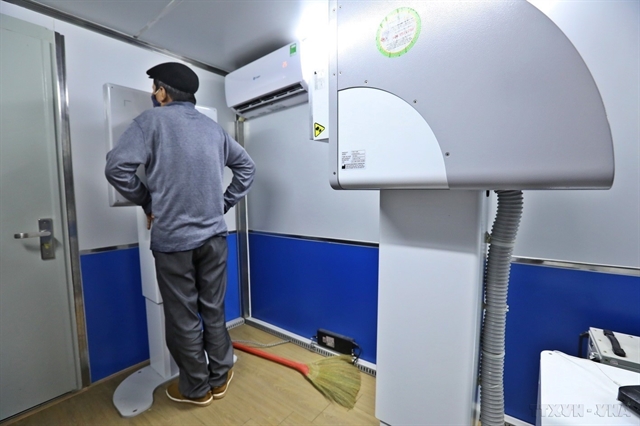
| A patient is screened for tuberculosis using a mobile X-ray van as part of a community active case-finding campaign. — VNA/VNS Photo |
A key finding provided scientific evidence for actively seeking out TB cases in the community. That evidence laid the groundwork for a strategy that screens people with chest X-rays and confirms infection with Xpert molecular tests.
The researchers also helped develop treatment regimens, improve the diagnosis of lung lesions and build a network for managing chronic lung disease. They designed devices for lung biopsies and CT-guided procedures that have received utility solution patents and are now used in hospitals.
The work addresses respiratory disease at every stage. Early detection gets patients assessed and treated sooner, diagnostic tools pinpoint lung damage, and community-based management keeps patients under follow-up. Because the techniques were packaged for use by both hospitals and community health networks, their reach extends well beyond a single institution.
Care that fits local resources
The third body of work, led by Professor Cao Ngọc Thành and six co-authors and also honored in the sixth round, aimed to improve reproductive health care for women in areas with limited resources.
The research covered screening and prevention of pre-eclampsia and eclampsia, community-based care for women, and infertility treatment. The team also trained staff and transferred techniques to lower-level health facilities.
|
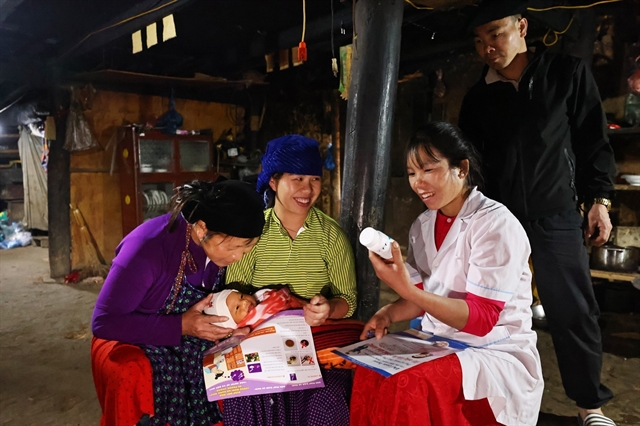
| A health worker advises a family of an ethnic group on newborn care and reproductive health at their home. — VNA/VNS Photo |
In prenatal care, the researchers built a model to predict pre-eclampsia early in pregnancy and tested preventive measures that are practical in Vietnamese conditions. Pre-eclampsia is a potentially dangerous complication marked by high blood pressure.
The findings informed screening and prevention guidelines the Ministry of Health issued in April 2021.
In the community, the team developed a cervical cancer screening approach suited to district and commune clinics and improved care for ethnic minority women.
The centre said the project stood out for matching medical standards to what local health systems can realistically deliver. When research comes with training and technology transfer, it said, people gain better access to care.
Together, the three bodies of work show medical progress at different scales, from advanced lifesaving surgery to disease management and locally tailored care. Their impact continues through the procedures they established, the staff they trained and the networks that apply them. — VNS
Society
 Society
 Society
 Society
 Society
 Society
 Society
 Society
 Society
 Society
 Society
 Society
 Society
 Society
 Society