 Society
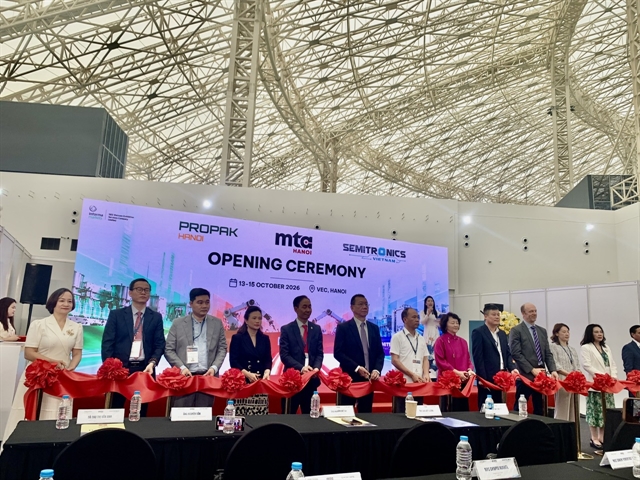
Three international exhibitions open in Hà Nội
1.
|
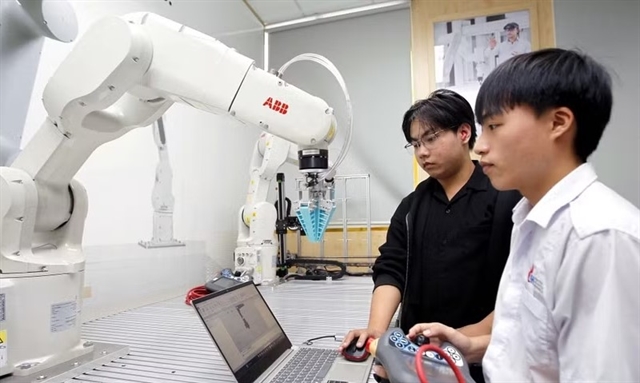
| Students test algorithms for controlling a robotic arm at the Robotics Laboratory of HCM City University of Industry. — VNA/VNS Photo Thanh Vũ |
HÀ NỘI — Việt Nam is rapidly upgrading its national standards, metrology, and quality infrastructure – a strategic move aimed at establishing technological self-reliance and boosting global competitiveness. Alongside identifying key priority products, the government is building a modernised technical framework to ensure the country can independently develop and scale core technologies.
Under the Law on High Technology, strategic technologies are those with breakthrough potential and broad spillover effects. The State prioritises investment in these technologies to increase technological autonomy, create competitive advantages, safeguard national defence and security, and promote sustainable socio-economic development.
On April 30, 2026, the Prime Minister issued Decision No. 21/2026/QĐ-TTg, identifying a list of strategic technologies. These include: digital technologies, such as artificial intelligence (AI), big data, digital twins, cloud computing, edge computing, the Internet of Things (IoT), and blockchain; next-generation mobile networks; robotics and automation; advanced biotechnology and biomedicine; energy and advanced materials; semiconductor chips; cybersecurity and quantum technologies; marine, ocean, and underground technologies; aviation and space; and high-speed and urban rail.
The list also classifies strategic technology products into two groups. The first comprises 22 products that are ready for the market and can generate direct economic impact. The second includes eight products expected to drive new growth, provide a foundation for future technologies and strengthen self-reliance in national defence and security.
The Commission for the Standards, Metrology and Quality of Việt Nam has identified six strategic products to be prioritised under the national science, technology and innovation programme. They are large language models and virtual assistants; AI cameras with edge processing; autonomous mobile robots; 5G equipment and systems; blockchain platforms and applications for traceability and digital assets; and unmanned aerial vehicles (UAVs).
The selection takes practical needs into account, focusing on products that can directly contribute to socio-economic development, public governance, national defence and security, while creating opportunities for Việt Nam to master core technologies.
Alongside this process, the country is working to develop a coordinated quality infrastructure to support strategic technology development. On September 30, 2026, Deputy Prime Minister Hồ Quốc Dũng signed Decision No. 1876/QĐ-TTg approving a scheme to develop national technical organisations in standardisation, metrology and quality.
These organisations form a core part of the national quality infrastructure (NQI), which provides a long-term foundation for improving quality-related management and supporting development based on science, technology, innovation and digital transformation. The system is also intended to serve national defence and security, facilitate international integration, reduce compliance costs for businesses and strengthen their competitiveness, as well as enhance the country's reputation.
Under the scheme, the State will provide direction, develop policies and make targeted investments in essential technical capabilities, while encouraging broader participation and mobilising lawful resources from domestic and international sources.
By 2030, national technical organisations are expected to be strengthened, upgraded or developed from existing institutions. They will need core technical capabilities and coordinated, interoperable, modern systems, with the aim of gradually gaining international recognition in standardisation, metrology, accreditation, conformity assessment, and productivity and quality.
The system is expected to support State management, the development of strategic technologies and products, and nationally important projects. It will also help businesses improve productivity, product quality and competitiveness, expand exports, and meet requirements for national defence, security and international integration.
The scheme sets out five main tasks: improving institutions, policies and mechanisms; developing national quality infrastructure; training highly skilled personnel; promoting digital transformation; and strengthening international cooperation and mobilising resources.
Priority will be given to standards, technical regulations and testing methods for strategic and high technologies with complex requirements or high technical barriers. These measures are also needed to support State management, exports, innovation and digital transformation.
The coordinated development of the national system for standards, metrology and quality, alongside the identification of strategic technologies and products, shows that Việt Nam is gradually laying the foundations for developing and mastering key technologies. When standards, technical regulations, metrology, conformity assessment and testing methods are developed to meet the requirements of strategic technology sectors, they serve not only as tools for ensuring quality but also as “soft infrastructure” supporting research, innovation, product commercialisation and improved competitiveness. — VNS
Society
 Society
 Society
 Society
 Society
 Society
 Society
 Society
 Society
 Society
 Society
 Society
 Society
 Society
 Society