 Society

Ministry proposes allowing foreign investors to participate in market infrastructure
1.
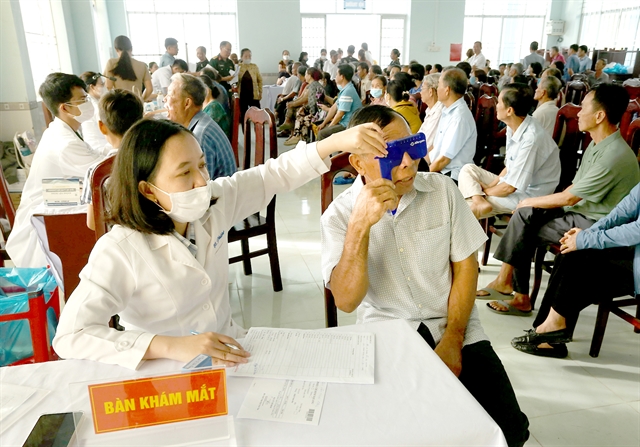 |
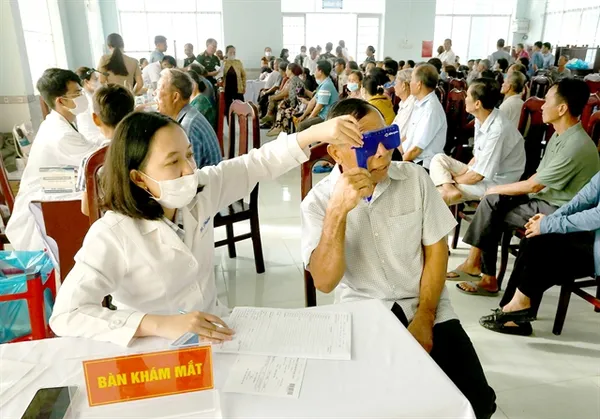
| Health workers conduct routine medical check-ups for residents in Cần Thơ City. The city will promote health care quality in the future to better serve citizens. — VNA/VNS Photo Duy Khương |
CẦN THƠ — As a specialised medical centre of the Mekong Delta, Cần Thơ City faces the dual challenge of enhancing its capacity for medical examination and treatment and developing advanced medical techniques, and ensuring primary healthcare and preventive services.
Cần Thơ’s tertiary hospitals not only serve local residents but also receive large numbers of patients from provinces and cities across the Mekong Delta.
But its allocated budgets, hospital beds and high-quality human resources remains limited.
Hoàng Quốc Cường, director of the Cần Thơ Department of Health, said that one of the most evident obstacles was the slow progress of key healthcare investment projects.
The project to build the Cần Thơ City Oncology Hospital, with a capacity of 500 beds and a total adjusted investment of more than VNĐ2 trillion (US$77.2 million), is behind schedule, with only about 7.1 per cent of this year's allocated capital disbursed.
With few months remaining in 2026, resolving problems in coordination among contractors, organisation of construction and capital disbursement will be decisive in bringing the facility into operation.
Pressure is also mounting at the primary healthcare and preventive medicine levels. In the first nine months this year, Cần Thơ recorded nearly 6,000 dengue fever cases, more than double the figure for the same period last year, while the number of hand, foot and mouth disease increased to approximately 1.5 times.
At the same time, the scope of management at the grassroots level has expanded following administrative restructuring, while staffing and equipment for disease prevention and control remain limited.
Some chemical sprayers have deteriorated or broken down.
The absence of complete economic-technical norms, unit prices and financial mechanisms for certain services not covered by the Health Insurance Fund has made it difficult for healthcare facilities to implement these programmes.
Financial pressures are directly affecting the operations of some public healthcare facilities. The transition to financial autonomy has made it difficult for some units to balance income and expenditure. Some facilities also face obstacles in ensuring supplies of emergency and rare medicines, as suppliers have suspended deliveries.
Aligning mechanisms, unlocking resources
According to information from the Cần Thơ Department of Health, although hospitals have implemented electronic medical records at a basic level, information technology infrastructure at some health stations is substandard, and personnel responsible for technology and information security has not yet meet requirements.
The connection and integration of health data into shared systems also face obstacles, with the proportion of electronic health records integrated into VNeID reaching just over 30 per cent.
This shows that digital transformation in healthcare is not merely a matter of investing in equipment, but is also directly linked to infrastructure, human resources and the ability to share data across different levels of the system.
Director Cường said that Cần Thơ's health sector identified that its development request for the coming period involved continued investment in infrastructure, equipment and new techniques. It also called for better resource allocation mechanisms commensurate with the city’s role as a specialised medical centre of the region. This saw coordinated removal of bottlenecks relating to finance, investment, human resources and data.
The health sector has proposed that the city prioritise local budget allocations and increase the proportion of public investment allocated to preventive medicine and primary healthcare during the 2026–2030 period, while exploring a resource allocation mechanism commensurate with its function as the specialised medical centre of the Mekong Delta.
Nguyễn Thị Ngọc Diệp, deputy chairwoman of the Cần Thơ People’s Committee, said that the city would focus in the coming period on reviewing the progress of major projects, most notably the 500-bed Oncology Hospital project in the healthcare sector.
Issues requiring particular attention include organisation of construction, faster capital disbursement and adjustments to capital plans in line with actual implementation capacity.
According to the health sector’s proposal, this year's capital plan from the local budget should be reviewed and reduced by approximately VNĐ300 billion (US$11.5 million) to ensure that the disbursement target is achievable.
Alongside investment resources, human resource policies are regarded as essential. The health sector is working with concerned agencies to improve mechanisms for attracting, remunerating and retaining highly qualified doctors and healthcare workers in the public sector.
In the long term, resolving bottlenecks in resource allocation mechanisms, public investment, finance, human resources and digital transformation will be essential for Cần Thơ to improve the quality of healthcare for its people and maximise its role as a regional hub for specialised healthcare in the Mekong Delta. — VNS
Society
 Society
 Society
 Society
 Society
 Society
 Society
 Society
 Society
 Society
 Society
 Society
 Society
 Society
 Society