 Society
Greening Hà Nội's streets
1.
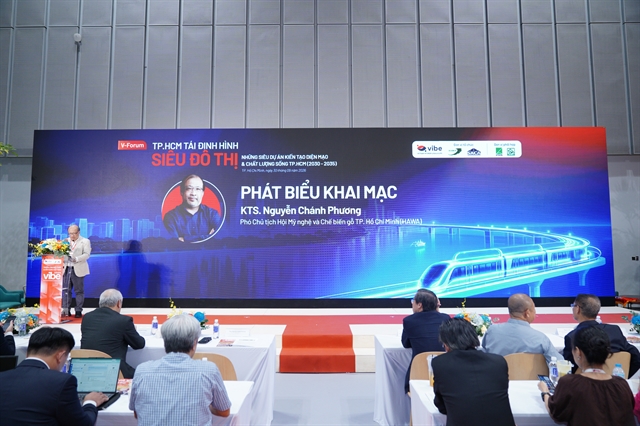 |
| Nguyễn Chánh Phương, vice chairman of the Handicraft and Wood Industry Association of HCM City, speaks at the forum. — Photo courtesy of HAWA |
HCM CITY — As HCM City enters a new phase of spatial development following its merger with the former Bình Dương and Bà Rịa-Vũng Tàu provinces, experts have stressed that urban planning should focus not only on economic growth and infrastructure but also on jobs, housing, social services and quality of life for more than 14 million residents.
The information was highlighted at a forum ‘HCM City – Reshaping the Megacity: Mega-Projects Shaping the city's Future Landscape & Quality of Life in 2030–35’, organised by the Handicraft and Wood Industry Association of HCM City (HAWA) in collaboration with the HCM City Construction and Building Material Association (SACA), the Vietnam Association of Architects and the HCM City Association of Architects in HCM City on September 30.
The forum was held as part of the Vietnam Interior and Build Expo (VIBE 2026), providing a platform for authorities, experts and businesses to discuss urban planning, infrastructure, the urban economy and investment and cooperation opportunities during the city’s new development phase.
Nguyễn Chánh Phương, Vice Chairman of HAWA, said each stage of HCM City’s transformation created new requirements for urban space and quality of life. Large-scale infrastructure and urban projects would create new development centres and investment opportunities while increasing demands for better transport, public spaces and living environments.
Architect Ngô Anh Vũ, Deputy Director of the HCM City Urban Planning Institute, said the city’s master plan had been developed with a 100-year vision, aiming to build a global, smart and modern metropolis.
The plan sets development milestones for 2030, 2045 and 2075 and beyond, with the city aiming to reach the level of leading Southeast Asian cities by 2030 and become an economic, cultural and innovation centre of Asia by 2045.
The new spatial structure has been broadly described as a “5-5-5 and 10” model, comprising five growth poles, five satellite centres, five connectivity systems, and 10 administrative areas.
The former HCM City core would focus on urban governance and finance, while the east would develop as an innovation hub. The west would focus on urban development, healthcare and education, while the north would develop high-tech industry and logistics. The marine economic pole would be associated with Cần Giờ, Bà Rịa-Vũng Tàu, and Gành Rái Bay.
Vũ said the city’s river-based geography required planning to make better use of rivers, lakes, the sea and green spaces while strengthening connections between development areas.
Planning around residents
Architect Ngô Viết Nam Sơn, Chairman of NgoViet Architects & Planners, said the first question for a megacity plan should be how people would live within the new urban structure.
HCM City needs a polycentric urban ecosystem in which each growth pole is supported by jobs, housing, technical infrastructure and social infrastructure, he said. New urban areas focused mainly on housing but lacking jobs, schools, hospitals and essential services could result in low occupancy and long commuting distances.
Sơn suggested developing “15-minute cities”, where residents can access employment, education, healthcare and basic services within a short travelling time, particularly through public transport.
Transit-oriented development should also be planned alongside housing and employment. As land prices around metro stations rise, the city needs affordable housing to prevent workers from being pushed further away from workplaces and public transport, he said.
“The question that needs to be asked when implementing major projects is: Who is the megacity being planned for?” Sơn said.
Green space and nature should also be treated as part of urban infrastructure. With a 100-year vision, the city needs to reserve land for nature, heritage and future development. Green areas can provide recreational space while helping reduce flooding, pollution and noise.
Architect Hoàng Thúc Hào, Vice Chairman of the Vietnam Association of Architects, said that even as HCM City develops on a megacity scale, it should preserve spaces connected to people, nature and communities.
Architect Trần Khánh Trung, Vice Chairman of the HCM City Association of Architects, said new urban areas should be designed to adapt to flooding, climate change, electric vehicles and changing lifestyles. In TOD (Transit-Oriented Development) areas, ground floors could provide public spaces linking metro stations with pedestrian streets, while rooftops could incorporate more green areas.
Unlocking the marine economy
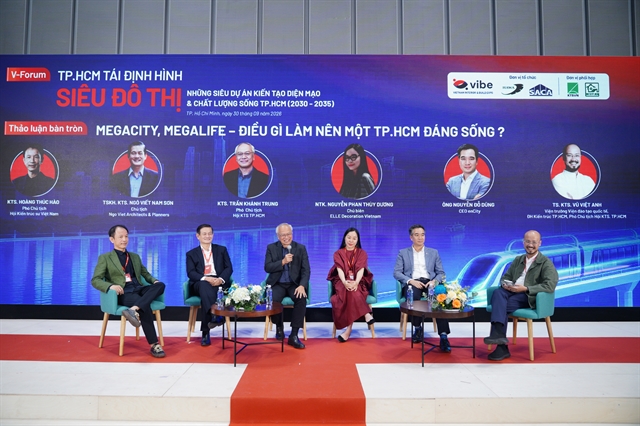 |
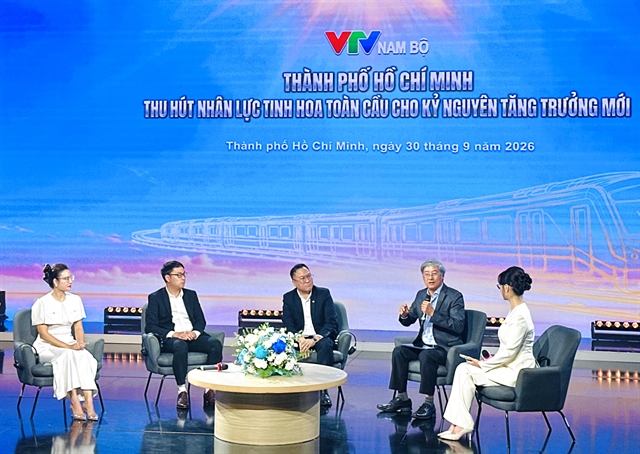
| Speakers discuss what makes HCM City a liveable city at the forum. — Photo courtesy of HAWA |
Experts also highlighted opportunities to develop a broader marine economic ecosystem.
Nguyễn Đỗ Dũng, CEO of enCity, said the city’s geographical position, the sheltered Cần Giờ-Gành Rái Bay and its seaport system provided an important foundation for marine economic development.
However, activity remains concentrated largely on ports and logistics, while higher-value sectors such as shipping, shipbuilding, maritime finance, and insurance remain underdeveloped, he said.
Dũng proposed an integrated vision for a “HCM City Bay” connecting Cần Giờ, Bà Rịa-Vũng Tàu, Đồng Nai, Bình Dương and the Mekong Delta. The inner bay could prioritise production, infrastructure and maritime services, while sea-facing areas could focus on urban development and tourism.
The marine economy should also be linked with finance, logistics, energy and other higher-value maritime services, he said.
Experts also said public transport would become increasingly important as HCM City develops its urban railway network. But transport infrastructure can only deliver its full benefits when planned alongside housing, jobs, schools, hospitals, commercial facilities and public spaces.
The long-term objective of megacity planning should not simply be to expand development space, but to create an urban ecosystem where residents can access housing, jobs and essential services, travel conveniently and enjoy a better living environment, they said.
As growth poles, economic corridors, transport networks and green spaces become increasingly interconnected, quality of life will be an important measure of the success of HCM City’s transformation, they added. — VNS
Society
 Society
 Society
 Society
 Society
 Society
 Society
 Society
 Society
 Society
 Society
 Society
 Society
 Society
 Society
.jpeg)



