 Society
Seven Vietnamese export product groups at risk of trade remedy investigations
1.
New roads, revitalised craft villages, renewed cultural spaces and modern production models are reshaping Hanoi’s suburban countryside. Here, a modern way of life is taking root alongside values passed down through generations, creating rural communities that are dynamic and progressive while retaining their distinctive cultural identity.
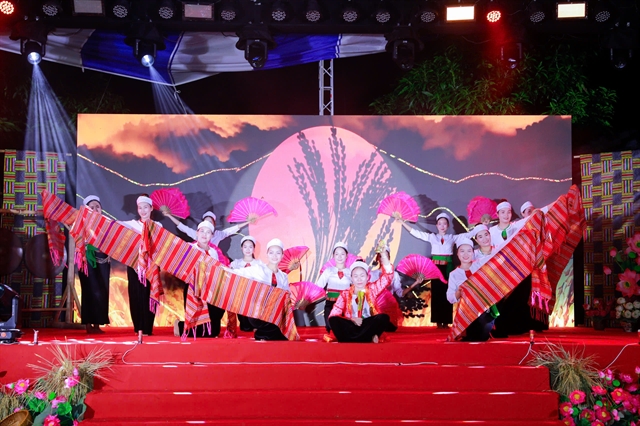 |
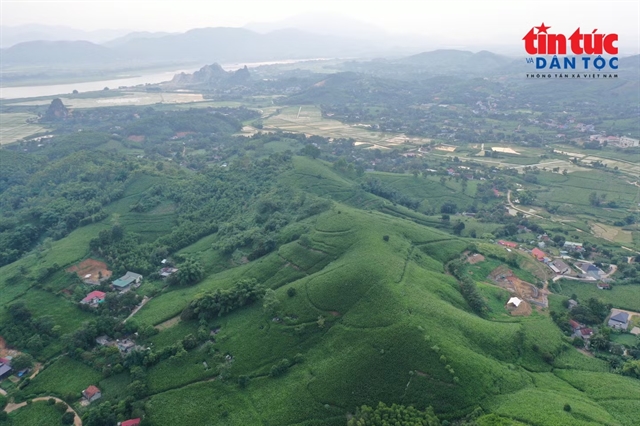
| Developing green community-based and regenerative tourism while preserving the cultural identity of the Mường ethnic community, contributing to new rural development in Mường Cốc Hamlet, Mỹ Đức Commune. |
When tradition becomes a resource
After more than 15 years of implementing the National Target Programme on New Rural Development, Hà Nội’s suburban areas have undergone significant changes. Infrastructure has become more developed and better connected, the rural economy has gained momentum, and people’s material and spiritual well-being has steadily improved.
For Hà Nội, however, new rural development is about more than meeting a set of criteria. The city is entering a new phase aimed at building modern, civilized and culturally distinctive rural communities where people enjoy an increasingly better quality of life while the region’s historical, cultural and community values are preserved and promoted.
This approach is increasingly visible in the way local communities are turning their existing cultural assets into resources for development.
As the country prepares to mark the 81st anniversary of the August Revolution and National Day on September 2, many rural areas around Hà Nội are offering residents and visitors opportunities to experience the capital’s history, culture and community life.
At Đường Lâm Ancient Village, visitors can explore traditional houses and village architecture while taking part in traditional activities such as making peanut candy and banh te, a local specialty. New services are also being introduced to make the village experience more engaging, including ox-cart rides through the village.
Hà Kế Dũng, who operates the ox-cart experience in Đường Lâm, said many families, particularly children, enjoy feeding and stroking the oxen and interacting with animals that were once a familiar part of rural life. Such simple encounters offer visitors a more direct connection with the countryside.
At Miền Community-based Tourism Site in Ba Vì Commune, visitors can discover the culture of the Dao ethnic community through activities such as learning about traditional herbal medicine, experiencing a Dao herbal bath, sampling local cuisine and exploring indigenous ways of life.
Meanwhile, Mường Cốc Community-based Tourism Site has attracted groups of international visitors with activities including cycling, enjoying local food and joining traditional musical and cultural performances with Mường ethnic residents.
Through these experiences, traditional culture is becoming more than something to be preserved. It is also becoming part of the contemporary rural economy. Ancient villages, traditional crafts, local cuisine and customs are creating new livelihoods while offering distinctive ways to introduce Hà Nội to international visitors.
As urbanisation accelerates, preserving the character of each rural community is also becoming a way to give Hanoi’s countryside its own appeal and identity.
Modern rural development is also reflected in changing community practices. In Hát Môn 5 Hamlet, Hát Môn Commune, a more environmentally conscious approach to funerals has been maintained for years, with cremation accounting for 100 percent of cases.
Nguyễn Đình Đạo, a representative of the Hamlet’s Association of Elderly People, said most families choose cremation first and then hold the funeral ceremony after the ashes are brought home. The practice helps protect the environment, save land and encourage a more modern way of life.
Nguyễn Đình Sơn, Secretary of the Party Committee of Hát Môn Commune, said the locality has registered with the city to complete its new rural development goals in 2026 and move toward modern rural development. Promoting traditional cultural values is seen as an important resource for sustainable socio-economic development.
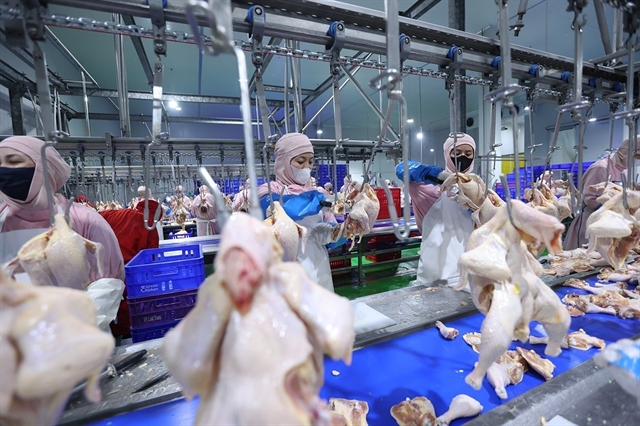 |
| Green Chicken Co., Ltd., part of the Dutch De Heus Group, in Thường Tín Commune has invested in a poultry slaughtering line that meets the ISO 22000:2018 international food safety management standard, creating hundreds of jobs for local farmers’ families. Photos courtesy of the Hanoi Office for Coordination of the New Rural Development Programme. |
Rural communities embracing the future
Before Hà Nội began implementing the two-tier local government model in July 2025, the city was officially recognised by the central government as having completed its new rural development tasks at the municipal level. Following this milestone, the focus for suburban areas is shifting beyond meeting basic criteria toward improving the quality of development and people’s quality of life.
At the heart of this process is higher incomes for rural residents. Hà Nội is promoting a shift in the rural economic structure toward high-tech agriculture, organic production, value chains, digital applications and e-commerce.
In Nhân Hiền Village, Thường Tín Commune, the sound of chisels and hammers still fills local workshops. From rough blocks of wood, skilled artisans create intricate sculptures, continuing a traditional craft that has been passed down through generations.
Around 200 families in Nhân Hiền Hamlet are currently engaged in wood carving. Their products range from small reliefs to statues as tall as five meters. The traditional craft not only survives but also provides employment for thousands of workers each year.
To meet changing market demand, artisans in Nhân Hiền have expanded from traditional wood carving to stone sculpture. Artisan Nguyễn Minh Phú said stone carving requires skill, precision, patience and creativity so that each work has its own character rather than being mass-produced. A single piece can take considerable time and involve numerous painstaking stages, with every detail carefully carved and shaped by hand.
Nguyễn Văn Tản, Vice Chairman of the Thường Tín Commune People’s Committee, said Nhân Hiền’s craft village has made a positive contribution to the local economy. To preserve and develop the traditional craft, the commune works with artisans to promote their products through exhibitions, displays and livestream sales, gradually expanding their markets.
The story of Nhân Hiền illustrates how the vitality of a traditional craft village depends not only on preserving its skills, but also on its ability to adapt to new markets and technologies.
Across Hà Nội’s rural areas, new-style cooperatives, digitally enabled farms and production models incorporating product traceability are emerging. Many OCOP-certified products—part of Việt Nam’s One Commune One Product programme—have established a presence in the market, increasing the value of local agricultural and specialty products.
The rural economy is also expanding beyond agriculture. Food processing, services, community-based tourism and creative craft villages are creating new jobs, diversifying household incomes and opening up opportunities for younger workers.
In Đoài Phương Commune, economic development is being pursued alongside efforts to improve quality of life. The locality is promoting tourism and services while shifting agricultural production toward high-tech applications and value-chain linkages. It has earmarked 60ha for high-tech agriculture.
Nguyễn Quang Hán, Secretary of the Party Committee of Đoài Phương Commune, said that alongside economic development, the locality aims to become a desirable place to live, where people’s material and spiritual well-being can genuinely improve.
The commune is reviewing its public land resources and asking villages to identify suitable sites for playgrounds, green parks and community spaces. Cultural, artistic and sports activities are also being promoted to meet residents’ growing needs for recreation and community life.
According to Ngọ Văn Ngôn, Deputy Chief of the Hanoi New Rural Development Coordination Office, the city will continue pursuing new rural development under the criteria for the 2026–2030 period. Several localities, including Hát Môn, Đan Phượng and Kiều Phú, have proactively registered to work toward meeting the new criteria.
Hà Nội’s countryside is taking on new forms. Modern roads and public facilities now stand alongside ancient villages; digital technology is entering production and commerce; traditional crafts are finding new markets; and local culture is becoming part of community-based tourism.
In this evolving landscape, modernisation does not mean erasing the past. Instead, values preserved through generations are becoming a foundation on which rural communities can build new opportunities for development.
This is how Hà Nội is building modern, livable rural communities—where economic development goes hand in hand with culture, technology works alongside tradition, and people’s quality of life remains at the heart of the transformation. VNS
*In collaboration with the Hanoi Office for Coordination of the New Rural Development Programme.
Society
 Society
 Society
 Society
 Society
 Society
 Society
 Society
 Society
 Society
 Society
 Society
 Society
 Society
 Society