 Society
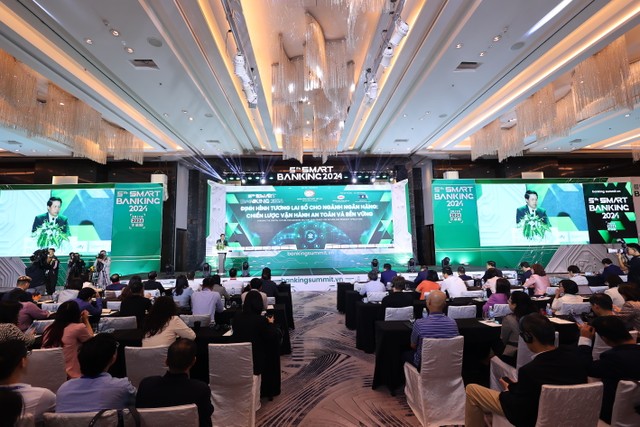
Smart Banking 2026 to open next week in Hà Nội
1.
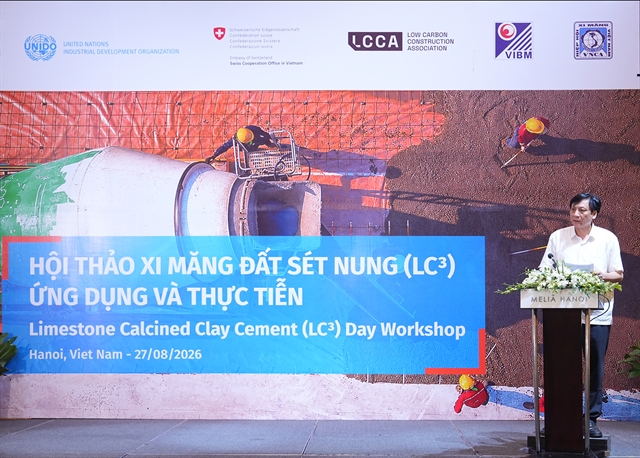 |
| Dr Hoàng Hữu Tân, deputy director general of the Department of Science, Technology, Environment and Building Materials, under the Ministry of Construction, attends a workshop on Việt Nam's adoption of limestone calcined clay cement in Hà Nội on Thursday. — Photos courtesy of UNIDO |
HÀ NỘI — A workshop was held in Hà Nội on Thursday to exchange knowledge on practical solutions to reduce the carbon intensity of cement production, particularly with the use of limestone calcined clay cement (LC3).
The event was organised by the United Nations Industrial Development Organization (UNIDO) to support industrial decarbonisation of Việt Nam's cement sector, in collaboration with the Embassy of Switzerland in Việt Nam, the Việt Nam National Cement Association (VNCA) and other relevant associations and research institutes.
Dr Hoàng Hữu Tân, deputy director general of the Department of Science, Technology, Environment and Building Materials, under the Ministry of Construction, was in attendance.
Discussions covered global cement decarbonisation trends, LC3 technology and its relevance to the Vietnamese context, as well as practical ways for the country to adopt the technology.
They also touched on clay availability in Việt Nam, the standards and specifications for calcined clay production and the sustainability strategy of the cement sector.
In his opening remarks, Dr Hoàng Hữu Tân from the Ministry of Construction said that for Việt Nam, the development of LC3 should be approached comprehensively and based on sound scientific evidence.
Thorough assessments should be made of clay resources and quality, calcination, grinding and blending technologies, cement performance and durability, as well as economic viability, applicable standards, technical regulations and market acceptance, he said.
“In particular, proposed solutions need to be validated and adapted to the raw materials, technologies and production practices of Việt Nam’s cement industry,” Tân said.
Limestone calcined clay cement, or LC3, is a low-carbon blended cement that replaces a substantial proportion of clinker with calcined clay and limestone, which can reduce carbon emissions by up to 40 per cent compared with conventional Portland cement while maintaining comparable performance and durability.
LC3 can be integrated into existing cement production systems and make use of locally available clay resources, offering a scalable pathway for reducing cement-sector emissions.
UNIDO Country Representative in Việt Nam Lê Thị Thanh Thảo stressed that industrial decarbonisation is a growing priority for the country.
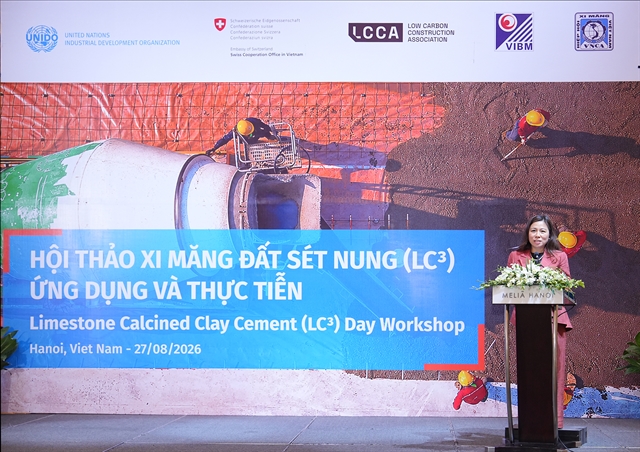 |
| Lê Thị Thanh Thảo, UNIDO Country Representative in Việt Nam, delivers welcome remarks at the event. |
As the world’s third-largest cement producer, Việt Nam’s cement industry accounts for around 16 per cent of the country’s total greenhouse gas emissions, making decarbonisation critical to meeting climate goals while maintaining the industry’s competitiveness.
“The transition must support competitiveness, innovation and sustainable growth,” Thảo said.
“UNIDO plays a key role in bringing partners together and helping to scale up proven solutions, while LC3 demonstrates how climate action can go hand in hand with industrial development.”
Through its Energy Systems and Industrial Decarbonisation Unit, UNIDO is supporting efforts to identify and advance practical pathways to decarbonise Việt Nam’s cement sector.
Its integrated approach combines policy frameworks, technology deployment, financing and market development to support the sector’s transition towards low-carbon production while maintaining industrial competitiveness and contributing to national climate goals.
Sharing Switzerland’s experience in decarbonisation in a keynote speech, Benjamin Müller, Chargé d’Affaires ad interim at the Embassy of Switzerland in Việt Nam, said: “LC3 demonstrates how research, international cooperation and industrial innovation can come together to address the climate challenge.
“Switzerland is pleased to support knowledge exchange and partnerships that contribute to Việt Nam’s sustainable industrial development.” — VNS
Society
 Society
 Society
 Society
 Society
 Society
 Society
 Society
 Society
 Society
 Society
 Society
 Society
 Society
 Society