 Society

HKSTP Partners with Leading Science and Technology Company Merck to Open a New Chapter in I&T Collaboration
1.
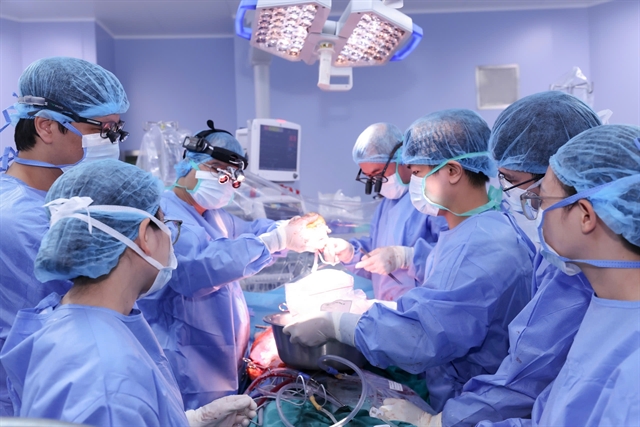 |
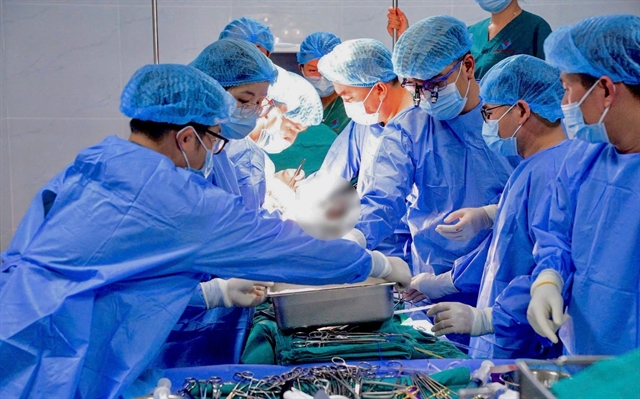
| Doctors perform a heart transplant on the patient at the 108 Military Central Hospital. —Photo benhvien108.vn |
HÀ NỘI — Doctors at the Hà Nội-based 108 Military Central Hospital have successfully performed a second heart transplant within just a few days, marking a significant milestone for Vietnamese medicine.
The 50-year-old patient was admitted with end-stage heart failure caused by dilated cardiomyopathy.
Before surgery, his condition had repeatedly deteriorated, with acute episodes of heart failure accompanied by persistent shortness of breath and chest pain, placing his life at immediate risk without a timely heart transplant.
On July 25, he received a heart from a brain-dead donor.
During the first hours after the transplant, his condition was relatively stable.
The donated heart began beating with good contractile function, while the patient’s haemodynamics remained stable with only low doses of inotropic and vasopressor drugs.
He did not require extracorporeal membrane oxygenation (ECMO).
Bleeding was also well controlled, with only a small amount of fluid drained from the pericardial and retrosternal spaces.
However, less than 24 hours later, the transplanted heart began showing severe and complex signs of dysfunction.
Its contractile function was almost completely lost, requiring full circulatory support with ECMO combined with left ventricular drainage.
Despite intensive treatment over the following 48 hours, the transplanted heart showed no signs of recovery.
The patient subsequently developed multiple organ failure and was considered to have a poor prognosis.
Another chance
At that point, just two days after the first transplant, the hospital received a brain-dead donor who had consented to multi-organ donation.
An assessment found that the donor heart met extended-criteria requirements and was not suitable for the other heart-transplant candidates on the waiting list.
Colonel Ngô Vi Hải, Head of the Department of Thoracic and Cardiovascular Surgery and leader of the transplant team, said the decision presented 'an extremely difficult choice'.
The donor heart was not ideal.
The left ventricle was severely thickened because the donor had a history of hypertension and kidney failure, while echocardiographic indicators of cardiac function were also concerning.
Meanwhile, the recipient was in critical condition and had already developed multiple organ failure, making it extremely difficult for him to withstand another major operation.
However, with the first transplanted heart having completely and irreversibly lost its function after 72 hours, the patient would certainly have died without intervention.
The 108 Military Central Hospital convened an emergency consultation involving leading specialists, who conducted a comprehensive assessment of the situation.
Major General Phạm Thái Giang, deputy director of the hospital, said: “This is the first case in Việt Nam in which a patient had undergone a second heart transplant so soon after the first.”
A first heart transplant is already a highly complex procedure, while a second transplant is considerably more challenging because the patient has already undergone major surgery, developed multiple organ failure and requires another emergency operation.
“Early repeat heart transplantation is rare worldwide, with very few cases reported,” the deputy direct added.
Nevertheless, faced with the choice between accepting the patient’s death and undertaking another major operation involving significant risks and challenges, the doctors decided to proceed with an early repeat transplant.
Following consultations, assessment and agreement among specialists, the hospital decided to use the heart from the newly received brain-dead donor and perform a second transplant on the patient.
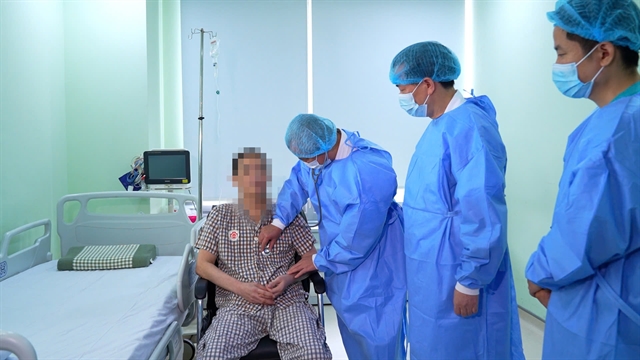 |
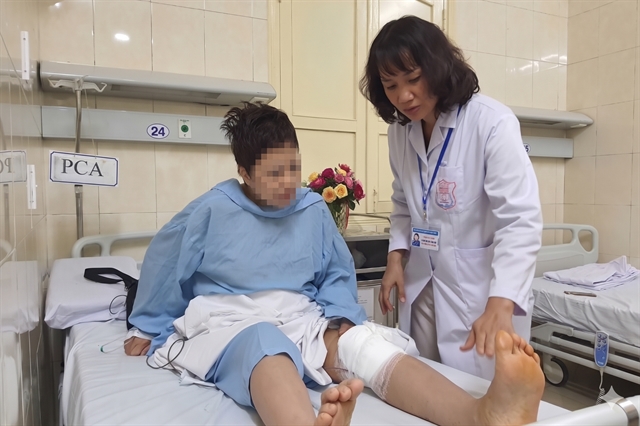
| Doctors examine the patients' health after surgery at the 108 Military Central Hospital. —Photo benhvien108.vn |
Second transplant
On July 28, the second heart transplant was performed under particularly challenging circumstances.
The patient had already undergone one heart transplant and was suffering from severe multiple organ failure.
For the anaesthesia and intensive-care team, the procedure presented an exceptional challenge, requiring them to sustain the life of a critically unstable patient while maintaining circulation, respiration and other vital functions throughout the operation.
The surgical team also faced considerably greater pressure and technical difficulties than during the first transplant.
Dr Ngô Vi Hải, the lead surgeon, said that during a second transplant, the recipient’s tissues are no longer intact as they are during an initial procedure, making the surgical connections much more difficult.
“We performed the operation with the highest level of concentration and close coordination among the anaesthesia, intensive-care and cardiopulmonary bypass teams to ensure that not even the smallest error occurred,” he said.
When the transplanted heart began beating again and the patient’s haemodynamics gradually stabilised, the surgical team and medical staff were delighted.
The challenges continued in intensive care after the operation.
During treatment, the function of the transplanted heart gradually improved.
The patient was successfully weaned off ECMO on the eighth day after the transplant and had his endotracheal tube removed on the 10th day.
These were important milestones, showing that the transplanted heart was recovering and had regained the ability to maintain the patient’s circulation without mechanical circulatory support.
The patient, visibly moved, said: “This was an extremely rare case, so I feel incredibly lucky to have received a second heart.
"The doctors were dedicated and compassionate and saved my life. I am deeply grateful to and appreciative of the donors whose gift gave me a chance to live.” — VNS
Society
 Society
 Society
 Society
 Society
 Society
 Society
 Society
 Society
 Society
 Society
 Society
 Society
 Society
 Society