 Society

Việt Nam, China urged to strengthen people-to-people ties, expand cooperation
1.
|
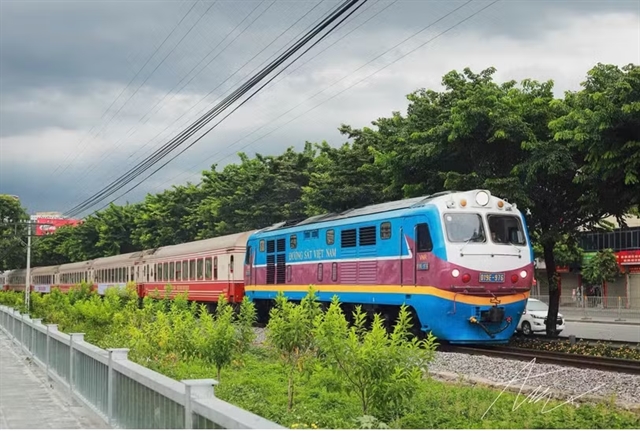
| Vietnam Railways has introduced a range of tourism, heritage and dedicated train services, attracting growing numbers of passengers. VNA/VNS Photo |
HÀ NỘI — Việt Nam's railway sector is gaining fresh momentum as a series of innovative services, including tourism, heritage and dedicated commuter trains, have attracted growing numbers of passengers and opened up new opportunities for the industry.
One of the most notable successes is the premium Hoa Phượng Đỏ (Flamboyant Flower) train operating between Hà Nội and Hải Phòng city. Since entering service in May 2025, the train has completed nearly 3,000 trips and carried around 1.33 million passengers, according to the Hải Phòng railway transport branch, part of the Hà Nội Railway Transport Joint Stock Company under the Việt Nam Railways Corporation.
Four pairs of Hoa Phượng Đỏ trains run daily on the route, transporting between 2,500 and 3,000 passengers each day. Passenger numbers rise to around 5,500-6,000 daily during weekends and public holidays, prompting Việt Nam Railways to add extra carriages or services to meet demand.
Trần Văn Hạnh, Director of the Hải Phòng railway transport branch, said revenue on the Hà Nội–Hải Phòng route increased 15 per cent year-on-year in the first half of 2026. The online ticketing system allows operators to monitor bookings in real time and quickly add carriages when demand increases.
Beyond its distinctive design inspired by Hải Phòng, known as the city of Flamboyant Flowers, the train is integrated with tourism services, including buses, motorbike rentals, city tours, digital tourism maps and QR codes displayed insider the carriages, enabling passengers to conveniently access travel information and local attractions, he added.
Việt Nam Railways has also introduced the "heritage journey" between the central cities of Huế and Đà Nẵng, which entered service in March. Two pairs of heritage trains operate daily, offering passengers a scenic journey through one of Việt Nam's most spectacular coastal landscapes. The train makes a special stop at Lăng Cô for sightseeing and photo opportunities while passengers can also enjoy panoramic views of Hải Vân Pass, live traditional music performances and culinary specialties of the central region on board.
The sector is studying plans to extend the heritage train network with a new Huế–Đồng Hới (Quảng Bình province) route. The proposed 190km service will connect major cultural and historical attractions, including the imperial city of Huế, the Quảng Trị Ancient Citadel, the Vịnh Mốc Tunnels and Phong Nha – Kẻ Bàng National Park, creating a distinctive inter-regional tourism product.
Dedicated commuter trains have also delivered encouraging results. After nine months of operation, the Hải Dương–Hải Phòng service for public employees has carried more than 170,000 passengers across nearly 400 trips, maintaining an average seat occupancy rate of over 90 per cent.
Likewise, a charter commuter train launched on June 26 for Bạch Mai Hospital's medical staff travelling between Hà Nội and Phủ Lý (Hà Nam province) has recorded high occupancy, averaging around 400 passengers per trip on working days.
According to Việt Nam Railways, the sector transported approximately 3.9 million passengers in the first six months of 2026, up 5.2 per cent year-on-year. Several routes posted double-digit revenue growth such as Hà Nội–Lào Cai 27 per cent, Hà Nội–Đà Nẵng 12 per cent and Hà Nội–Hải Phòng over 12 per cent. The Huế–Đà Nẵng heritage train recorded an 11 per cent increase in passenger numbers and a 41 per cent rise in revenue. Charter train services also generated more than VNĐ16 billion (US$608,000) from 13 charter operations.
Despite fluctuations in fuel prices, Việt Nam Railways attributed the positive performance to its flexible introduction of new transport products and services. In the first half of 2026, the corporation reported consolidated revenue exceeding VNĐ5.2 trillion, up 4.1 per cent year-on-year, while after-tax profit surpassed VNĐ180 billion, reaching 151 per cent of its annual target. Transport operations remained the key growth driver, with revenue rising 8.8 per cent to nearly VNĐ3 trillion.
It plans to further expand tourism, heritage, charter, dedicated commuter and short-distance train services, while integrating rail transport with tourism, accommodation and sightseeing to strengthen the sector's competitiveness and achieve double-digit growth in 2026. — VNA/VNS
Society
 Society
 Society
 Society
 Society
 Society
 Society
 Society
 Society
 Society
 Society
 Society
 Society
 Society
 Society