 Society
Firms urged to turn supply-chain opportunities into orders
1.
|
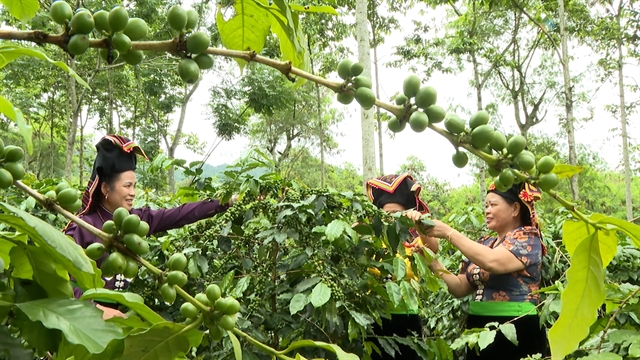
| Farmers in Điện Biên growing crops. VNA/VNS Photo |
Trần Như
ĐIỆN BIÊN — Developing concentrated raw material zones linked to deep processing, promoting green and circular agriculture, and strengthening value chain linkages has been identified as the strategic direction for Điện Biên to boost the competitiveness of its key agricultural products amid increasingly demanding market requirements.
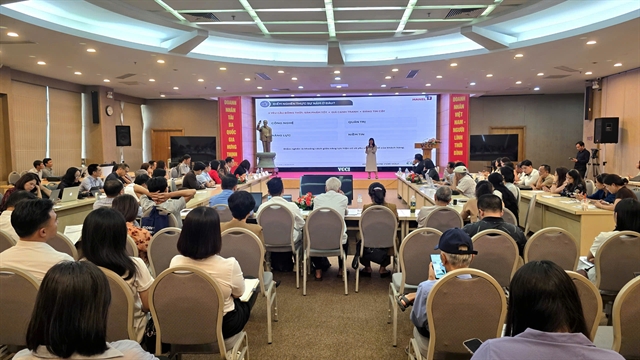
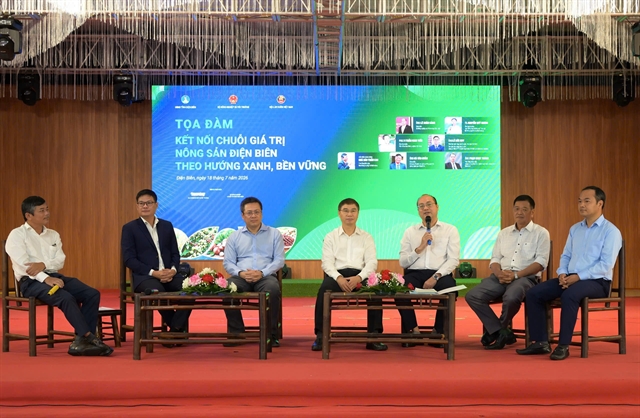
That was the central message shared by experts, scientists, businesses and administrators at the seminar Sustainable Agricultural Development Linked to Green Transition and Enhancement of Key Product Value Chains, jointly organised by the Provincial People's Committee, the Ministry of Agriculture and Environment and the Việt Nam Garden Association on July 18.
Delivering the opening remarks, Lò Văn Cương, Permanent Vice Chairman of the Provincial People's Committee, said that developing green and circular agriculture, reducing emissions and adapting to climate change was not merely a trend but had become an inevitable requirement in the context of integration.
According to Cương, international commitments on greenhouse gas emission reduction, together with increasingly stringent requirements from import markets on traceability, cultivation area codes and sustainable development, were creating both opportunities and challenges for the local agricultural sector.
With more than 954,000ha of natural land area, about 93 per cent of which is agricultural and forestry land, Điện Biên holds many advantages for developing commodity agriculture along green and organic lines. The province currently has more than 10,000ha of high-quality rice, 10,800ha of coffee, 12,400ha of macadamia and nearly 5,000ha of fruit trees. Brand-building efforts have also yielded considerable results, with two geographical indications and nine collective and certification trademarks registered for protection.
The province has signed memoranda of understanding with eight businesses and investors to research the development of raw material zones, concentrated livestock farms and agricultural processing facilities. However, according to provincial leaders, production scale remains fragmented, the rate of deep processing is low, value chain linkages are not yet sustainable, and the attraction of business investment into agriculture has not matched the province's potential.
|
| Scene of the seminar on July 18 in Điện Biên. VNS Photo Trần Như |
Arabica and circular economy as strategic directions
Lê Văn Đức of the Việt Nam Garden Association assessed that the north-west region enjoys many favourable conditions for developing green agriculture linked to the circular economy, with Arabica coffee being a crop of particular advantage.
According to Đức, the north-west region has a clearly defined dry season from December to February, which suits the growth requirements of Arabica coffee. Although the region's coffee area accounts for only about 5.6 per cent of the national total, it remains a key zone for this variety.
In Điện Biên alone, the coffee area has grown by more than 5,000ha in just seven months, demonstrating that the province has chosen the right strategic crop.
Đức also emphasised the role of the circular economy in making use of agricultural by-products, reducing emissions and increasing value. Many models combining the growing of biomass grass and vegetables with livestock farming, and using waste to cultivate earthworms that in turn serve production, have delivered clearly positive results.
In addition, digitalising production, applying QR codes for traceability, establishing cultivation area codes and developing OCOP products are regarded as important conditions for enabling mountain-region agricultural products to enter modern distribution systems and expand into export markets.
From a seed research perspective, Đinh Thị Tiếu Oanh, Deputy Director of the Western Highlands Institute of Agricultural and Forestry Science and Technology, said the north-west needed to transition to new coffee varieties with higher yields and quality. The varieties TN1, TN2, TN6, TN7, TN9 and THA1 all achieve yields of about three tonnes of green bean per hectare, show good resistance to coffee leaf rust, and have cup quality that surpasses the Catimor variety currently in widespread cultivation.
Oanh proposed the synchronised implementation of solutions covering varieties, water-saving irrigation, climate change adaptation and cultivation zone management in line with traceability requirements, to meet the standards of import markets.
Meanwhile, Phạm Anh Tuấn, former Director of the Institute of Agricultural Engineering and Post-Harvest Technology, argued that to enhance the value of agricultural products, Điện Biên needed to invest more substantially in post-harvest preservation and processing technology.
He proposed developing drying systems and silos for rice; focusing on specialty processing, roasting and controlled fermentation for coffee; and investing in cold storage, modified atmosphere packaging technology, quick freezing, cold drying and freeze-drying for fruit crops, with the aim of extending shelf life and increasing product value.
He noted that making use of processing by-products would help form a circular production chain, reduce emissions and increase added value.
Forming large-scale raw material zones
Lê Xuân Cảnh, Director of the Điện Biên Department of Agriculture and Environment, said the province was making a strong shift towards large-scale commodity production, focusing on four strategic crops: Arabica coffee, macadamia, pineapple and high-value fruit trees.
In 2026, the province aims to develop an additional 6,000ha of macadamia and 6,000ha of coffee; at the current rate of progress, the Arabica area could reach about 16,000ha by the end of the year. According to Cảnh, the province hopes to receive support in the areas of seed varieties, cultivation techniques, processing, market access and cultivation area codes.
Dr Phan Việt Hà, Deputy Director of the Western Highlands Institute of Agricultural and Forestry Science and Technology, assessed that Điện Biên holds considerable potential for developing high-quality Arabica in a context where climate change could significantly reduce Arabica-growing areas in many countries by 2050. However, he cautioned that area expansion must be based on suitable ecological conditions, particularly the length of the dry season to allow the trees to differentiate flower buds.
Lê Đức Huy, Chairman of the Members' Council of Simexco Đắk Lắk, said Điện Biên could fully become a specialty coffee region linked to tourism if raw material zones are digitalised from the outset and quality is strictly controlled from harvest through to processing.
On behalf of the business community, Hà Văn Quân, Director of Điện Biên High-Tech Agricultural Tourism Joint Stock Company (TH Group), said the enterprise was developing macadamia raw material zones, investing in processing plants and researching the development of carbon credits to create additional income for local people and contribute to green production.
In the fruit and vegetable sector, Phạm Ngọc Thành, Deputy General Director of Doveco, said Điện Biên still had ample room to develop raw material zones serving processing for export. The company was ready to form linkages for product offtake, supply seeds and transfer technical expertise for pineapple, passion fruit, sweet corn and legume vegetables.
Building brands to international standards
Phạm Ngọc Mậu, Deputy Head of the Department of International Co-operation at the Ministry of Agriculture and Environment, said exports were an effective avenue for raising the value of agricultural products, but success depends on products having sufficiently strong brands. Điện Biên needs to pay close attention to packaging, product identity and genuine research into the needs of international consumers, rather than focusing solely on what the province currently produces.
Dr Nguyễn Thị Bích Ngọc, Deputy Director of the Plant Protection Research Institute, argued that the foundation of a sustainable value chain is improving quality at the field level through the use of standard-compliant seed varieties, organic fertilisers, biological preparations and integrated crop health management.
Nguyễn Quý Dương, Deputy Director of the Department of Crop Production and Plant Protection, recommended that Điện Biên concentrate on developing four advantageous crop groups – Arabica coffee, macadamia, pineapple and medicinal plants – while expanding raw material zones in conjunction with market linkages, processing and brand-building. The department is also advising on amendments to Decree 38/2026/NĐ-CP in the direction of greater decentralisation in the issuance of cultivation area codes, to help localities expand exports.
Concluding the seminar, Cương affirmed that Điện Biên would continue to develop concentrated raw material zones linked to deep processing, promote value chain linkages, improve the investment environment and work alongside businesses to resolve difficulties, raise incomes for local people and progressively affirm the standing of Điện Biên's agricultural products in both domestic and international markets. — VNS
Society
 Society
 Society
.jpg) Society
Society
 Society
 Society
 Society
 Society
 Society
 Society
 Society
 Society
 Society
 Society
 Society