 Society

Drive to Great: BAIC FOTON Africa Partners Conference Set to Open
1.
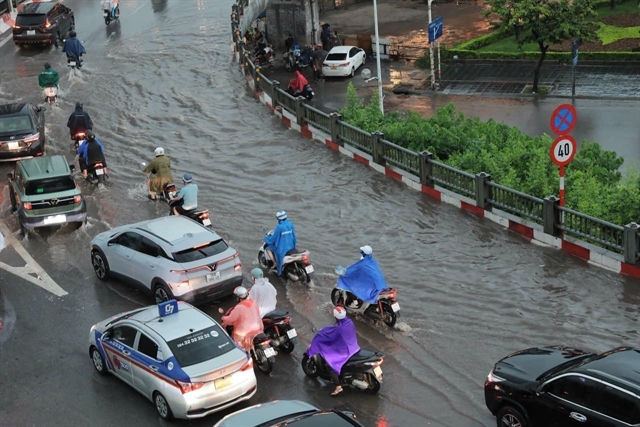 |
| Localized flooding occurs towards Vĩnh Tuy Bridge in the heavy rains in Hà Nội on July 9. VNA/VNS Photo |
HÀ NỘI — The mountainous and midland areas of northern Việt Nam face several days of heavy rain and a serious risk of flash floods and landslides, the National Centre for Hydro-Meteorological Forecasting has warned.
On July 18, the region is expected to see scattered showers and thunderstorms, with localised rainfall exceeding 50mm in some places.
From the night of July 18 to the night of July 19, conditions will worsen, with moderate to heavy rain and thunderstorms forecast across the mountains and midlands. Widespread rainfall of 50–100mm is expected, with localised very heavy rain exceeding 250mm in some areas.
On July 20, rain and thunderstorms will continue, with localised heavy rain of 20–40mm widespread and localised very heavy rain exceeding 80mm in some areas. Heavy rainfall is expected to ease gradually from the night of July 20.
Flash floods on small rivers and streams and landslides on hillsides pose a risk to many communes and wards across Lai Châu, Điện Biên, Sơn La and Lào Cai provinces. The natural disaster risk level for flash floods, landslides and ground subsidence caused by flooding or water flow is level one; for Lai Châu and Lào Cai, it is level two.
At sea, during the day and night of July 18, the northern Gulf of Tonkin and the sea area from Đắk Lắk to Lâm Đồng will have south-westerly winds of force five, at times force six, with gusts of force seven to eight and rough seas. Wave heights are expected to reach 1.5–3m.
The northern Gulf of Tonkin, the sea area from Lâm Đồng to Cà Mau, the sea area from Cà Mau to An Giang, the Gulf of Thailand and the eastern part of the northern East Sea will also see scattered showers and thunderstorms. During thunderstorms, there is a risk of waterspouts, strong gusts of force seven to eight and waves exceeding 2m.
On July 19, the sea area from Đắk Lắk to Lâm Đồng will continue to have strong south-westerly winds of force five, at times force six, with gusts of force seven to eight and rough seas. Wave heights of 1.5–3m are forecast; winds are expected to weaken during the night.
All vessels operating in these areas face a high risk from strong winds, large waves and waterspouts. The natural disaster risk level at sea is level two.
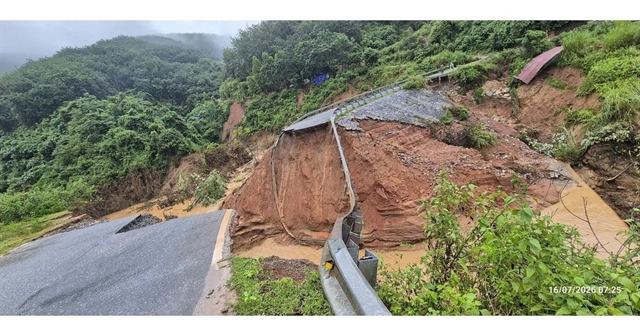 |
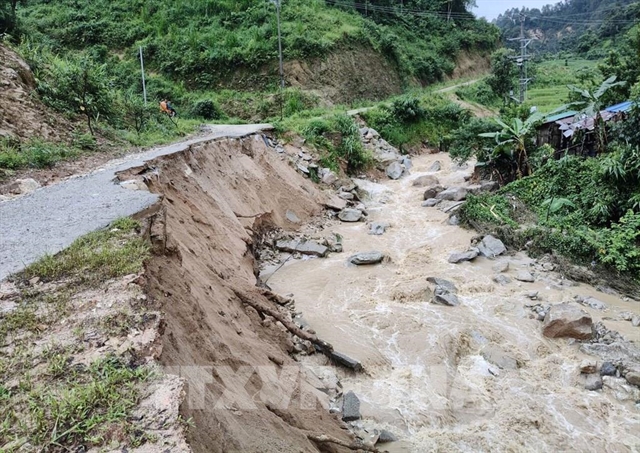
| Heavy rains caused damage to the roadbed of National Highway 12 through Lai Châu, temporarily disrupting traffic. Photo courtesy of Lai Châu Provincial Police |
Ministry orders preparation
The Ministry of Construction has issued a directive ordering transport and construction agencies across 15 northern and north-central provinces and cities to prepare for heavy rain, floods, flash floods, landslides, tornadoes, lightning and hail.
The directive covers directly managed departments, Việt Nam Railways Corporation, and the Departments of Construction in Điện Biên, Lai Châu, Sơn La, Lào Cai, Tuyên Quang, Cao Bằng, Thái Nguyên, Lạng Sơn, Phú Thọ, Hà Nội, Bắc Ninh, Quảng Ninh, Hải Phòng, Hưng Yên and Ninh Bình.
To protect lives and minimise damage to property, the ministry has called on heads of agencies and units to urgently direct, inspect and supervise disaster prevention and rescue operations, and to review and put in place plans to ensure the safety of transport and construction infrastructure when natural disasters occur.
The Department for Roads of Việt Nam (DRVN) has been required to direct its units to review traffic safety plans on national highways under its management, promptly address road sections hit by landslides or severed connections, and ensure unobstructed traffic – particularly on key national highways and main transport arteries. It must also safeguard personnel, construction equipment and project components currently under construction.
The DRVN must at the same time direct its Road Management Zones to co-ordinate with local Departments of Construction and other agencies to organise traffic duty, manage traffic flow, station personnel on watch, and install buoys, barriers and warning signs at sections with deep flooding, fords, severed roads and landslide-affected areas. People and vehicles are to be strictly prohibited from entering areas flagged as dangerous.
The Việt Nam Railway Authority and Việt Nam Railways Corporation are responsible for directing their units to carry out patrol and guard duties at vulnerable structures, including bridges, tunnels, weak road sections and areas prone to flooding, flash floods, falling rocks and land subsidence, as well as railway sections downstream of dykes, irrigation dams and reservoirs. They must also prepare vehicles, materials, equipment and personnel to address the aftermath of rain and floods and restore traffic as quickly as possible.
Plans must also be drawn up to halt trains, space out departures, arrange shuttle services and transfer passengers when flooding or landslides force trains to stop in affected sections.
The Việt Nam Maritime and Waterway Administration has been tasked with directing their waterway management and maintenance units to monitor weather forecasts and flood warnings, draw up safety plans, and retrieve and preserve buoys and navigation markers as needed. They must redeploy buoy and marker systems promptly once rain eases and floodwaters recede, and implement standing plans to protect key bridges on national inland waterways from floating debris.
The Civil Aviation Authority of Việt Nam and the Việt Nam Air Traffic Management Corporation are to step up inspections of airports, terminals, communications systems and flight operations to detect and address incidents promptly. They are also to direct airlines to monitor weather developments closely and make timely adjustments to flight schedules, routes and destination airports as required.
The Department of Economíc - Construction Investment Management under the Ministry of Construction has been directed to require project management boards, investors, construction contractors and other relevant units to ensure construction safety and landslide prevention during the rainy and flood season, put in place measures to respond to rain and floods, and prepare to address construction incidents promptly while keeping traffic moving on routes that are simultaneously under construction and in operation.
Departments of Construction in affected provinces and cities are to co-ordinate closely with local authorities, Road Management Zones, and road, railway and waterway management units to address incidents caused by rain and floods, manage traffic diversions on roads under their management, and help the railway sector arrange shuttle services and transfer passengers and goods when necessary. — VNS
Society
 Society
.jpg) Society
Society
 Society
 Society
 Society
 Society
 Society
 Society
 Society
 Society
 Society
 Society
 Society
 Society