.jpg) Society
Society

Việt Nam seeks to modernise state audit amid emerging challenges
1.
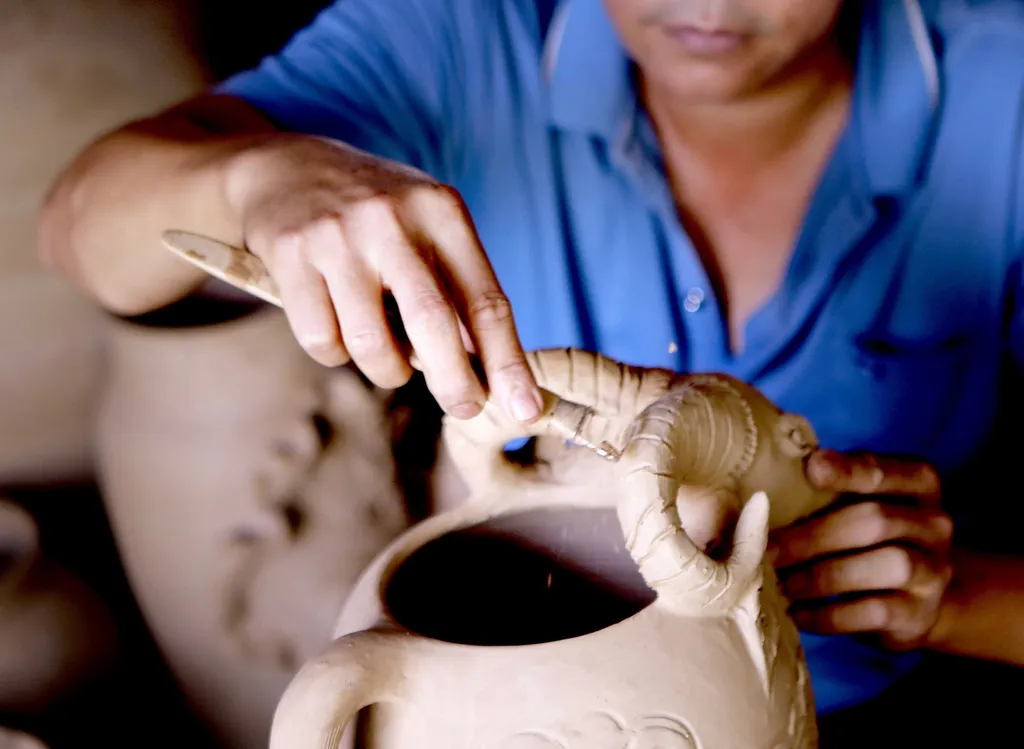 |
| Shaping Hương Canh pottery is a delicate process that demands skill and precision from the artisan. VNA/VNS Photos |
PHÚ THỌ — The doors of the gas kiln swung open on a sweltering July afternoon, releasing a wave of searing heat. After nearly 24 hours of firing, jars, vases and pots were carefully lifted out one by one. Artisan Nguyễn Hồng Quang examined each piece with practised care, inspecting its colour and finish to ensure the firing had been successful.
A short distance away, his younger sister Nguyễn Thị Hằng sat at the potter's wheel, her weathered hands moving effortlessly over the clay as she shaped another vessel.
Such scenes have become increasingly rare in Hương Canh. Once a pottery village where kilns burned day and night, only a handful of families still practise the centuries-old craft today.
When the kilns fell silent
More than three centuries ago, the people of Hương Canh began using the rich green clay found along the riverbanks to create distinctive stoneware. Water jars, storage urns, burial jars and roof tiles produced in the village became well known across northern Việt Nam for their durability, waterproof qualities and characteristic dark-brown finish.
There was a time when nearly every household depended on pottery for a living. The sounds of clay being kneaded and potters' wheels spinning echoed through the village from dawn until late at night, while carts laden with jars and urns left one after another for markets across the region.
As markets evolved, however, plastic, stainless steel and concrete gradually replaced traditional pottery in everyday life. Demand shrank, forcing many families to abandon their kilns and seek other livelihoods. Younger generations, meanwhile, became increasingly reluctant to pursue a physically demanding craft that offered relatively modest returns.
One by one, the kilns fell silent.
Today, only about four families remain committed to the craft in what was once one of the best-known centres of stoneware production in Việt Nam's northern midlands.
Shaped by a love of clay
Nguyễn Hồng Quang's family is among the few still devoted to Hương Canh pottery.
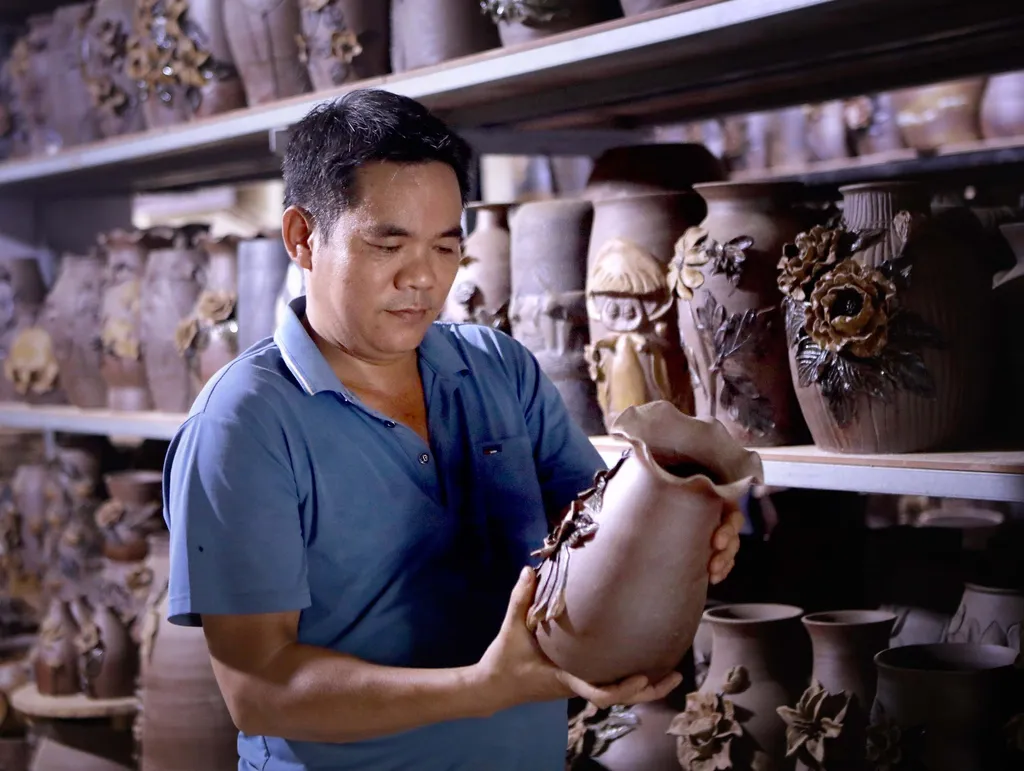 |
| Every Hương Canh pottery piece begins to take shape through the artisan's skilled hands. |
Born into a family of potters, Quang graduated from the University of Industrial Fine Arts and had opportunities to pursue other careers. Instead, he chose to return to his hometown and continue his family's centuries-old tradition.
His decision came at one of the most difficult periods in Hương Canh's history, when more and more artisans were abandoning their wheels and the village's kilns were going cold. Despite the challenges, Quang remained determined to preserve the craft while exploring new ways to adapt it to changing market demands.
Building on traditional products such as jars and urns, he has expanded into decorative ceramics, relief sculptures and ornamental vessels, while remaining true to the defining characteristics of Hương Canh pottery, including its distinctive clay, traditional forming techniques and unglazed firing process.
In recent years, Quang's family has also opened a hands-on pottery studio, giving schoolchildren, families and visitors the opportunity to experience the traditional craft firsthand.
There, Nguyễn Thị Hằng and their mother, artisan Giang Thị Nhạn, personally guide visitors through kneading clay, working the potter's wheel and shaping their own creations. At the end of each session, participants are able to take home the pottery they have made themselves.
"The experience studio does not generate much income, but we continue to operate it," Quang said.
"If young people never have the chance to touch the clay or experience this craft, it will be very difficult to talk about preserving it."
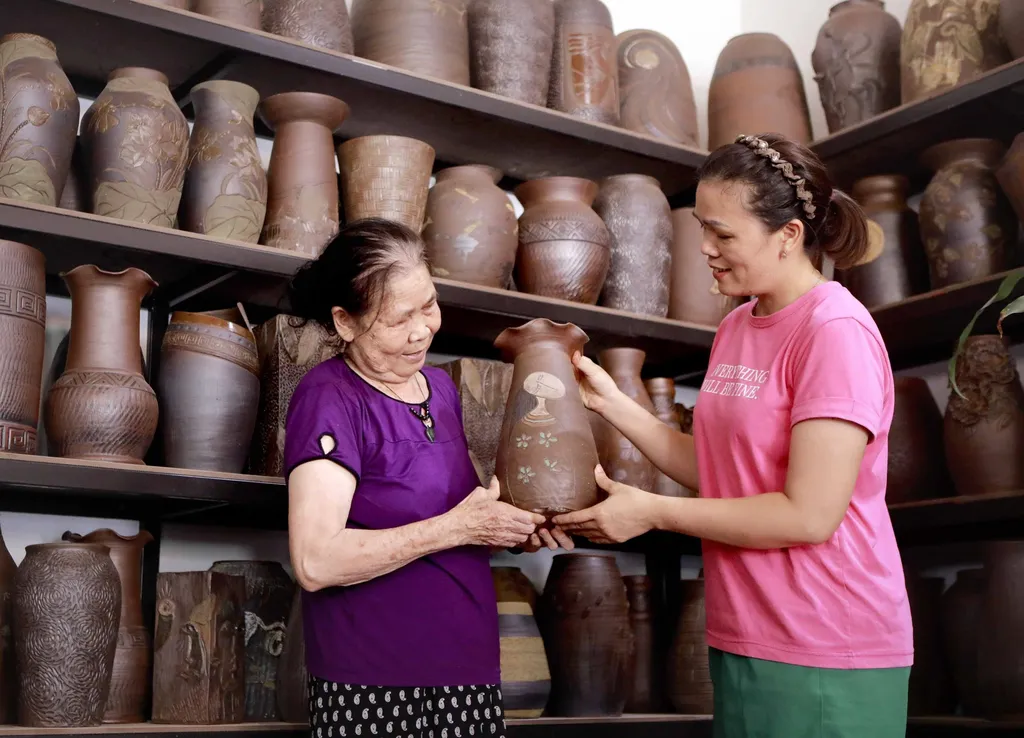 |
| Nguyễn Thị Hằng and her mother, artisan Giang Thị Nhạn, exchange ideas and share their experience as they put the finishing touches to Hương Canh pottery. |
Keeping the fire alive
Products from Quang Đức Pottery Workshop are gaining wider recognition, with many works exhibited at art shows and finding their way into private collections in Việt Nam and overseas.
Yet the issue weighing most heavily on the artisans is succession.
Although Quang's children have all received training in the arts, none has chosen to continue the family craft. Hằng's family faces a similar situation.
"Pottery is hard work and the income is not particularly high, so it is understandable that our children choose different paths," Quang said.
"I simply hope that more young people will take up the craft in the future. If we want the pottery village to survive, those who practise the craft must be able to earn a decent living from it."
In Quang's view, encouraging younger generations to return to Hương Canh pottery will require stronger support policies, including better access to production space, raw materials, vocational training, trade promotion and closer links between the craft village and tourism.
Sharing the same concern, Hằng hopes the village will one day have a permanent space to display, promote and sell its pottery, helping attract more visitors and expand the market.
As evening falls, the heat around the workshop gradually begins to fade.
In the pottery studio, several children carefully cradle the first pieces they have ever made before leaving with their parents.
For Quang's family, moments like these matter far more than the modest income the studio generates. They offer more people, especially children, the chance to touch the clay, understand the craft and appreciate the value of preserving it. As long as there are people willing to do that, the fire of Hương Canh pottery will continue to burn.
The village may no longer echo with the sounds of hundreds of spinning wheels and glowing kilns as it once did. Yet as long as artisans such as Nguyễn Hồng Quang, Nguyễn Thị Hằng and the few remaining potters continue their quiet dedication, the spirit of Hương Canh pottery will endure. Their hope is not only to preserve a tradition spanning more than three centuries, but also to create sustainable livelihoods so that future generations will choose to stay with the clay and carry the story of Hương Canh into the future. VNS
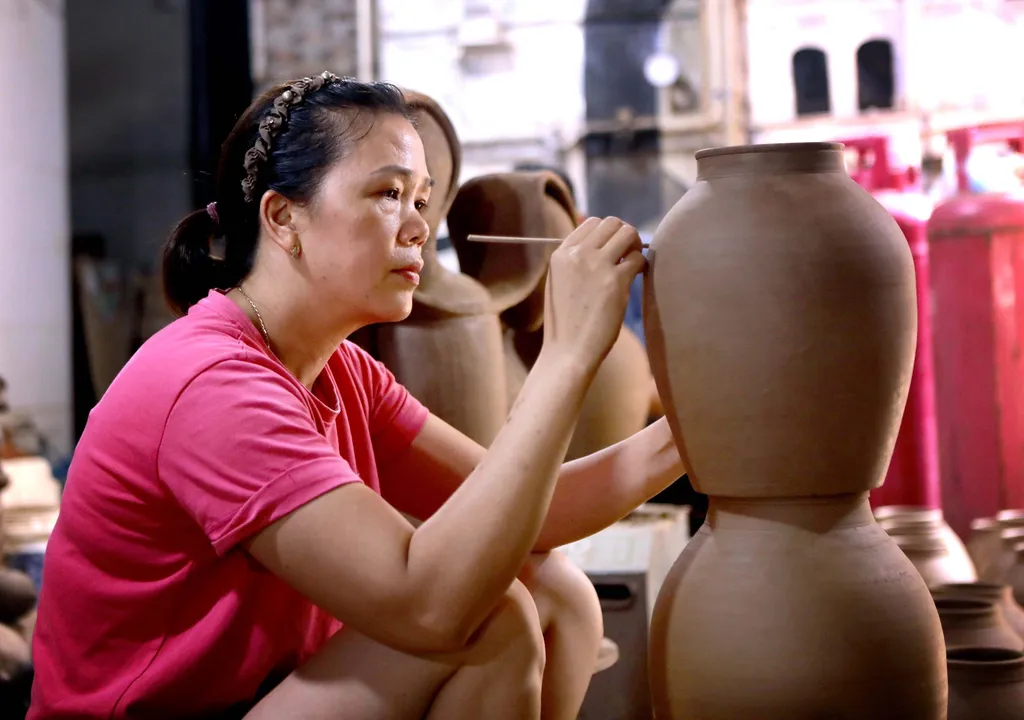 |
| Nguyễn Thị Hằng is among the few artisans who remain dedicated to the Hương Canh pottery tradition. |
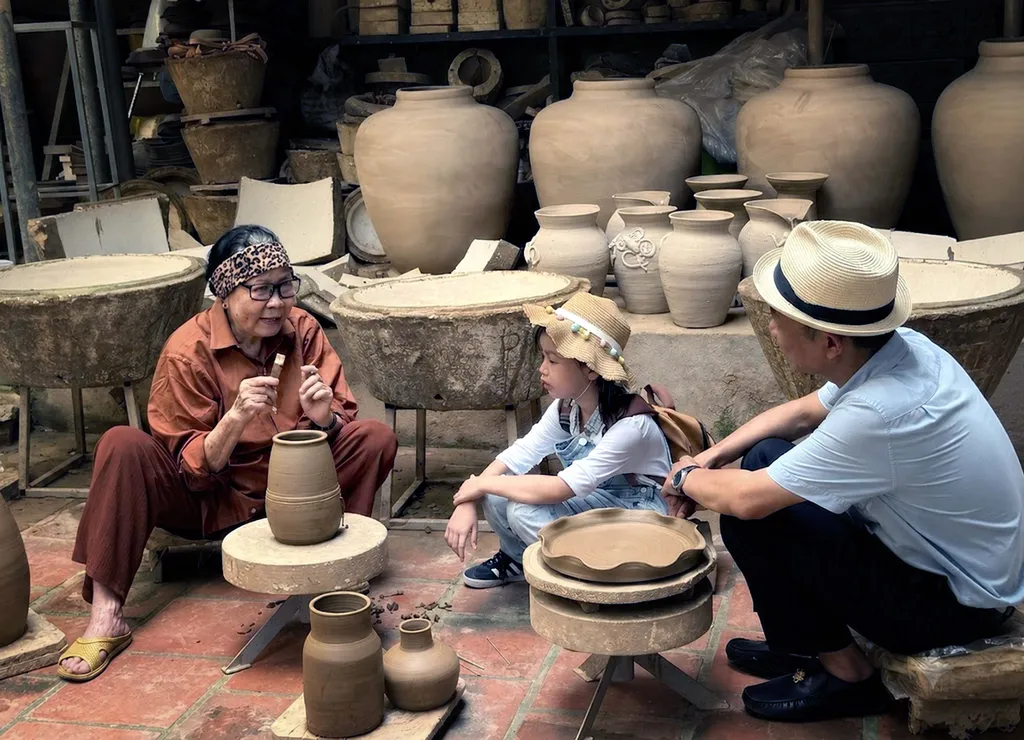 |
| Artisan Giang Thị Nhạn guides children and visitors as they try their hand at shaping pottery. |
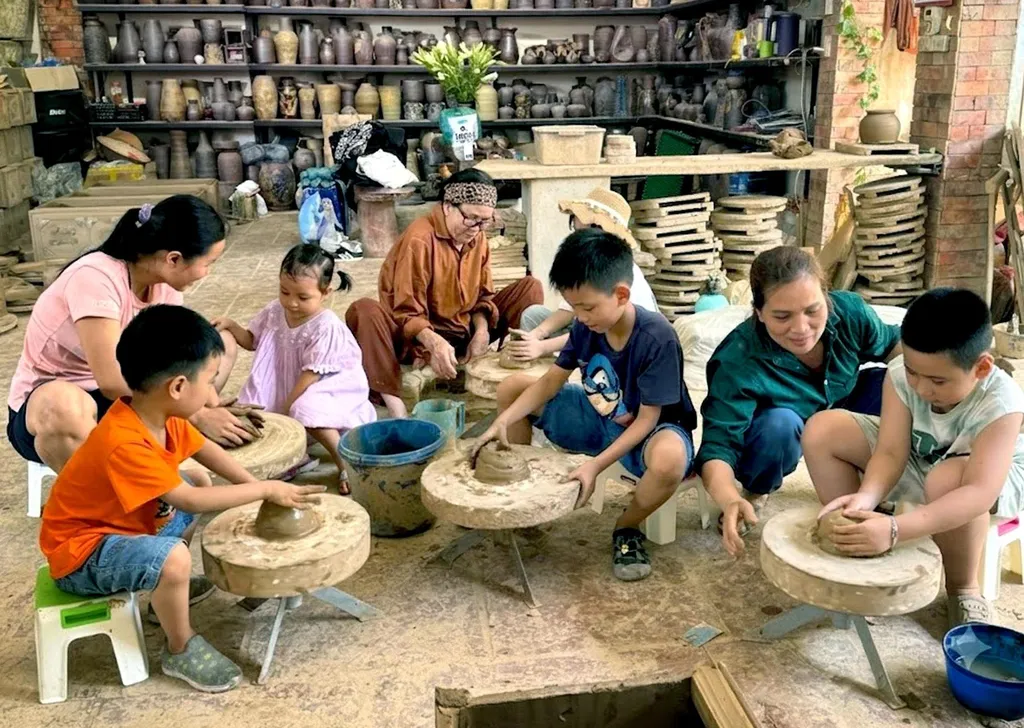 |
| Children explore the art of pottery-making at the Hương Canh pottery experience centre. |
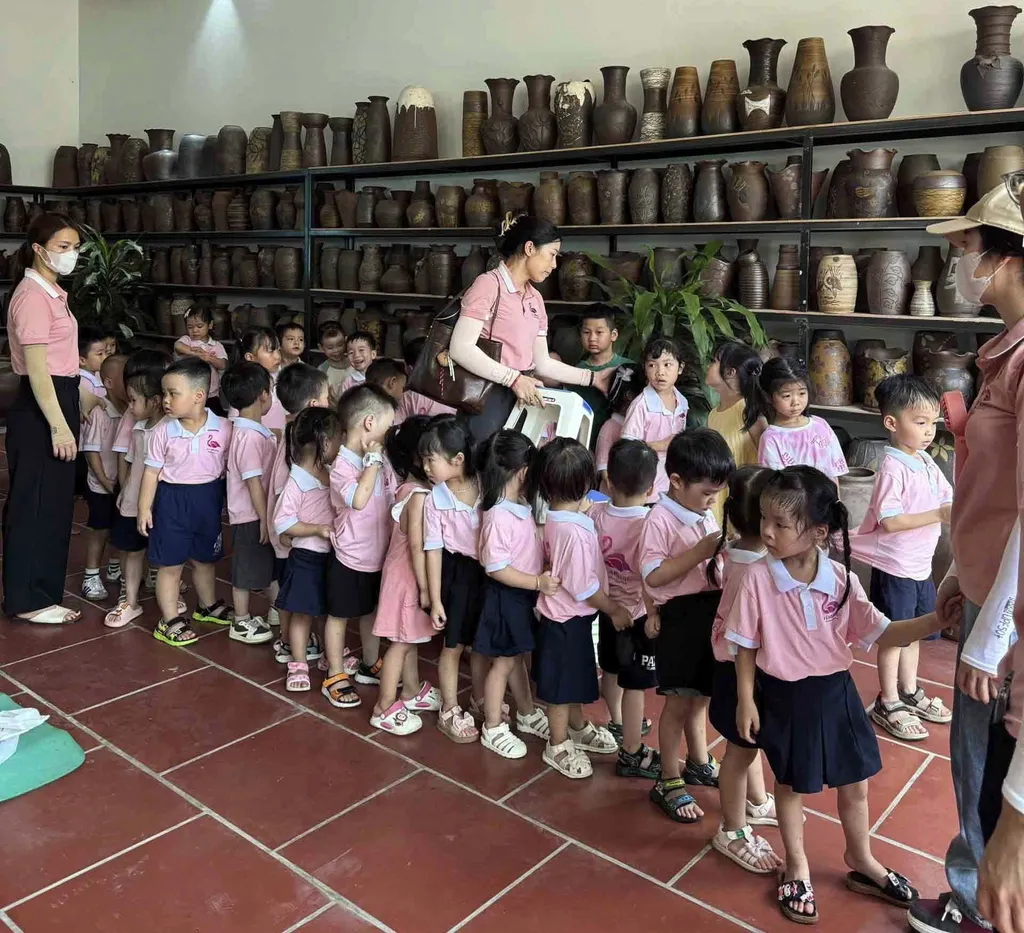 |
| Children explore the art of pottery-making at the Hương Canh pottery experience centre. |
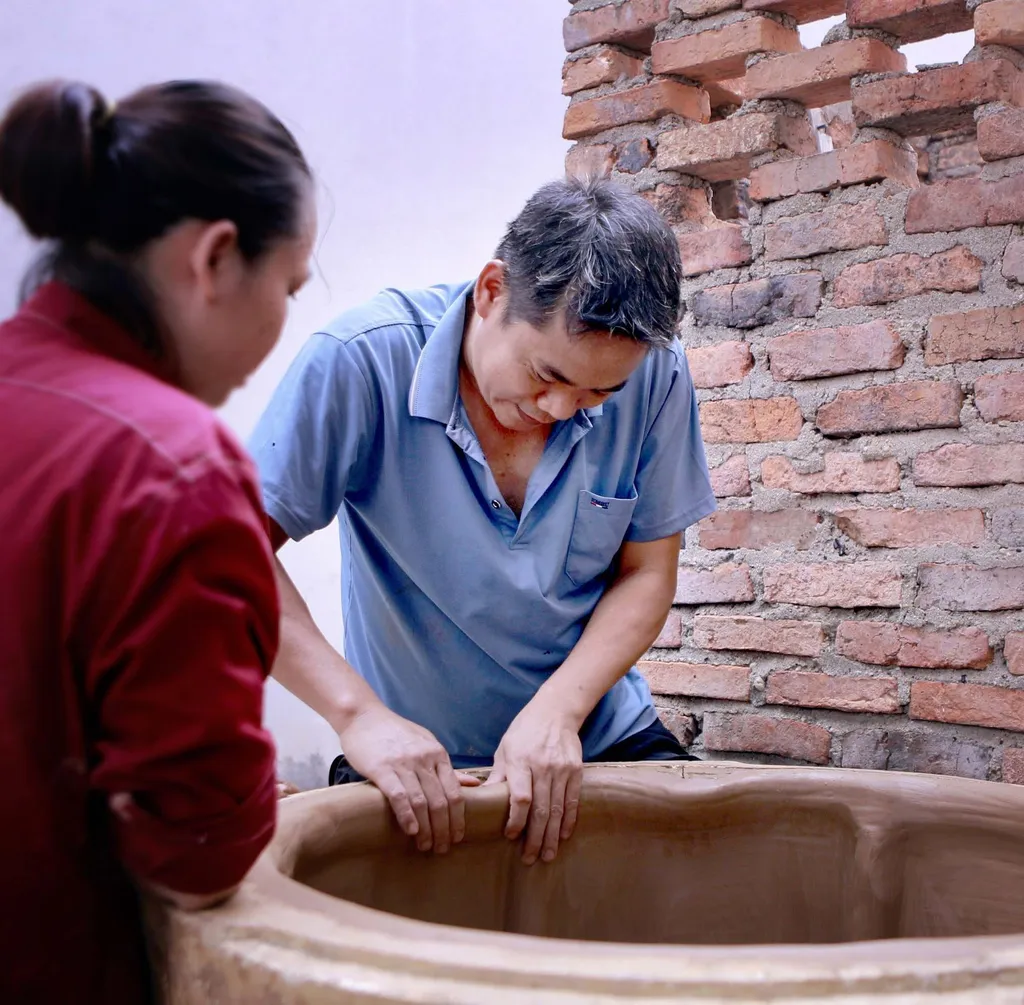 |
| Artisan Nguyễn Hồng Quang guides a technician in finishing the rims of large ceramic jars, a process that demands skill and experience. |
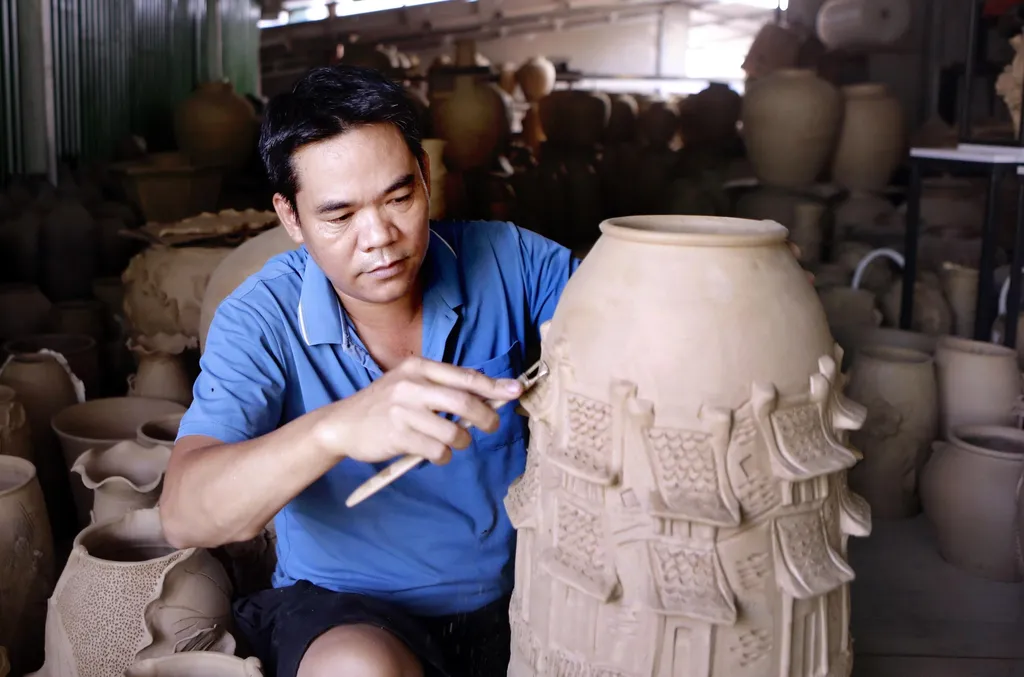 |
| Shaping Hương Canh pottery requires patience, precision and skilled craftsmanship. |
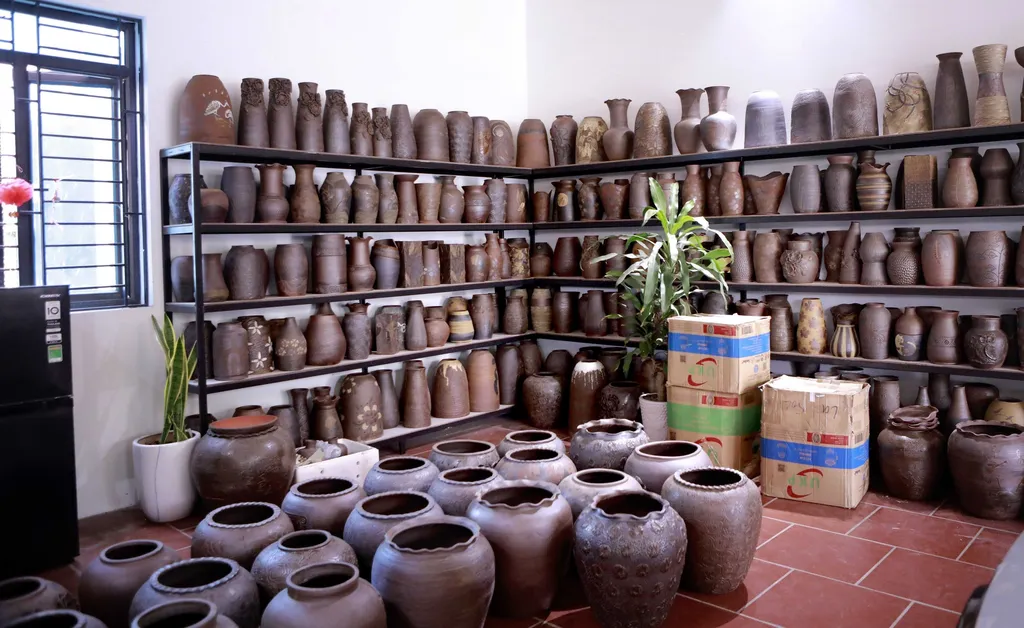 |
| Every piece of Hương Canh pottery reflects the creativity and experience of its maker. |
Society
 Society
 Society
 Society
 Society
 Society
 Society
 Society
 Society
 Society
 Society
 Society
 Society
 Society
 Society