.jpg) Society
Society
Việt Nam seeks to modernise state audit amid emerging challenges
1.
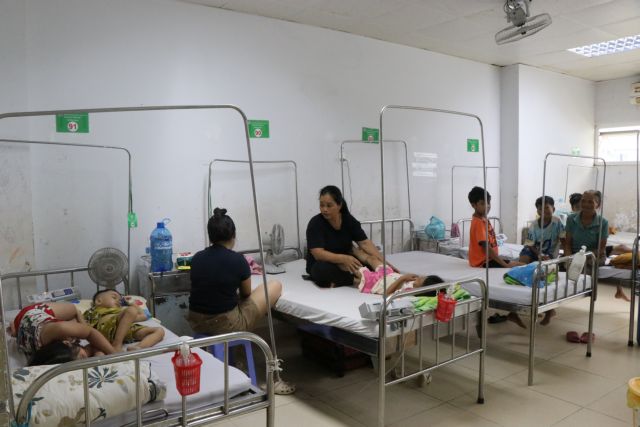 |
| Parents stay by their children's bedsides during thalassemia treatment at Tây Nguyên Regional General Hospital. — VNA/VNS Photo |
ĐẮK LẮK — The needle goes in, and Nguyễn Văn Nguyên barely reacts anymore.
At 13, he has done this so many times – a vein found, a line run, a bag of blood emptied slowly into his arm – that the fear he once felt has faded into routine.
"When I was little, I was terrified every time they had to find a vein. But after so many transfusions, I barely feel it anymore," he said.
Nguyên, who comes from the Central Highlands province of Lâm Đồng, has been coming to hospitals for more than 11 years, ever since he was diagnosed at the age of 10 months with thalassemia – a blood disorder that leaves the body unable to produce enough healthy haemoglobin.
He has few memories of school.
Illness cut his time in the classroom to just one year, but he can read and write, and he knows, with unusual clarity for a 13-year-old, exactly what keeps him alive: roughly every six weeks, he needs someone else's blood.
Before a transfusion, he says, he feels drained. Afterward, his strength returns.
"I'm grateful to all the people who donate blood because they help keep me alive," he said.
Years of crisis.
His path to Tây Nguyên Regional General Hospital, where he's now treated, has taken him through years of crisis.
In the early years after his diagnosis, his parents took him to HCM City for care, selling land and other family assets to pay for his care.
By the time he turned five, his spleen had swollen dangerously, and iron was accumulating in his organs faster than doctors could manage – the intervals between transfusions kept shrinking.
Surgeons removed his spleen, and the family eventually moved his care closer to home, to Đắk Lắk Province, where he now receives regular transfusions and treatment to remove excess iron from his blood.
His mother, Hà Thị Trâm, 52, still carries the memory of the despair she felt when she first learned of her son's diagnosis.
Doctors found the disease while treating her son for acute pneumonia at Children's Hospital 2 in HCM City, when he was still an infant.
By the age of two, he needed regular blood transfusions.
"Before the spleen surgery, his belly was so swollen he couldn't even walk; he could only sit," she said, her voice trembling.
She never dared send him to daycare, afraid another child might bump into his abdomen. At the worst point of his illness, he needed blood every 10 days.
"There were times our family nearly fell apart," she said.
"But I look at my child, and I find the strength to keep going. I hope medicine keeps advancing so a miracle may come."
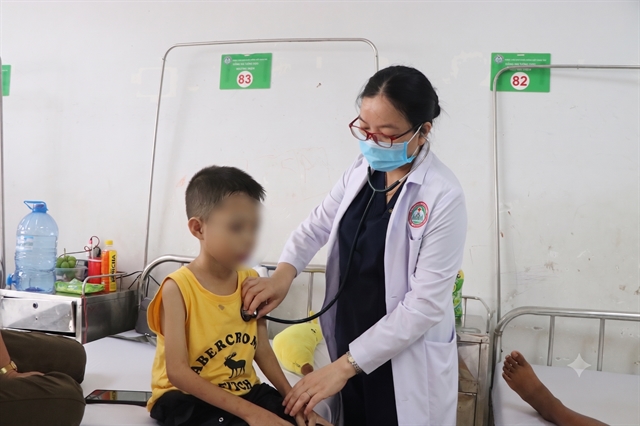 |
| A doctor examines a young thalassemia patient at the hospital. — VNA/VNS Photo |
Living on blood
Down the hall, Phạm Thị Hôn, from Đắk Lắk, is living a version of the same story, doubled.
Two of her three children – Phạm Hữu An Knul, 10, and Phạm Kiều Mai Knul, 7 – have thalassemia, and both need monthly hospital trips for transfusions and iron-removal treatment.
Every visit means missed work and money borrowed for food and transportation.
"Some days they're so anemic that they're exhausted, vomiting and slipping into a heavy sleep that's difficult to wake them from," Hôn said.
"It's only after the transfusion that they get better. I'm grateful to the doctors, and to the people who donate blood. They're giving my children another chance at life."
Stories like these repeat by the hundreds at the hospital's General Pediatrics Department, which currently treats roughly 2,000 thalassemia patients – about 400 of whom need transfusions on a strict, recurring schedule.
According to Đặng Việt Nam, a senior specialist physician at the hospital, thalassemia is caused by inherited or spontaneous gene mutations, typically emerges between six months and a year of age, and lasts a lifetime.
Depending on severity, patients need transfusions every four to six weeks; in the most severe cases, every two to three weeks.
Each session can require two to three units of blood, each containing about 350 millilitres, depending on the child's weight.
Keeping hope alive
Behind the scenes, keeping the blood flowing is a struggle in itself.
According to Trần Quang Huy, director of Đắk Lắk's Hematology and Blood Transfusion Centre, the Central Highlands has a comparatively high thalassemia rate, and guaranteeing a safe, timely blood supply is an especially critical task.
Blood has no substitute and can be stored for only 42 days, so supplies must be constantly replenished through voluntary donation drives.
Patients with rare blood types face even greater challenges in finding compatible donors.
To manage the strain, the hospital's blood bank and the province's volunteer-donation steering committee run donation drives in scheduled waves and maintain what they call a "living blood bank" – networks of volunteers who agree to donate on short notice whenever supplies run low.
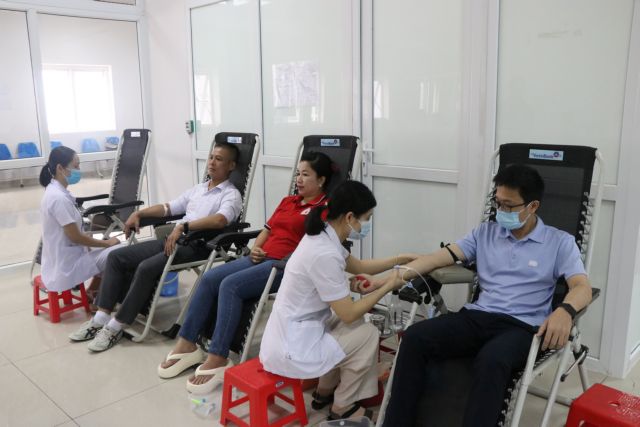 |
| Volunteers donate blood, helping replenish supplies used in emergency care and treatment for thalassemia patients. — VNA/VNS Photo |
Even that system comes under predictable pressure.
Blood donations consistently decline during the summer months and around major holidays such as the Lunar New Year.
Meanwhile, the Central Highlands still lacks a dedicated haematology centre for diagnosing and treating blood disorders, forcing patients and healthcare workers to navigate additional challenges in a fight that, for children like Nguyên, never truly ends.
For now, what keeps him going arrives every six weeks in a plastic bag – one stranger's donation at a time. — VNS
Society
 Society
 Society
 Society
 Society
 Society
 Society
 Society
 Society
 Society
 Society
 Society
 Society
 Society
 Society