 Society
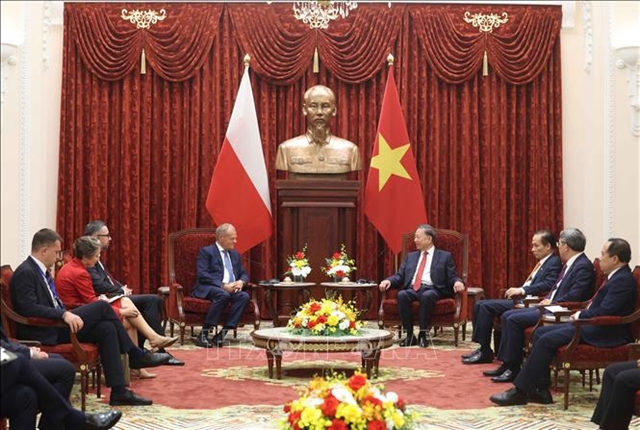
National Assembly President meets Polish Prime Minister
1.
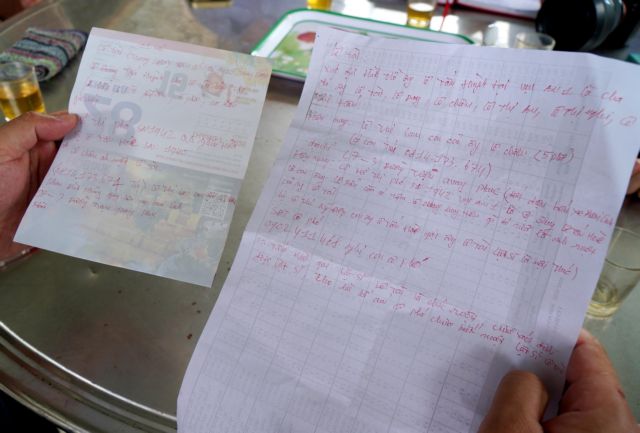 |
| Verified information matches to martyr Lê Tài. VNA/VNS Photo |
QUẢNG NGÃI - On the altar in a small house in Vạn An Village of central Quảng Ngãi Province, a picture of Lê Tấn Huỳnh has been kept by his family for many years.
No one expected that the photo would become an important clue, opening up the journey to find relatives of Lê Tài (alias Trung Liên) - the officer who went to the battlefield of South Việt Nam (known as B battlefield) 65 years ago.
From old file documents
At the National Archive Centre, more than 72,000 documents and thousands of belongings, including notebooks, personal papers, and even gold, that soldiers and officers left behind before going to B battlefield have been stored since 1995.
Most of the owners of these files were either killed or had their personal information lost, meaning that returning their keepsakes to their families remains an unfinished mission.
Among the tens of thousands of files is one named Lê Tài.
According to the archived documents, Tài was an official from the Department of Salt Management (the then Ministry of Light Industry) going to B battlefield on December 28, 1961.
The faded pages still contain all the information of Tài’s parents, siblings and original hometown in Nghĩa Thương Commune of former Tư Nghĩa, Quảng Ngãi Province.
These are the initial data for a journey of searching.
Right after receiving a proposal from the National Archive Centre, the Party Committee of Tư Nghĩa Commune determined that this was not only an administrative task but also a responsibility to show gratitude to those who have contributed to the revolution.
Then, the local authority mobilised all of the political system to identify information relating to Tài.
Local officials, village heads, veteran and senior members of the Lê family were invited to assist, tracing family connections one by one to piece together memories that had faded with the passage of time.
The journey was far from easy.
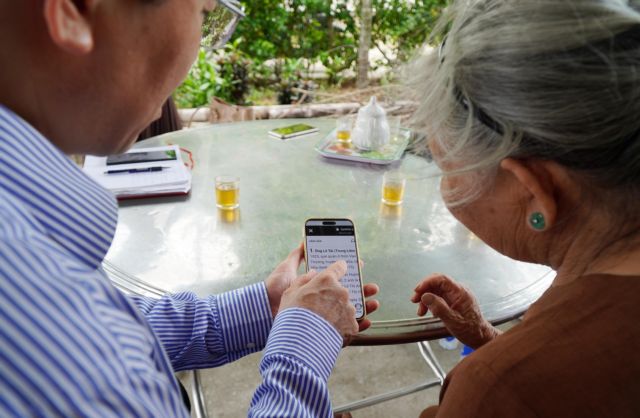 |
| Checking information with Lê Tài's relative. VNA/VNS Photo |
More than 60 years had passed. Tài's parents and siblings had all died, many key witnesses were no longer alive, and repeated changes to administrative boundaries had made the verification process even more difficult.
Nguyễn Đăng Vinh, secretary of Party Committee of Tư Nghĩa Commune, said: “We were determined that, even if there was only the slightest glimmer of hope, we had to do everything possible to find Tài's surviving relatives.”
“In addition to tracing family lineages, the commune also broadcast announcements through its public loudspeaker system and community Zalo groups. Acting on a small lead provided by a local resident, the search was gradually narrowed to Vạn An Hamlet,” Vinh said.
Reconnecting a family’s memories
The turning point came from officials of a grassroots administrative unit who understood every family, every lineage, and every relationship that cannot be fully reflected in documents.
After going to Hồ Thị Phó’s family to verify information, Nguyễn Minh Dũng, head of Vạn An 3 Hamlet, paid attention to a photograph on an altar.
The deceased in the photo is Lê Tấn Huỳnh - identical to Tài’s father's name in the archives.
From this clue, Dũng continued to compare information of Tài’s mother and siblings. All matched.
Hồ Thị Phó, 84, Tài’s grand daughter-in-law, brought her husband’s ID card for comparison.
The documents clearly stated that Hồ’s father was Lê Dung, matching the name of Tài’s elder brother recorded in the dossier. With that, the final pieces of the puzzle fell into place, bringing the long search for his surviving relatives to an emotional conclusion for both the family and those directly involved in the verification process.
Holding back tears, Phó said that what the family had long wished for was not the belongings their uncle had left behind before heading to the South, but simply to know the exact date of his death so that future generations could properly commemorate him.
For many years, the family had been able to offer only symbolic prayers during Lunar New Year and on War Invalids and Martyrs' Day because they had never known the day he had "returned."
Her heartfelt words left many deeply moved.
“After completing the verification of Tài’s identity, the local authorities worked with the Department of Home Affairs to collect and consolidate the relevant documents. These will serve as the basis for submitting a proposal to the competent authorities to consider recognising Tài as a martyr, provided he meets the legal criteria,” Vinh said.
Tài’s story is one of dozens of thousands of files and belongings that the National Archive Centre has been striving to give back to the owners or their families.
Each file that is successfully verified is not only a result of archiving work but also contributes to reconnecting memories of a family and returning a name to history as well as presenting gratitude for those who dedicated and sacrificed for the fatherland.
It is a reminder that despite time passing, no sacrifice is forgotten. VNS
Society
 Society
 Society
 Society
 Society
 Society
 Society
 Society
 Society
 Society
 Society
 Society
 Society
 Society
 Society