 Society
Vietnamese businesses face tax hurdles
1.
|
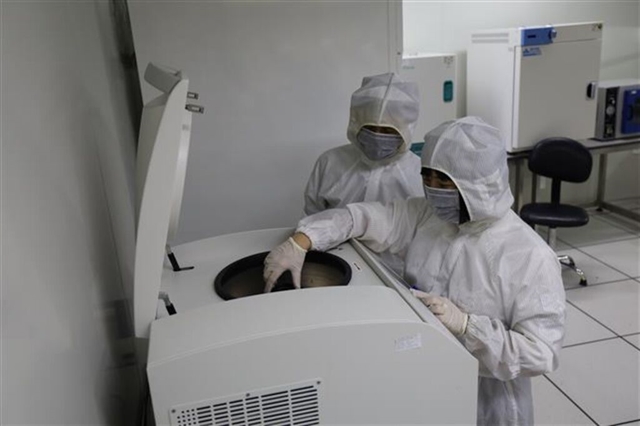
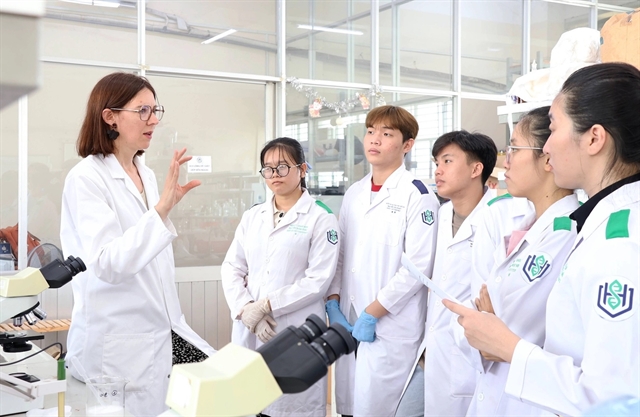
| Scientists conducted the experiment in the Institute of Materials Science (Vietnam Academy of Science and Technology). VNA/VNS Photo Thu Phương |
HÀ NỘI — As Việt Nam advances its science, technology, innovation and digital transformation agenda, basic research is being positioned as a strategic foundation for technological self-reliance and national competitiveness.
The Party and State have consistently underscored the importance of strengthening basic research as the bedrock of scientific and technological development. The Politburo's Resolution No. 57-NQ/TW, issued on December 22, 2024, on breakthroughs in science and technology, innovation and national digital transformation, identifies investment in basic research as a long-term commitment vital to sustainable development.
According to Prof. Dr. Trần Tuấn Anh, Vice President of the Việt Nam Academy of Science and Technology (VAST), Việt Nam cannot achieve its ambition of becoming a high-income developed country by relying solely on technology outsourcing. Instead, it must build the capacity to generate new knowledge and core technologies, with basic research serving as the starting point for technological mastery.
Việt Nam has recorded encouraging progress in recent years. The VAST published 2,437 scientific papers in 2025, including 1,699 in international journals. Research has expanded across a wide range of disciplines, from mathematics and theoretical sciences to semiconductors, energy, and applied physics through projects funded by the State, the National Foundation for Science and Technology Development (NAFOSTED) and the Vingroup Innovation Foundation (VINIF).
Việt Nam National University, Hà Nội (VNU Hà Nội), has also aligned its development strategy with Resolution 57. Between 2021 and 2025, its researchers produced more than 10,500 Web of Science- and Scopus-indexed publications and established 50 strong research groups, including 33 specialising in basic research.
In the first five months of 2026, VNU Hà Nội scientists published 1,088 WoS- and Scopus-indexed papers. Of these, 67 per cent appeared in Q1 and Q2 journals, more than 31 per cent involved international collaboration, and nearly 6,300 researchers participated in scientific projects.
Prof. Dr. Nguyễn Văn Minh, former rector of the Hà Nội National University of Education, said basic research not only generates new knowledge but also fosters innovation and improves the quality of economic growth. Việt Nam's growing research capacity has enhanced its regional and international standing while contributing to sustainable development, strategic autonomy, national defence and governance.
Removing bottlenecks
Despite these achievements, experts said basic research continues to face major obstacles. Investment remains modest, while Việt Nam has yet to build a strong national research ecosystem. Fragmented research activities, weak institutional linkages, a shortage of internationally recognised research groups, and limited world-class laboratories continue to hamper progress.
Experts stressed that basic research should no longer be viewed as a purely academic pursuit but as an integral part of strategic technology development, providing the knowledge base for future innovation and applied research.
Prof. Dr. Trần Đại Lâm, Director of the VAST's Institute of Materials Science, said researchers should align their work with national priorities and business needs while promoting interdisciplinary cooperation to build stronger scientific communities.
VAST President Prof. Dr. Trần Hồng Thái called for long-term national science and technology programmes backed by stable funding and evaluation based on substantive milestones rather than annual budget cycles. He also proposed shifting from a supply-driven to a demand-driven research model, under which the State and businesses identify priority challenges before commissioning research teams.
At a recent meeting of the Standing Board of the Central Steering Committee for Science, Technology, Innovation and Digital Transformation, Party General Secretary and State President Tô Lâm stressed the need to remove institutional bottlenecks, improve the legal framework for basic research and adopt a longer-term vision, describing investment in knowledge creation as laying the foundation for Việt Nam's development in the decades ahead. — VNA/VNS
Society
 Society
 Society
 Society
 Society
.jpg) Society
Society
 Society
 Society
 Society
 Society
 Society
 Society
 Society
 Society
 Society