 Society

VR experience brings history to life for Hà Nội students
1.
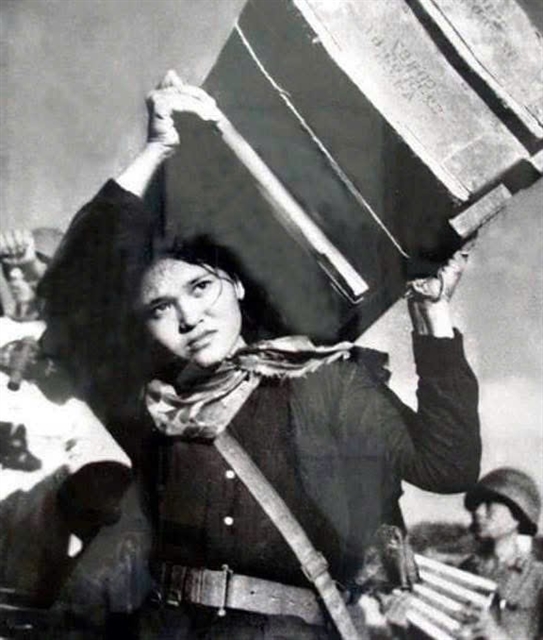 |
| Militiawoman Ngô Thị Tuyển, 19, carries two ammunition boxes weighing a combined 98kg to resupply troops defending Hàm Rồng Bridge during the resistance war against the US. VNA/VNS Photo |
THANH HÓA — Ngô Thị Tuyển, the militiawoman known for carrying 98kg of ammunition through a hail of bombs and gunfire during Việt Nam's resistance war against the US when she was just a teenager, is being remembered following her death on July 4 at the age of 81.
Nearly six decades have passed, yet Tuyển's story remains one of the defining legends of the war.
Her feat led to her becoming the first woman in northern Việt Nam to receive the nation's highest military honour, and came to embody the resilience, courage and patriotism of the people of Thanh Hóa and generations of Vietnamese.
That legacy has prompted an outpouring of tributes to one of the country's most celebrated wartime heroines.
Born in 1946 in Nam Ngạn Village, now part of Hạc Thành Ward in Thanh Hóa Province, Tuyển grew up in a community that would become one of the fiercest battlegrounds in northern Việt Nam.
In early 1965, as US warplanes repeatedly bombed Hàm Rồng Bridge, the strategic crossing over the Mã River became one of the most heavily targeted sites in the north. The bridge was a vital transport link carrying troops and supplies from the north to battlefields in the south.
Tuyển joined the Nam Ngạn militia and took part directly in defending the bridge.
During the historic battle on April 4, 1965, anti-aircraft units urgently needed more ammunition. At just 19 years old and weighing only about 44kg herself, Tuyển asked her comrades to place two connected 37mm ammunition boxes, together weighing approximately 98kg, onto her shoulders.
She then ran through a barrage of bombs and shells to deliver the ammunition to the front line.
The image of the slight young woman carrying a load more than twice her own body weight under relentless bombardment quickly became an enduring symbol of the extraordinary courage and determination displayed by the people of Hàm Rồng throughout the war.
After two days of fierce fighting on April 3 and 4, 1965, the armed forces and people of Hàm Rồng–Nam Ngạn shot down 47 US aircraft while successfully defending Hàm Rồng Bridge, marking one of the most celebrated victories of northern Việt Nam's air defence forces.
In recognition of her exceptional bravery, Tuyển was awarded the title of Hero of the People's Armed Forces on January 1, 1967, when she was just 21 years old. She became the first woman in northern Việt Nam to receive the top military honour.
Throughout her revolutionary career, she was also awarded two Third-Class Military Exploit Orders and the Hồ Chí Minh Badge. She also had the honour of meeting President Hồ Chí Minh on three separate occasions.
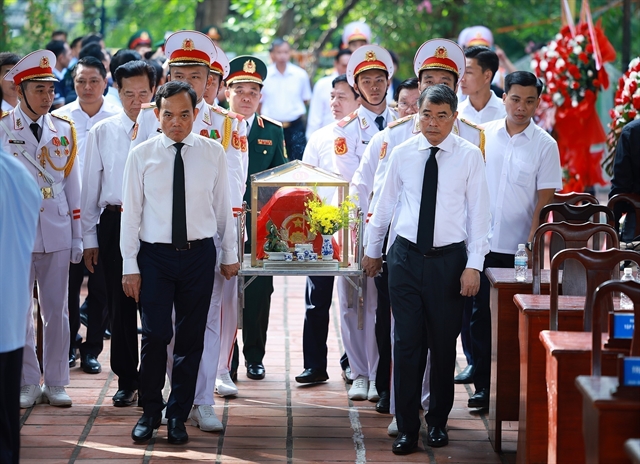
Tuyển passed away on the morning of July 4 at the age of 81. On July 5, family members, local authorities, veterans and residents gathered to pay their final respects before she was laid to rest at Chợ Nhàng Cemetery in Thanh Hóa Province.
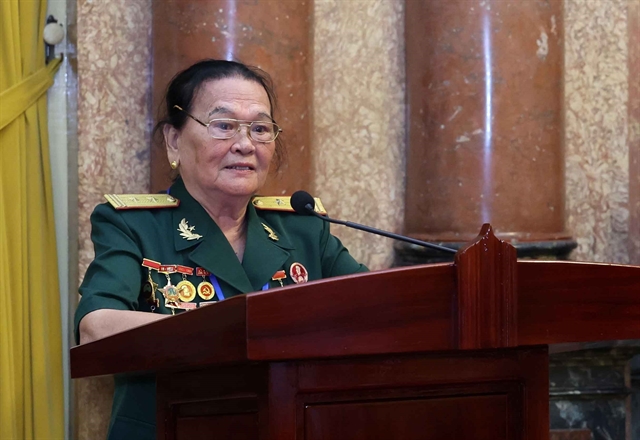 |
| Hero of the People's Armed Forces Ngô Thị Tuyển speaks at a ceremony marking the 77th anniversary of War Invalids and Martyrs' Day (July 27, 1947–July 27, 2024). VNA/VNS Photo Nhan Sáng |
Despite becoming famous for her remarkable feat, Tuyển herself often expressed amazement at what she had accomplished.
"I still don't know how someone as small as me managed to carry those two ammunition boxes weighing 98 kilogrammes," she once told reporters.
"The effort left me with a spinal injury. Even now, whenever the weather changes, the pain returns," she said.
Her legendary strength was even put to the test in front of foreign journalists.
In 1967, during a meeting between Thanh Hóa provincial leaders, military officials and foreign correspondents at the provincial guest house in Thanh Hóa Town, many foreign reporters questioned whether the widely circulated story could possibly be true.
To settle the doubts, provincial authorities prepared about 90kg of sweet potatoes to represent the two ammunition boxes.
Tuyển hoisted the load onto her shoulders and walked around the courtyard several times while journalists filmed the demonstration. Witnessing the feat first-hand, they acknowledged that the stories about her extraordinary strength were no exaggeration.
A Soviet journalist embraced her and presented her with a fountain pen as a token of admiration. Years later, American author Karen Turner recounted Tuyển's feat in her book ‘Even the Women Must Fight’, which explores the experiences of Vietnamese women during the war.
Hoàng Xuân Cành, a former militia member and deputy commander of the Nam Ngạn self-defence militia unit, recalled that among nearly 100 members of the force, Tuyển stood out despite her small stature.
She was responsible for maintaining security in Nam Ngạn Village and supporting logistics, including transporting food, supplies and ammunition to front line troops.
According to Cành, she was renowned for her exceptional physical strength, tireless work ethic and willingness to volunteer for the most demanding assignments.
Remembering the sight of his comrade carrying the two ammunition boxes to resupply soldiers near the riverside, Cành said it remained one of the defining memories of his life – a lasting symbol of patriotism and indomitable will.
Ngô Thị Tuyển fulfilled her mission as an outstanding daughter of Thanh Hóa and of the Vietnamese nation.
The image of the diminutive militiawoman striding fearlessly through a rain of bombs with the two ammunition boxes across her shoulders will live on in the nation's collective memory. It stands not only as an astonishing display of physical strength, but above all as a triumph of patriotism, courage and selfless devotion to the country. — VNS
Society
 Society
 Society
 Society
 Society
 Society
 Society
 Society
 Society
 Society
 Society
 Society
 Society
 Society
 Society