 Society
Vietnamese scientist wins ASEAN-US Science Prize for Women
1.
|
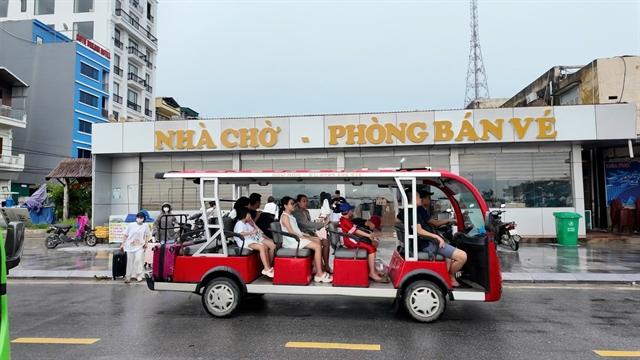
| Tourists take electric cars to ferry terminal to board vessel back to the mainland. — VNA/VNS Photo |
QUẢNG NINH — More than 1,700 tourists stranded in the Cô Tô Special Zone have returned safely to the mainland after typhoon Maysak subsided and maritime weather conditions stabilised.
Transport operations began at 4pm on Sunday, coordinated by local authorities and passenger transport providers.
The decision to resume service followed a rigorous safety assessment of the maritime route, with passenger security remaining the top priority.
Phùng Văn Thảo, a tourist from Hà Nội, said that arriving on holiday as the typhoon made landfall in Cô Tô had caused his family concern. But, as local Cô Tô officials, hotels and restaurants provided accommodation and meals, Thảo’s family felt reassured.
Once the typhoon passed, the group of tourists were able to return safely and promptly to the mainland, leaving them with many memorable experiences from the trip.
Sharing the same relief at returning to the mainland, Lê Ngọc Muộn, a visitor from Hòa Bình, Phú Thọ Province, said the owner of the Đông Á Hotel on the island provided enthusiastic support and even organised a pig roast to treat the hotel’s guests.
After the typhoon subsided, tourists were informed that passenger services had resumed and were soon able to travel back to the mainland. Muộn said his family were very pleased and grateful to those on Cô Tô Special Zone.
To prepare for typhoon Maysak, the Cô Tô Special Zone had suspended passenger sea transport and implemented comprehensive measures to ensure the safety of tourists staying on the island.
The swift arrangement of ferries to return visitors once conditions permitted demonstrates the local authorities’ and transport operators’ proactive and flexible response to post‑typhoon recovery.
The action helped safeguard people and foster confidence among residents and tourists. Management and safety measures for visitors were strictly enforced.
Before the typhoon made landfall, more than 2,800 tourists were staying on the island, including 14 international visitors (seven French, four German, one British, one Japanese and one Czech), all of whom remained safe.
Nguyễn Danh Hà, chairman of the Cô Tô People’s Committee, instructed all levels and agencies within the region not to be negligent or complacent.
The chairman ordered the safeguarding of vessels and infrastructure, required border guard stations to remain on duty for disaster prevention and search‑and‑rescue operations, and called for readiness of personnel and equipment to respond to potential incidents.
Construction units responsible for port works and transport infrastructure were instructed to protect machinery and materials and to prevent landslides or safety incidents.
Accommodation providers and relevant authorities were to attend properly to guests and ensure absolute safety for those staying on the island. They were also to inspect and assist in securing any dwellings with weak structures.
Thanks to proactive preparedness and measures to safeguard lives and property, the damage caused by typhoon Maysak in the Cô Tô Special Zone was negligible. — VNS
Society
 Society
 Society
 Society
 Society
 Society
 Society
 Society
 Society
 Society
 Society
 Society
 Society
 Society
 Society