 Society

Viên dives again to popularise swimming passion
1.
|
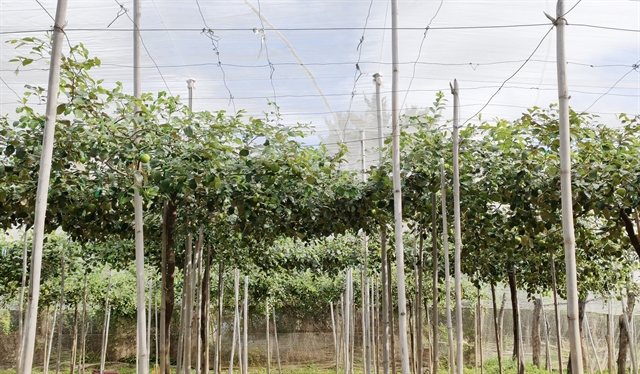
| Jujubes are planted in a net-house in Ninh Phước Commune, Khánh Hòa Province, helping safeguard crops from pests. — VNA/VNS Photo Nguyễn Thành |
KHÁNH HÒA — Khánh Hòa Province is accelerating digital transformation and the adoption of high technology in agriculture, aiming to raise productivity, improve product quality and build a greener, more competitive farming sector.
The move follows the Politburo's Resolution No. 57, issued in December 2024, on breakthroughs in science, technology, innovation and national digital transformation.
Provincial authorities see digital technology as a key driver of agricultural restructuring, helping farmers produce more efficiently while reducing environmental impacts.
Following the recent administrative merger of Ninh Thuận Province into Khánh Hòa in July 2025, the expanded Khánh Hòa Province now covers more than 8,555 square kilometres and has a population of over 2.2 million.
Its diverse climate and farming conditions provide favourable opportunities for developing high-value agriculture.
Farmers in the province are increasingly using greenhouses, net houses, drip irrigation systems and sensors that automatically regulate temperature and humidity.
These technologies, combined with Vietnamese and global good agricultural practices (VietGAP and GlobalGAP) production standards, have significantly improved yields and product quality while reducing water consumption, pesticide use and environmental pollution.
|
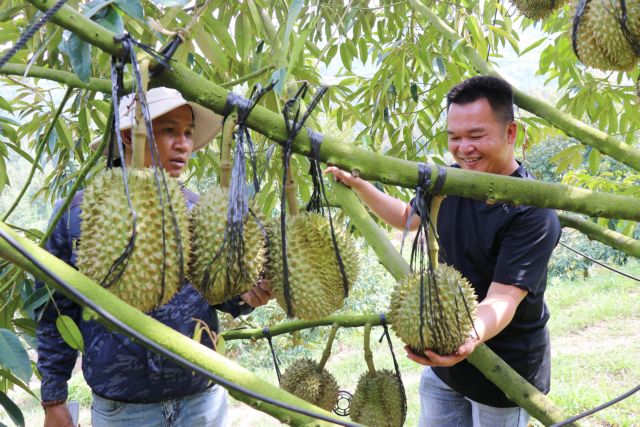
| Sakura Farm in Đông Khánh Sơn Commune applies advanced agricultural technologies to grow durian, including an automated water-saving irrigation system and equipment to monitor, analyse and assess soil health. — VNA/VNS Photo Nguyễn Thành |
Jujube is one of the fruit crops that has benefited from high-tech farming methods to prevent pests and diseases. The trees produce fruit throughout the year.
Under traditional farming methods, growers often lose nearly half of their harvest to pests, especially oriental fruit flies that damage the fruit.
Tống Minh Hoàng, from Ninh Phước Commune, said his family invested nearly VNĐ20 million (US$760) to install a netting system covering its entire jujube orchard of more than 1,000 square metres.
The farm's jujube products, grown under VietGAP standards, have been recognised under the country’s “One Commune–One Product” (OCOP) programme with a three-star rating.
Hồ Tấn Cường, director of the Bắc Cam Ranh Jujube Growing Co-operative, said jujube farmers had shifted from traditional cultivation to VietGAP production, adopting net houses, insect-proof orchard covers, biological pest control and digital production records to improve traceability.
"As a result, yields and fruit quality have increased by around 15–20 per cent compared with conventional cultivation," he said.
A well-managed 1ha VietGAP jujube orchard equipped with net houses can generate annual revenue of more than VNĐ500 million ($18,980), with profits of around VNĐ250 million ($9,490) after production costs.
Khánh Hòa, which is the country’s largest jujube producing province, has more than 1,000ha of jujube, producing about 40,000 tonnes of fruit each year.
The province plans to expand VietGAP and organic production, diversify processed jujube products and combine farming with agri-tourism to create additional income for local communities.
|
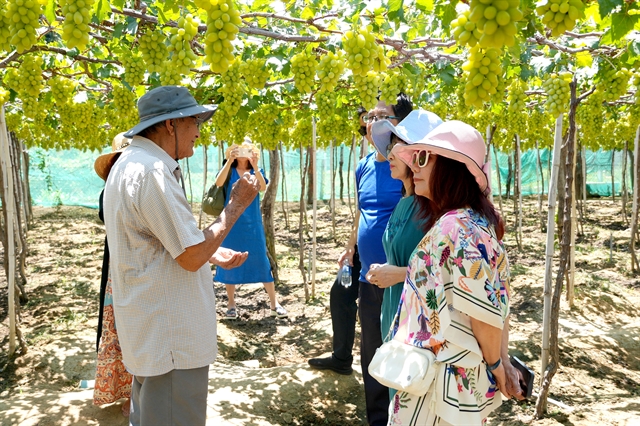
| Nguyễn Văn Mọi, owner of Ba Mọi Grape Farm in Ninh Phước Commune introduces the farm's grape-growing and grape cultivation process to visitors. — VNA/VNS Photo Nguyễn Thành |
The province is tightening the management of planting area codes and packing facilities to meet increasingly demanding export requirements.
The province's People's Committee has instructed departments and local authorities to speed up the issuance and management of planting area and packing facility codes, while clearing pending applications to ensure uninterrupted production and exports.
It has 170 planting area codes covering more than 3,542ha, including 65 approved for export.
The province also has two mango and durian packing facilities authorised to export to Europe and China.
The province is also improving land-use efficiency.
Between 2026 and 2030, more than 2,200ha of low-performing farmland will be converted to higher-value crops better suited to local soil conditions, climate resilience and market demand.
Hoàng Thị Trang, deputy head of the province Agricultural Extension Centre’s Agricultural Extension Division, said: "Agricultural extension is not only about transferring technology. It also connects policymakers, scientists and farmers, helping shift the focus from agricultural production to agricultural economic development."
|
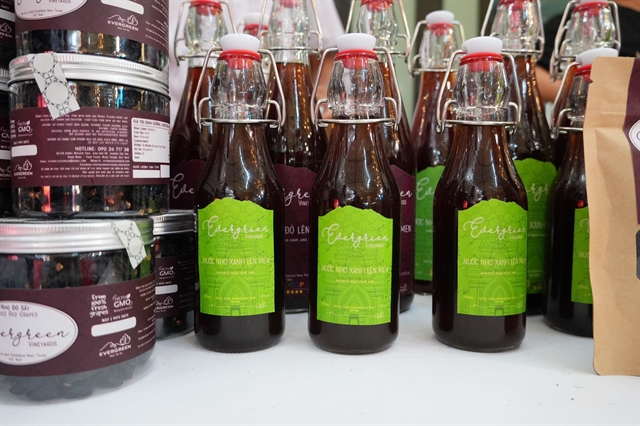
| Processed grape products at Evergreen Ninh Thuận Grape Co-operative in Ninh Chử Ward. Home to Việt Nam's largest grape-growing area, with more than 1,000ha of vineyards, Khánh Hòa Province is expanding high-tech cultivation and grape processing to increase product value. — VNA/VNS Photo Nguyễn Thành |
Under its Agricultural Extension Programme for 2026–30, the province will promote digital transformation, expand high-tech production, strengthen value-chain linkages and encourage sustainable farming.
The long-term goal is to develop a modern agricultural economy centred on large-scale commodity production, higher food safety standards and stronger export competitiveness.
A key priority is the development of concentrated farming areas that integrate advanced technologies.
The province is expanding green farming models in the livestock and fisheries sectors, encouraging the use of high-density polyethylene (HDPE) cages in marine aquaculture and equipping offshore fishing vessels with modern navigation systems to improve productivity and safety.
It is developing digital platforms to support product promotion, market connections and traceability, while helping farmers access information and new technologies more easily.
Trịnh Minh Hoàng, vice chairman of the provincial People's Committee, said high-tech agriculture would generate both economic and environmental benefits.
"The efficient use of water and the wider adoption of safe and organic production standards are becoming major trends," he said.
He added that the province would continue to attract investment, strengthen links between businesses and co-operatives, develop concentrated farming areas connected with processing industries and expand agri-tourism. — VNS
Society
 Society
 Society
 Society
 Society
 Society
 Society
 Society
 Society
 Society
 Society
 Society
 Society
 Society
 Society