 Society
HCM City urged to expand social housing to improve affordability
1.
|
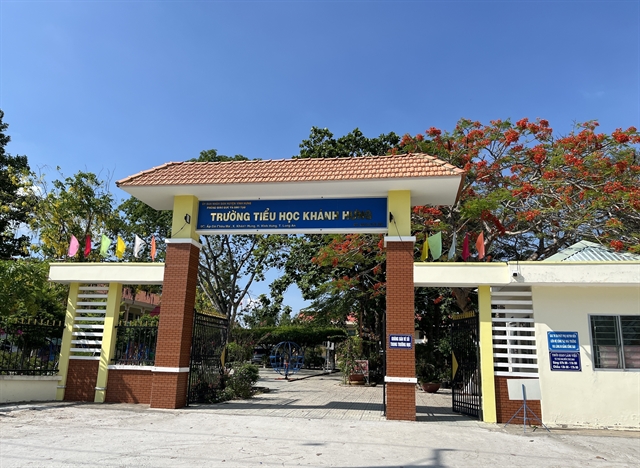
| Khánh Hưng Primary School in Tây Ninh Province's border commune of Khánh Hưng has been upgraded with modern facilities. — VNA/VNS Photo Đức Hạnh |
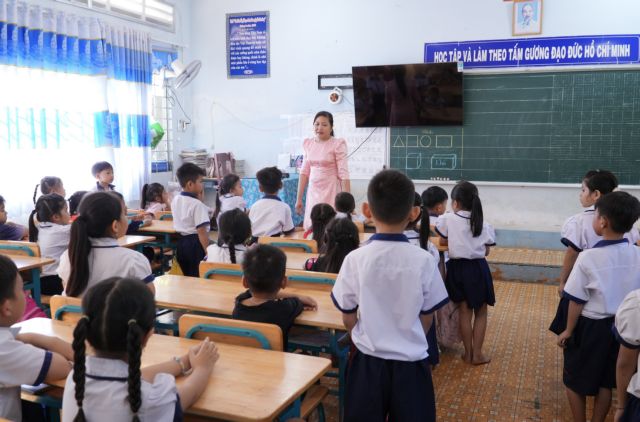
TÂY NINH — Tây Ninh Province is stepping up investment in schools, boarding facilities, and digital learning in communes along the Cambodia border, helping improve education quality and expand educational opportunities for local students.
The southern province has many border communes, where children often face difficulties getting to school. Many travel long distances every day, affecting attendances and learning outcomes.
Investment in boarding schools is therefore expected to provide stable accommodation and improve access to education in these areas.
In the border commune of Khánh Hưng, education quality is improving thanks to coordinated investment.
In the 2025–26 academic year, Khánh Hưng Primary School has 22 classes with 638 students. The school recently built a new multi-purpose hall for educational, cultural, artistic, and sporting activities.
Its two-session school day, combined with semi-boarding arrangements, ensures all pupils can have lunch and rest at school.
Besides, the school’s use of information technology in teaching has expanded, helping improve overall education quality.
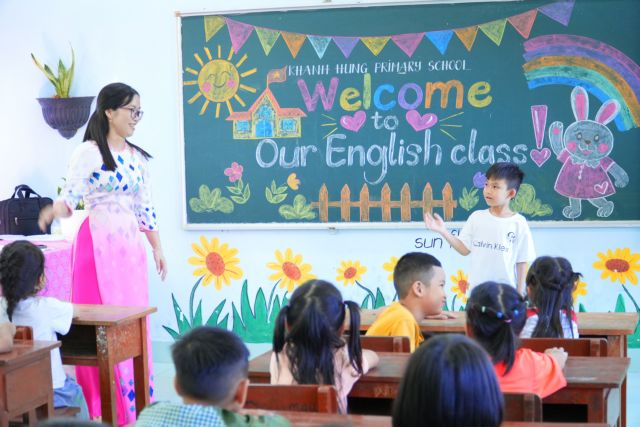
Nguyễn Thị Anh Triều, an English teacher at the school for more than a decade, has adopted new teaching methods, applied information technology, and taken part in professional development activities.
|
| Pupils learn English at Khánh Hưng Primary School in Khánh Hưng Commune. — VNA/VNS Photo Đức Hạnh |
Authorities in the commune are developing a combined primary and lower secondary school with boarding facilities that will open in the 2027-28 academic year.
According to Phạm Minh Phụng, head of the commune's culture and social affairs division, the new school is expected to house about 30 per cent of its students, with priority given to those living far from school or in difficult circumstances. The rest will study under semi-boarding arrangements.
At Thái Trị Primary and Secondary School in Khánh Hưng Commune, supporting disadvantaged students remains a key priority.
The school has 520 students, many from poor and near-poor households.
Trương Đình Lộc, its principal, said around 40 students face hardships, with many walking between two and four kilometres each day to attend school.
But with help from benefactors and local authorities, they have got bicycles, scholarships, and health insurance cover, he said.
These efforts have helped improve education quality, reduce dropout rates, and earn the school recognition for achieving the national standard last year, he added.
|
| Schools in border areas of Tây Ninh Province are benefiting from improved facilities and better learning conditions. — VNA/VNS Photo Đức Hạnh |
Tây Ninh is accelerating plans to build boarding schools in border communes.
Nguyễn Quang Thái, director of its Department of Education and Training, said the province has completed a review of land sites for boarding schools in all 19 border communes.
It is prioritising the use of public lands and existing facilities to reduce costs while ensuring schools can support boarding, semi-boarding, and two-session teaching models.
It aims to complete the task before the 2027–28 school year.
Alongside infrastructure investment, it also considers improving teachers’ qualifications as a decisive factor in raising education quality.
It regularly organises training and professional development programmes to help teachers update their knowledge, skills and teaching methods.
The education sector is also accelerating digital transformation.
Schools are being encouraged to expand the use of digital learning resources, electronic lessons, management software, and assessment methods focused on developing students' skills. — VNS
Society
 Society
 Society
 Society
 Society
 Society
 Society
 Society
 Society
 Society
 Society
 Society
 Society
 Society
 Society