 Society
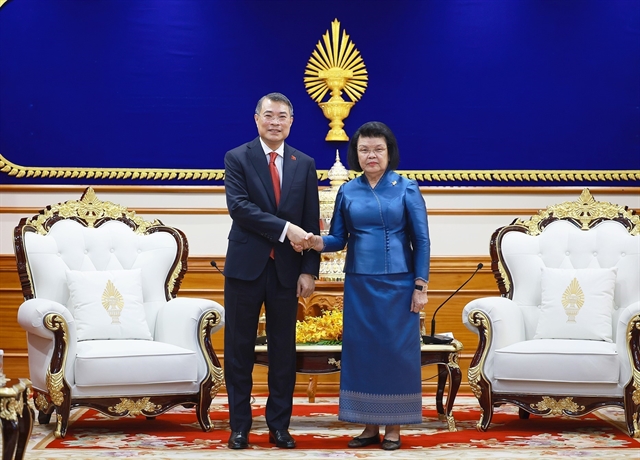
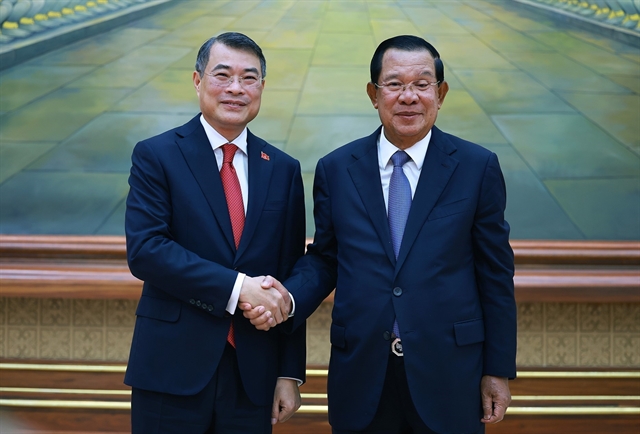
Vietnamese Prime Minister meets Cambodian National Assembly President
1.
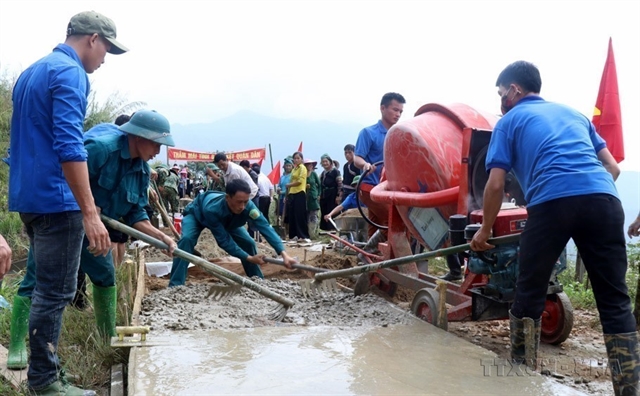 |
| The Military Command of Lào Cai Province, in coordination with the Việt Nam Fatherland Front Committee, builds a rural road leading to Khâm Dưới Village in Nậm Chày Commune, Lạng Sơn Province. VNA/VNS Photo Quốc Khánh |
HÀ NỘI — Many effective grassroots initiatives and practical experiences are shared at the ongoing 11th National Congress of the Việt Nam Fatherland Front (VFF) for the 2026–2031 term, reaffirming the organisation’s central political role in fostering patriotism, strengthening the great national solidarity bloc and helping to build a prosperous, strong, civilised and happy nation.
Held in Hà Nội from May 11 to 13, the congress marked a historic milestone and opened a new chapter for the VFF following the restructuring of socio-political organisations and mass associations assigned by the Party and State to operate under it. The event ushered in a new operational framework with greater status, responsibility and development ambitions.
At the congress, many localities shared successful approaches in mobilising communities to eliminate outdated customs and backward practices, promote civilised lifestyles and drive tangible changes in public awareness and behaviour.
Eliminating outdated customs
In implementing Resolution 15-NQ/TU dated December 22, 2023 on the elimination of outdated customs and practices, the Việt Nam Fatherland Front Committee of Lai Châu Province has coordinated with local authorities and member organisations to carry out extensive awareness campaigns tailored to ethnic communities in remote, mountainous and border areas.
To date, the province has identified 50 outdated customs and practices to be incorporated into community conventions for phased elimination.
Many harmful practices have either disappeared or sharply declined. Notably, child marriage cases fell significantly, with only 163 recorded couples by the end of 2025, down nearly 67 per cent.
Mass campaigns have also been widely implemented through effective community-based models, such as ‘Villages Free of Child Marriage and Consanguineous Marriage’, ‘Self-governing Clans Eliminating Harmful Customs’, ‘Civilised Weddings and Funerals’, ‘No Home Births’ and ‘No Children Giving Birth to Children’.
These initiatives have not only helped change behaviour, but also fostered healthier social environments. Longstanding practices among ethnic groups have gradually been abolished, including the custom among some Mông and Mảng communities of not placing the deceased in coffins, as well as traditional wood cremation practices among Dao and Thái groups.
Particular emphasis has been placed on mobilising village elders, reputable community figures and religious dignitaries, whose influence has played a critical role in persuading residents to adopt new practices.
To further improve effectiveness, the committee called on ministries and agencies to continue refining mechanisms and policies, especially regulations and sanctions related to the implementation of civilised lifestyles and support policies.
The province also proposed increasing resources for public awareness campaigns and model-building programmes and training local officials engaged in mass mobilisation. It recommended expanding successful models nationwide, particularly in ethnic areas, remote and border regions, while ensuring approaches remain aligned with the cultural identities of each ethnic group.
Marine economy and protecting sovereignty
Following administrative restructuring, the newly expanded Khánh Hòa Province now possesses one of the country’s greatest marine development advantages, with nearly 500km of coastline and around 200 islands of various sizes.
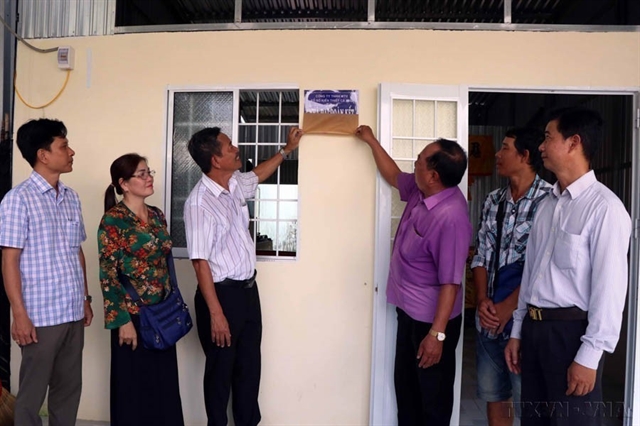 |
| The Việt Nam Fatherland Front Committee of Cà Mau Province, in coordination with Cà Mau Lottery One Member Co, Ltd, presents a house to Nguyễn Hồng Khanh in Thới Bình Town in Cà Mau Province. VNA/VNS Photo Kim Há |
Fatherland Front committees at all levels have coordinated with local authorities and relevant agencies to encourage coastal communities to participate in the co-management of marine conservation projects. These efforts have contributed to protecting coral reefs and marine ecosystems, restoring aquatic resources, safeguarding endangered marine species and stabilising aquaculture zones.
The initiatives have also generated new employment opportunities and improved local incomes through tourism and experiential activities, while raising awareness among fishermen about marine environmental protection and sustainable fisheries. Destructive fishing practices have largely been eliminated.
Numerous support programmes for fishermen and scholarships for students from disadvantaged fishing families have also helped encourage offshore fishing activities, contributing to economic development while reinforcing national sovereignty over seas and islands.
Women’s unions at various levels, for example, distributed 546 gift packages worth VNĐ280 million (US$10,700) and provided 10 livelihood-support facilities and 30 scholarships. They also delivered 200 gifts and 2,500 Mid-Autumn Festival presents to children of officers and soldiers stationed on the Trường Sa (Spratly) archipelago. The total value of their contributions exceeded VNĐ520 million.
Youth organisations in Khánh Hòa organised 465 awareness activities for more than 100,000 young people, implemented 89 projects and initiatives supporting maritime and island communities worth over VNĐ2.2 billion ($83,570), and provided thousands of gifts to military families and newly enlisted youths.
In the next few years, the VFF committees in the province identified maritime economic communication and sovereignty protection as a top priority, alongside regular activities aimed at fostering unity in awareness, ideology and action among officials, Party members and the public.
Strengthening solidarity and social welfare
Following the merger of the three provinces of Bến Tre, Trà Vinh and Vĩnh Long, the new Vĩnh Long Province is now home to 24 ethnic groups with a combined population of 441,822 people, accounting for 11.05 per cent of the provincial population. The Khmer ethnic group represents the largest minority community, with 415,970 people.
Public outreach and mobilisation efforts have undergone significant transformation, becoming more diverse and effective in strengthening national solidarity. VFF committees at all levels coordinated with authorities to organise more than 24,400 awareness sessions attended by over 667,000 people. Mass mobilisation work in ethnic community areas has also deepened, giving rise to many exemplary models.
The provincial VFF Committee mobilised resources to support the construction of 14,738 houses worth nearly VNĐ900 billion ($34.1 million), alongside almost 48,000 days of labour contributed by local residents. Social welfare programmes worth an estimated VNĐ800 billion ($30.3 million) were also implemented, while 2,363 public dialogue sessions were organised.
The VFF and its member organisations built 25 clean-water facilities, 18 rural bridges and 12 kindergarten classrooms in Khmer hamlets. They also organised free medical check-ups and medicine distribution for more than 25,000 people, awarded over 5,000 scholarships to ethnic students and supported literacy campaigns for nearly 1,200 elderly Khmer residents.
In cooperation with the Việt Nam Bank for Social Policies, the VFF facilitated the disbursement of more than VNĐ80 billion ($3.03 million) in preferential loans, helping 3,200 ethnic households expand production and escape poverty sustainably.
Meanwhile, a programme to eliminate temporary and dilapidated housing achieved all targets, with nearly 14,740 homes newly built or repaired.
More than VNĐ120 billion ($4.5 million) was raised through the ‘For the Poor’ Fund. Over the past five years, Fatherland Front committees at all levels supported the construction and repair of 2,150 houses for poor ethnic households.
Religious organisations also contributed over VNĐ50 billion ($1.8 million) to social welfare activities. To date, 98 out of 105 communes across the province have met new-style rural development standards.
Looking ahead, the Vĩnh Long Fatherland Front Committee plans to step up the use of information technology and social media to better connect with ethnic communities, particularly young people and residents in remote areas.
The province also aims to link national solidarity building with sustainable socio-economic development and targeted poverty reduction, while enhancing the effectiveness of key social welfare programmes and strengthening the Front’s supervisory and social criticism role in implementing ethnic policies.
Through increasingly people-centred activities that closely reflect the aspirations of citizens, the VFF has continued to uphold its role in uniting the country and mobilising the strength of the solidarity bloc in service of national construction and defence, while acting as a vital bridge between the Party, the State and the people. — VNS
Society
 Society
 Society
 Society
 Society
 Society
 Society
 Society
 Society
 Society
 Society
 Society
 Society
 Society
 Society