 Society

Vietnamese Prime Minister meets Cambodian National Assembly President
1.
|
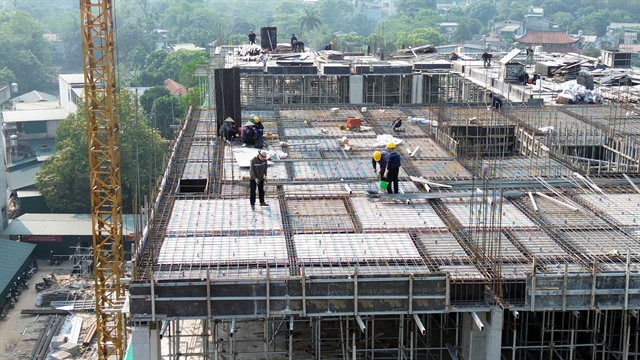
| Social housing blocks under construction in the northern province of Tuyên Quang, April 15. — VNA/VNS Photo |
HÀ NỘI — The Ministry of Construction has urged local governments to speed up social housing development, warning that uneven progress, rising costs and bureaucratic delays could derail a national target of 158,700 units by the end of 2026.
In a directive issued this week, the ministry called on provinces and cities to take a more hands-on role, working directly with developers to lock in construction timelines and ensure projects are completed on schedule.
The push comes as early figures suggest strong momentum at the national level, but patchy implementation on the ground.
In the first four months of the year, authorities broke ground on 40 new projects, adding more than 36,500 units. That brings the cumulative total to 226 projects with a planned 228,700 homes – about 144 per cent of the annual target.
More than 5,400 units have already been completed and handed over, with 25 localities meeting or exceeding their yearly goals.
But officials say the headline numbers mask significant disparities.
Some provinces and cities have yet to treat social housing as a priority, the ministry said, pointing to delays in land clearance, resettlement funding and infrastructure investment.
In other cases, land has been set aside but is poorly located, far from city centres and lacking basic services such as transport links, schools, healthcare and markets, making projects unattractive to potential buyers.
Developers are also facing mounting financial pressure. Prices for key construction materials, including steel, cement and aggregates, have risen steadily amid global economic and geopolitical uncertainty, squeezing already thin margins.
Unlike commercial projects, social housing prices are capped, leaving developers with significantly lower returns and less incentive to participate.
Administrative bottlenecks remain another major hurdle. Despite policy support for the sector, projects can still take one to two years to clear investment procedures, from paperwork and appraisal to final approval. The delays not only slow construction but also raise financing costs, further deterring private investment.
To address the issue, the ministry has asked local authorities to track market prices more closely and publish timely updates to help developers manage costs and avoid overruns.
At the same time, it called for tighter oversight to ensure homes go to eligible buyers. Authorities say there have been instances of speculative activity, including the resale of allocated units and the misuse of preferential policies, undermining the programme’s social objectives.
Under the new directive, provincial and city leaders are expected to take direct responsibility for project progress, working with developers to set firm deadlines. All ongoing projects are to be completed by the end of 2026 at the latest.
Developers, for their part, are being urged to mobilise financing, labour and equipment, and to adopt modern construction methods to speed up delivery.
Projects that have already secured investors but remain stalled, particularly those intended for industrial workers and members of the armed forces, are to be reviewed and cleared for construction by early in the second quarter.
The ministry also signalled support for a fast-track approval mechanism, or 'green channel', for social housing projects – a move seen as an attempt to cut through bureaucratic procedures and accelerate supply. — VNS
Society
 Society
 Society
 Society
 Society
 Society
 Society
 Society
 Society
 Society
 Society
 Society
 Society
 Society
 Society