 Society

Deputy PM calls for tighter price management of essential goods
1.
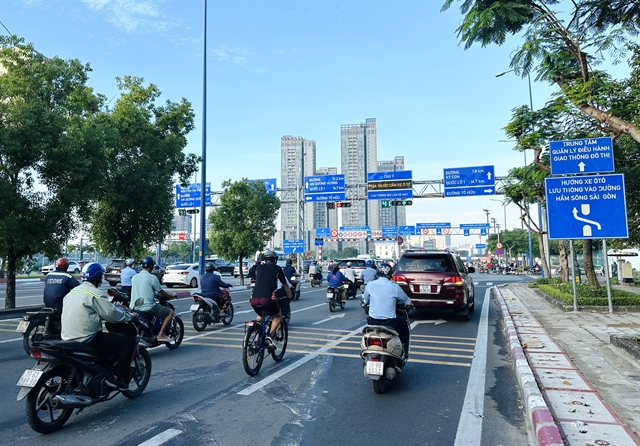 |
| Mai Chí Thọ Street in HCM City’s Thủ Đức city has installed cameras for traffic monitoring. The city is accelerating digital solutions to enhance urban management and effectively tackle traffic congestion and flooding. — VNS Photo Nguyễn Diệp |
HCM CITY — HCM City is accelerating the integration of digital technologies, big data, and shared platforms to address chronic urban challenges, including traffic congestion, flooding, and environmental pollution.
The Standing Committee of the city Party Committee recently issued Directive No. 10-CT/TU, a strategic move to enhance leadership in science, technology, and digital transformation.
The directive emphasises a shift from traditional planning to a ‘breakthrough action, measurable outcomes’ approach.
The Party Committee has mandated that all levels of government move beyond theoretical frameworks to focus on tangible results.
Leaders will now be held directly accountable for the oversight, inspection, and timely resolution of obstacles within their jurisdictions.
Key performance indicators (KPIs) for agencies and personnel will now weigh the success of digital applications.
Furthermore, the city aims to streamline its administrative apparatus, with a goal to cut 30-50 per cent of costs related to office supplies, printing, and physical storage by the end of 2026.
The directive identifies several priority areas where digital innovation must yield immediate public benefit.
The city will use big data to manage traffic flow and reduce flooding.
Authorities will install sensor systems to monitor and control environmental pollution.
Digital technology will be used to build a civilised and drug-free city.
The city will expand online public services to reduce administrative procedures.
The satisfaction of citizens and businesses is the main measure of success for this plan.
To support these initiatives, the city is focusing on building specialised databases that are "accurate, sufficient, clean, and up-to-date."
This unified data ecosystem is intended to improve advisory work and economic forecasting.
Amidst this digital push, the city has placed a high premium on security.
Heads of local agencies will be held responsible for cybersecurity, data protection, and safeguarding state secrets, with performance in these areas integrated into annual evaluations.
The digital shift is not limited to government halls. Mass organisations, including the Việt Nam Fatherland Front, have been tasked with promoting digital literacy through "digital neighbourhoods" and community-based technology teams.
These grassroots efforts aim to ensure that all citizens can navigate and benefit from the city's evolving digital infrastructure.
By aligning administrative reform with technological advancement, the city aims to enhance governance efficiency while ensuring national defence and socio-economic stability. — VNS
Society
 Society
 Society
 Society
 Society
 Society
 Society
 Society
 Society
 Society
 Society
 Society
 Society
 Society
 Society