 Society

OPPO Find X10 Pro Max to Debut Globally with MediaTek’s 2nm Flagship Dimensity 9600 Pro
1.
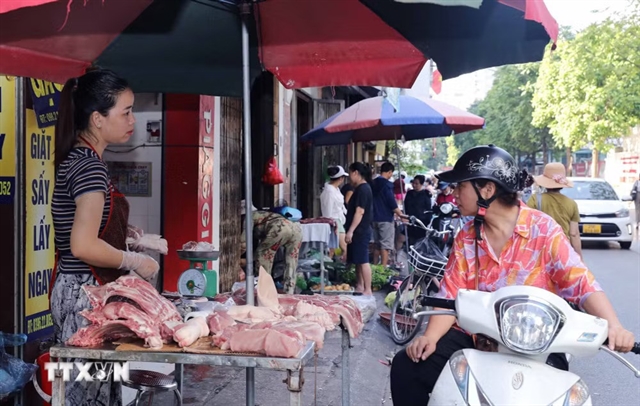 |
| 173 of 231 business sites encroaching on roads and pavements have been cleared, accounting for 75 per cent. — VNA/VNS Photo |
HÀ NỘI — The capital city plans to pilot the installation of 100 AI-powered cameras at food safety hotspots in a bid to strengthen monitoring and modernise governance, officials said at a meeting on Wednesday.
The cameras will be deployed at centralised slaughterhouses, wholesale markets and street food areas, with the ability to operate round-the-clock and automatically detect violations, enabling timely and accurate enforcement.
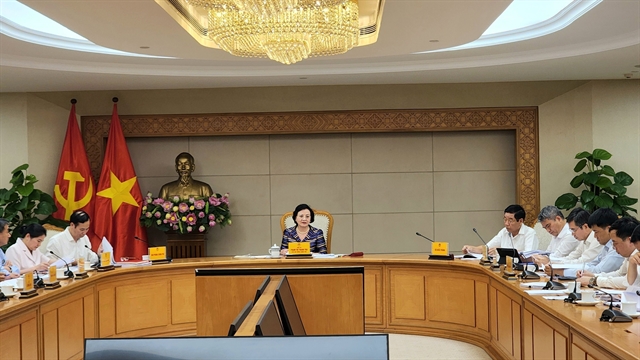
The proposal was discussed at a meeting held by the Hà Nội People’s Committee to review efforts to address bottlenecks in food safety management and launch the 2026 ‘Action Month for Food Safety’.
At the meeting, Deputy Director of the Hà Nội Department of Health Vũ Cao Cương said food safety management in the capital has improved significantly following recent enforcement efforts.
Notably, 173 out of 231 business sites encroaching on roads and pavements have been cleared, equivalent to 75 per cent. The city has also eliminated 101 small-scale slaughterhouses that failed to meet hygiene standards.
Authorities at the commune and ward level have sanctioned 927 violating establishments, with total fines exceeding VNĐ5.9 billion (US$224,000). City police have also prosecuted five cases involving 10 defendants for producing and trading counterfeit food products, strengthening deterrence against violations.
Officials said that pilot models currently underway, including centralised slaughterhouses, food-safe wholesale markets, traditional markets, collective kitchens and ready-to-eat meal services, have helped improve control over high-risk stages such as slaughtering, markets and street food.
The models have also contributed to restoring order in small-scale food businesses, improving transparency and helping consumers make safer choices, while laying the groundwork for a shift from reactive to proactive management.
To further address persistent challenges, the city will expand the use of technology, including AI surveillance and static QR codes at traditional market stalls, alongside the operation of the 1022 hotline to receive public feedback.
Vũ Thu Hà, Vice Chairwoman of the Hà Nội People’s Committee and permanent deputy head of the city’s Steering Committee for Food Safety, stressed that food safety must be ensured on a regular and continuous basis through coordinated measures.
She called for stronger application of information technology, the development of concrete management models and efforts to raise consumer awareness.
Hà also emphasised that all implementation processes must be transparent, with clear data and documentation available for inspection at any time.
Food production and trading establishments are required to install camera systems, connect them to monitoring networks and be ready to provide full records upon request.
“Each unit must protect itself through transparency and be ready to explain its responsibilities whenever required,” she said.
She also called for greater use of digital tools to ensure fairness and objectivity, with all inspection results and violations made public, alongside recognition for compliant businesses and strict action against serious breaches.
During the Action Month for Food Safety, running from April 15 to May 15, the city will roll out pilot models across all 126 communes and wards.
Each locality is required to implement at least one food safety model and fully update data for evaluation, with schools expected to strictly follow prescribed procedures.
The city will conduct a comprehensive review after the one-month campaign and consider policy adjustments while scaling up effective models to ensure sustainable food safety management. — VNS
Society
 Society
 Society
 Society
 Society
 Society
 Society
 Society
 Society
 Society
 Society
 Society
 Society
 Society
 Society