 Society

VN-Index ends lower despite liquidity hit over $1 billion
1.
|
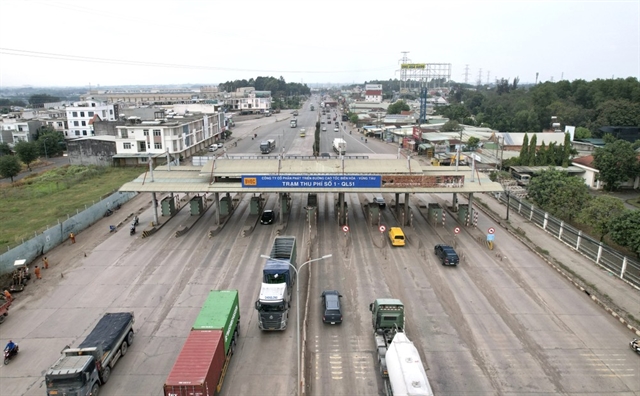
| Traffic surveillance cameras will be installed along National Highway 51 in HCM City in April as part of a broader plan to deploy AI across about half of the city’s camera network to enhance traffic monitoring and enforcement. — VNA/VNS Photo |
HCM CITY — HCM City plans to deploy artificial intelligence (AI) across roughly half of its existing camera network to support traffic monitoring and enforcement, as authorities step up efforts to tackle congestion and modernise urban transport systems.
According to the Department of Construction, the technology will be used to control traffic signals in key areas, including the city centre and major gateways, replacing largely manual operations.
The system will combine AI with digital twin technology, virtual models that simulate real-world traffic conditions, that is already piloted at major intersections along key corridors such as Mai Chí Thọ-Võ Văn Kiệt, Phạm Văn Đồng and areas near Tân Sơn Nhất international airport.
Officials said the shift would allow authorities to move from a reactive approach, where congestion is addressed after it occurs, to a more proactive model that analyses real-time data and predicts near-term traffic patterns to optimise signal timing.
To support the rollout, the city plans to upgrade its traffic signal infrastructure and expand its surveillance network.
Around 200 traffic signal control cabinets will be replaced and connected to a centralised traffic operations centre by the second quarter of 2026.
All traffic lights within Ring Road 2 are also expected to be integrated into the system within the same timeframe.
Authorities are also studying the application of AI-controlled traffic signals in congestion-prone corridors outside the ring road, including National Highways 51 and 13, and the Mỹ Phước-Tân Vạn route.
In addition, the city plans to install an additional 300 traffic-counting cameras and about 200 AI-enabled cameras, while completing a monitoring system along National Highway 51 by April 2026.
Another 120 cameras are expected to be deployed at key locations in neighbouring areas formerly under Bình Dương and Bà Rịa-Vũng Tàu provinces.
Officials said AI would be applied to about 50 per cent of the city’s camera network to detect and process violations of road traffic regulations.
The initiative comes as the city intensifies efforts to restore urban order and improve road safety.
Authorities recorded more than 19,600 violations related to the illegal use of roads and pavements during a recent enforcement campaign, with fines exceeding VNĐ17.28 billion.
While conditions have improved in several areas, particularly around hospitals, schools and markets, officials said violations remain persistent in some locations, especially where enforcement is inconsistent.
The city plans to expand digital monitoring systems, strengthen enforcement and refine legal frameworks in the coming period. — VNS
Society
 Society
 Society
 Society
 Society
 Society
 Society
 Society
 Society
 Society
 Society
 Society
 Society
 Society
 Society