 Society

Tuyên Quang teams up with China's Wenshan to draw tourists
1.
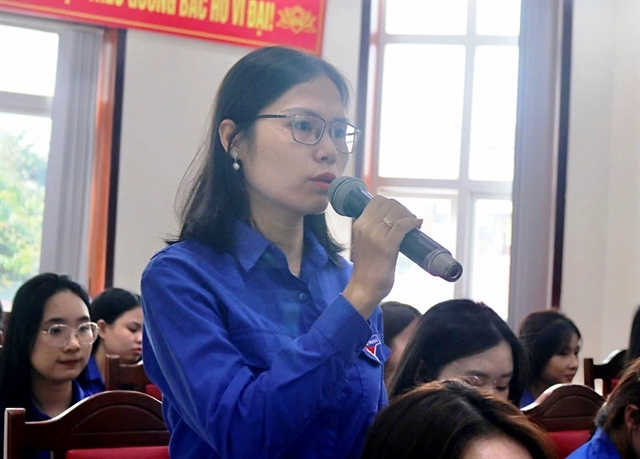 |
| Youth union members from Quảng Trị Province boldly and confidently express the real difficulties and obstacles they are facing in studying, working, starting businesses, and digital transformation at a dialogue conference between the provincial People's Committee Chairman and youth, themed “The role of youth in economic development, digital transformation, and building two-tier local government,” held on March 20. — VNA/VNS Photo Võ Dung |
HÀ NỘI — Young people are no longer confined to traditional volunteer activities; they are steadily charting a course in digital transformation, turning practical ideas into real-world solutions that connect communities, preserve heritage, and foster innovation.
From digital maps built by Youth Union members themselves to the digitisation of historical sites, technology is being integrated into daily life in an accessible, effective way, delivering tangible value to the community. These outcomes contribute to the practical implementation of Politburo Resolution No. 57-NQ/TW on the development of science, technology, innovation and national digital transformation.
In Quảng Trị Province, digital transformation began with the challenge of accessing information on localities following administrative unit mergers. Instead of hiring tech firms at great expense, local youth took a proactive approach, building data from their own resources.
Trần Thị Thu, Secretary of the Quảng Trị Provincial Youth Union, said: “We wanted to create a digital map to help residents inside and outside the province, and even international friends, access information on the 78 communes, wards and special zones post-merger. Thinking it up is one thing; making it happen is another.”
Through a data-building competition, all Youth Union bases produced videos introducing their localities, covering everything from natural conditions to culture, people and development directions. Going beyond mere narration, many units got creative, crafting stories tied to history and daily life to make the content engaging.
From over 80 submissions, the data was compiled and integrated into a shared digital map platform. Through this socialised approach, the project barely used public funds yet produced a user-friendly lookup tool that serves residents and promotes the local image.
According to Cao Hải Vân, Secretary of the Nam Đông Hà Ward Youth Union, the video wasn't done in a conventional style but built as a story across three generations, showing continuity in homeland-building. The most exciting part was the enthusiastic participation of residents, from neighbourhood officials to young children.
Today, with just a few clicks, users can explore information on each locality, from administrative data to vivid introductory videos. Thus, the digital map is not only a lookup tool but also a dynamic channel for promoting the local image. From an idea born of practical needs, Quảng Trị on the map demonstrates an approachable, effective way to drive digital transformation, reflecting the proactive, creative spirit of youth in applying technology to everyday life.
In Ninh Bình Province, digital transformation is pursued comprehensively, with a standout focus on digitising heritage sites. Via QR codes, residents and tourists can access full details on the history, architecture and cultural value of sites directly on their mobile devices. To date, the province has digitised 228 scenic spots and historical-cultural sites. Many projects incorporate cutting-edge tech, vividly recreating historical spaces and enhancing user experiences.
Alongside heritage efforts, Ninh Bình youth are deeply involved in digital transformation for social life. The province has formed 130 youth volunteer teams to support two-tier local government operations and online public services, with over 2,600 volunteer shifts aiding more than 110,000 residents. Notably, 2,380 community digital technology groups have been deployed, helping over 1.2 million residents access digital platforms.
Digital citizens
Last year, the Creative Youth campaign continued to show strong momentum, becoming a highlight of Youth Union activities. Far from mere slogans, many ideas and initiatives from members and youth were supported for implementation, addressing practical issues, especially in digital transformation.
The number of realised ideas surged, with over 12,000 initiatives backed. In many localities, science and technology creativity contests and forums were organised with a practical focus, encouraging youth to propose solutions for specific local and social problems. This not only created playgrounds but also environments for testing, refining and applying ideas. Alongside, efforts to enhance young human resources continued apace.
Numerous training programmes, workshops and scientific forums provided access to AI, new knowledge, skill development and creative thinking. Scientific research and tech application activities persisted, with hundreds of conferences, seminars and discussions supporting real-world projects. Large-scale tech playgrounds carried on, from informatics and robotics competitions to science-technology awards, unearthing and honouring young talents.
Digital skills programmes and innovation contests drew crowds of youth nationwide, fostering a culture of learning and creativity in the community. Notably, activities extended beyond specialised youth to broad audiences, aiming for digital skills. Models like creative spaces in schools, youth creativity forums and community idea contests enabled many young people to engage in the creative process.
Across the country, young people are proving that digital transformation is not just a policy goal but a lived, community-driven reality, blending technology, creativity and civic pride.
Support grassroots work
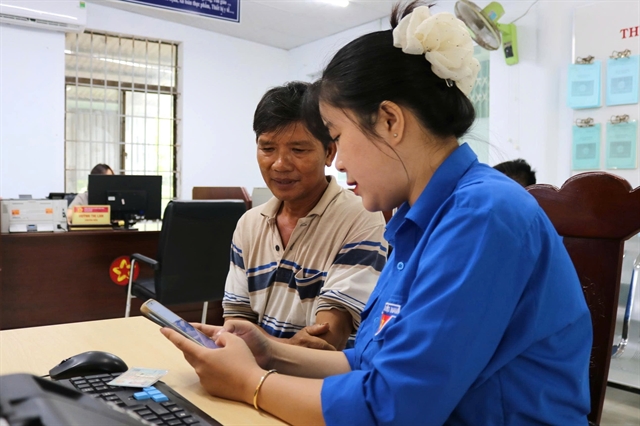 |
| A Youth Union member in Tuy An Nam Commune, Đắk Lắk Province guides a resident to fully fill in information before submitting administrative procedure dossiers. — VNA/VNS Photo Tường Quân |
To support two-tier local government operations following administrative mergers, in July last year the Central Youth Union and the Việt Nam Youth Federation Central Committee launched youth volunteer teams to assist grassroots online public services.
From July 1 to September 30 last year, more than 48,900 teams completed over 619,000 volunteer shifts, helping 3,321 commune-level units, 34 provincial units, and more than 5.1 million residents with administrative procedures.
According to Bùi Quang Huy, first secretary of the Hồ Chí Minh Communist Youth Union Central Committee, today’s young generation is inheriting and embodying patriotic, diligent, intelligent and creative qualities, bold thinkers and doers.
This is the digital citizen generation, born and raised in peace and exposed to the remarkable achievements of science and technology. They are smart, dynamic and creative, harbouring grand ambitions and strong integration aspirations, and above all, they hold unwavering faith in the Party, always charging ahead on the front lines for the nation’s tasks.
Looking ahead, the Central Youth Union will prioritise boosting youth digital capacity as a key measure to adapt to new development contexts. Education will modernise, blending online and in-person formats while leveraging digital platforms for wider reach.
Digital skills training and workshops will intensify, moving beyond basic knowledge to emerging technologies such as AI and big data. Tech and innovation playgrounds will continue, offering spaces to test ideas and build capacities. Communication campaigns, forums and contests on big data and blockchain aim to engage at least 1 million young people annually, while integrating cybersecurity and digital ethics education.
The Digital literacy for youth campaign will expand nationwide, targeting 100 per cent basic digital mastery among children and youth by 2030.
Amid rapid digital transformation across sectors, forming a digital citizen generation is not just a goal, it is becoming reality.
With proactive, creative spirits and quick adaptability, youth are turning digital transformation from policy into action, from vision into concrete life values.
Technology is no longer merely a tool. It is becoming the way youth think, act and contribute to society, a new language connecting them, sparking creativity and affirming their role in the nation’s development journey. VNS
Society
 Society
 Society
 Society
 Society
 Society
 Society
.jpg) Society
Society
 Society
 Society
 Society
 Society
 Society
 Society
 Society