 Society

Ping An Digital Bank Completes HKMA’s Second GenA.I. Sandbox Cohort
1.
|
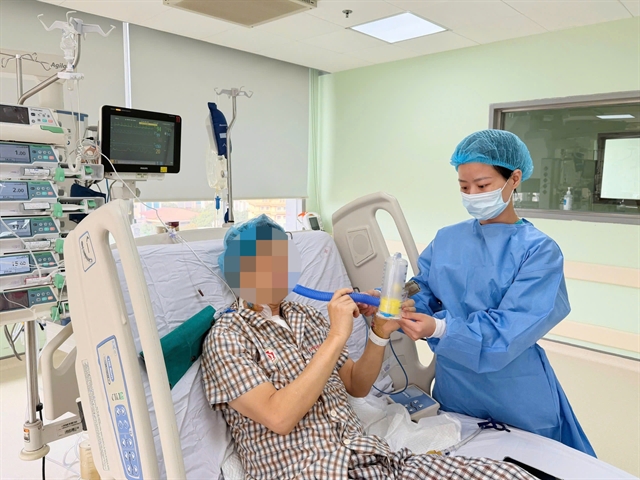
| One of the organ transplant recipients. The patient began recovering and was taken off the ventilator on the afternoon of March 12. — Photo baochinhphu.vn |
HÀ NỘI — In the early hours of March 12, doctors stepped off a night flight from HCM City carrying insulated containers they never let out of sight, holding a heart and a liver donated by a man whose family chose to give others a chance at life.
Inside were a heart and a liver: the final gift of a man whose family had agreed, in the midst of grief, to donate his organs so that others might live.
Within hours, that decision set in motion a tightly coordinated medical effort stretching across the country, ultimately saving seven patients in Hà Nội, Huế and elsewhere.
The donor, a man treated at Bình Dương General Hospital in HCM City, had suffered severe traumatic brain injuries. Despite intensive treatment, doctors were unable to save him and he was later declared brain dead.
His family then decided to donate his organs.
Once consent was given, the National Centre for Organ Transplant Coordination began mobilising transplant teams nationwide.
Doctors from the 108 Military Central Hospital in Hà Nội flew to HCM City early on March 11, while transplant teams in the capital simultaneously prepared potential recipients, completing medical tests and legal procedures required before surgery.
|
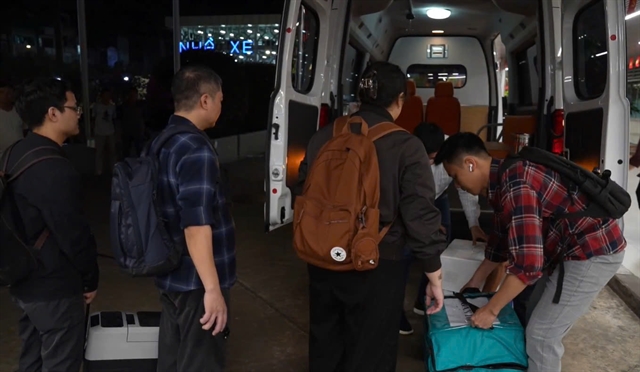
| Doctors transport the donated organs to the airport for urgent transfer to Hà Nội. |
Later that afternoon, the donor was transferred to Chợ Rẫy Hospital, where surgeons carried out a complex multi-organ retrieval operation. In the operating room, several surgical teams worked side by side with intense focus.
The donor’s heart and liver were allocated to patients waiting in Hà Nội. Part of the liver was reserved for a child being treated at the National Children’s Hospital. Two kidneys were sent to Huế Central Hospital, while the donor’s corneas were delivered to 103 Military Hospital and Bạch Mai Hospital.
By late evening, the organs destined for Hà Nội were packed in preservation containers and rushed to the airport.
“During that night flight, all our attention was fixed on those containers and on the patients waiting for transplants,” said Lieutenant Colonel Hồ Văn Linh, a surgeon from the hepatobiliary and pancreatic surgery department at the 108 Military Central Hospital.
“In organ transplantation, every minute matters.”
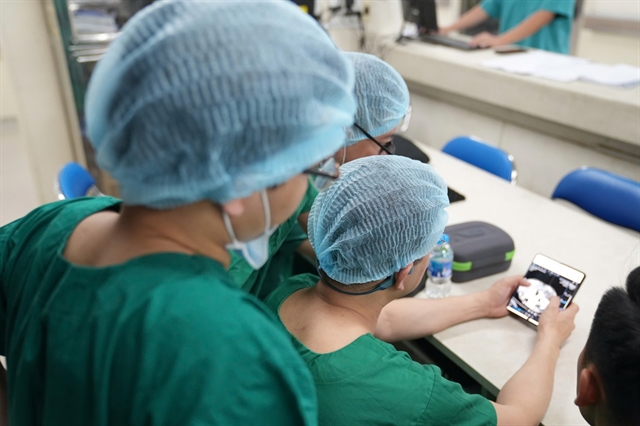
Throughout the journey, medical teams at both ends of the operation stayed in constant contact, exchanging updates about critical milestones – from the moment the heart was removed to the estimated arrival time in Hà Nội, so surgeons could prepare for immediate transplantation.
“We continuously updated key time points, such as when the heart was removed and the estimated transport time,” said Colonel Ngô Vi Hải, head of thoracic surgery at the 108 Military Central Hospital.
“That allowed the transplant team in Hà Nội to prepare each surgical step so the operation could begin as soon as the organ arrived.”
|
| Doctors in Hà Nội monitor each critical time point so the heart and the liver can be transplanted immediately upon arrival. |
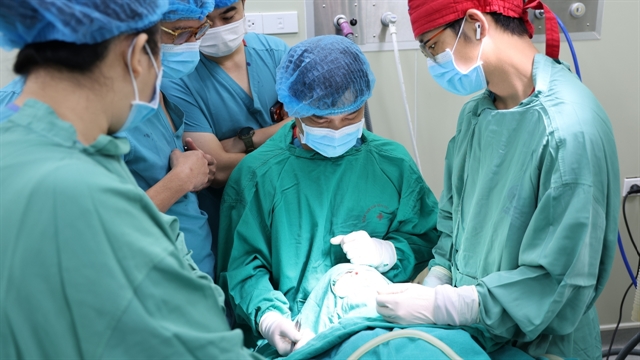
The team reached the 108 Military Central Hospital at 2am on March 12. Within hours, two major transplant surgeries were underway.
The liver recipient, a 42-year-old man suffering from acute liver failure linked to chronic hepatitis B and cirrhosis, underwent a nine-hour operation that doctors said was initially successful.
The heart recipient, a 53-year-old patient with end-stage heart failure caused by dilated cardiomyopathy, received the donor heart shortly after it arrived. Surgeons said the heart began beating in his chest just over 50 minutes after reaching the hospital.
The procedure marked the hospital’s ninth heart transplant and its third involving organs transported across the country.
By the afternoon of March 12, both transplant patients had been taken off ventilators. Doctors said they were conscious, breathing on their own and showing stable vital signs while continuing to receive close monitoring.
For the doctors involved, the operation was the result of an extraordinary chain of coordination stretching across multiple cities and hospitals.
From HCM City to Hà Nội and Huế, a single act of donation connected operating rooms hundreds of kilometres apart and gave seven patients the chance to continue lives that had once hung in the balance. — VNS
Society
 Society
 Society
 Society
 Society
 Society
 Society
 Society
 Society
 Society
 Society
 Society
 Society
 Society
 Society
.jpeg)