 Society

AIMCONNECT 2026 Held in Singapore, Bringing Global Automotive Leaders Together to Explore the Future of AI, Trust and Connected Mobility
1.
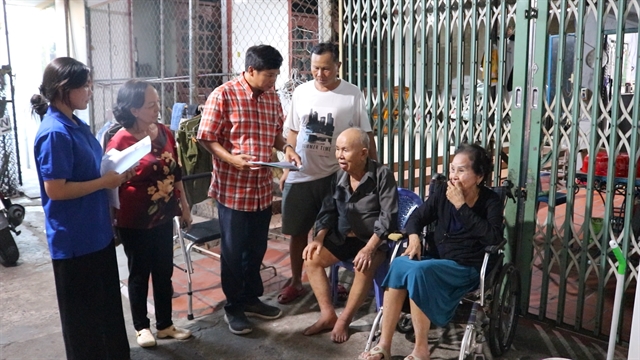 |
| Officials visit the house of a wheelchair-bound senior in HCM City’s Hiệp Bình Ward on March 3 to hand over voter cards for the upcoming elections. — VNS Photo Việt Dũng |
HCM CITY — In the days leading up to the 16th National Assembly and HCM City People's Council (2026–31 term) elections, administrative units have been hard at work to make sure disadvantaged people get to exercise their voting rights.
Trần Khánh Huyền, head of residential group No. 47 in Hiệp Bình Ward, along with other local officials, has been hard at work meeting voters and providing them with voter cards and information about various candidates.
They travel to the houses of seniors and people with disabilities to hand over the voter cards and provide instructions.
This is done both as work and a personal sense of care, Huyền told Việt Nam News.
“There were some difficulties. Some voters are immobile or have developmental disabilities. We have to call family members in advance and wait for them. But we are happy and excited to do this since it is the first election after the two-tier government model went into operation.”
Nguyễn Duy An, 92, a voter and Party member living in Hiệp Bình Ward, said he struggles to move around since he has bad legs and so was touched by the officials’ visit.
“This Sunday I will try to vote in person,” he said with a smile.
Nguyễn Thị Hồng Nga, 80, acknowledged by authorities as having performed meritorious service for the country, said the upcoming election is very important but she is wheelchair-bound, and so was happy that Huyền and other officials visited her house.
 |
| Visually impaired voters in Bình Thạnh Ward read information written in Braille about the candidates. — VNA/VNS Photo |
Meanwhile, the Việt Nam Fatherland Front Committee of Bình Thạnh Ward organised a dissemination meeting with visually impaired voters on March 10.
They were informed about voting procedures and local candidates using Braille and audio files.
Nguyễn Thị Cảnh, 32, said: “This is the first time I could access information on elections through Braille. It helps visually impaired voters better understand the candidates and feel better about themselves as it shows that the government and society truly care for disabled people.”
Hoàng Mai Quỳnh Hoa, chairwoman of the Bình Thạnh Fatherland Front Committee, said the ward has 20 temporary residents who are visually impaired and living in difficult circumstances.
To make sure no one is left behind, officials have tried to create favourable conditions for them to vote and exercise their rights as citizens, she said.
On election day, local youths would help transport them to voting spots and guide them through the voting procedures, she added. — VNS
Society
 Society
 Society
 Society
 Society
 Society
 Society
 Society
 Society
 Society
 Society
 Society
 Society
 Society
 Society