 Society

Lotte, Phát Đạt combine strengths in Thu Thiem project
1.
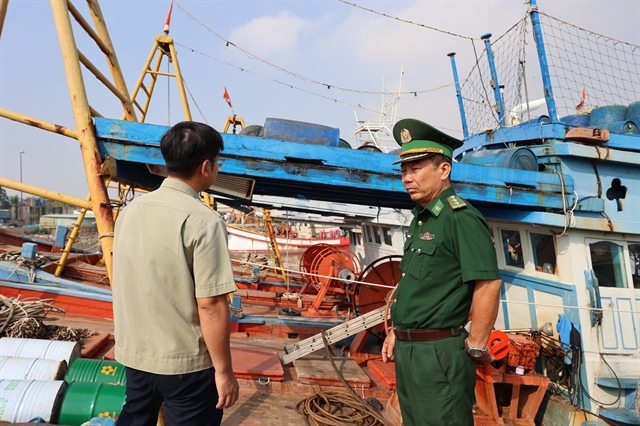 |
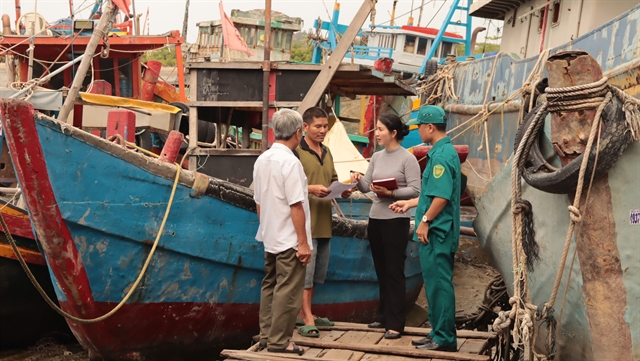
| Border guards at Cát Lở Port in HCM City’s Phước Thắng Ward provide fishermen with information on regulations against illegal, unreported and unregulated fishing.— VNA/VNS Photo |
HCM CITY — HCM City authorities are seeking to strengthen fisheries oversight to ensure strict compliance with regulations as Việt Nam prepares for the fifth on-site inspection by the European Commission to check illegal, unreported and unregulated (IUU) fishing.
The inspection delegation arrived in Việt Nam on March 9 to review implementation of recommendations aimed at combating IUU fishing.
HCM City is among the localities identified for inspections.
The event is considered particularly significant since its outcome will form an important basis for the EC to assess whether to lift the so-called “yellow card” warning imposed on Việt Nam’s seafood exports.
The city has taken a range of measures to enhance oversight of fishing activities and fishing vessels and raise fishermen’s awareness of legal compliance.
These efforts are not solely targeted at the EC inspection but also seek to promote the sustainable development of the fisheries sector over the long term.
The city currently has more than 4,450 fishing vessels in operation.
To manage the fleet effectively, authorities have conducted a comprehensive review and updated vessel data in the national fisheries database, VNFishbase.
The system enables authorities to monitor the legal status, operational history and fishing routes of vessels, thereby improving fisheries management.
For vessels measuring 15 metres or longer, which are required by law to install vessel monitoring systems (VMS), the installation rate exceeds 99 per cent.
The VMS system allows authorities to continuously track vessel movements at sea, enabling early detection of connection losses, boundary violations and other suspicious activities.
Local authorities have also stepped up monitoring of vessels that do not yet meet operational requirements.
Some 400 vessels have failed to complete necessary procedures such as obtaining fishing licences and other legal documents and undergoing technical inspections.
These have been placed under strict supervision, with authorities requiring them to remain anchored at designated locations and sealing their fishing gear to prevent unauthorised departures.
Local authorities regularly monitor these vessels, updating images and reports daily to ensure they do not operate illegally.
Long Hải Commune has the largest number of ineligible vessels: 191.
According to Trần Quốc Nhẫn, deputy head of the commune’s economic division, a dedicated team has been established to monitor such vessels.
Each vessel is assigned an identification sign and equipped with a positioning device, allowing authorities to monitor their locations remotely.
Officials check in every two hours to ensure the vessels remain at anchor.
Phước Thắng Ward too has set up a fisheries management team to monitor vessels forced to remain on shore.
Officials record daily images and update data in the management system. Only vessels that complete all required legal procedures are allowed to resume fishing.
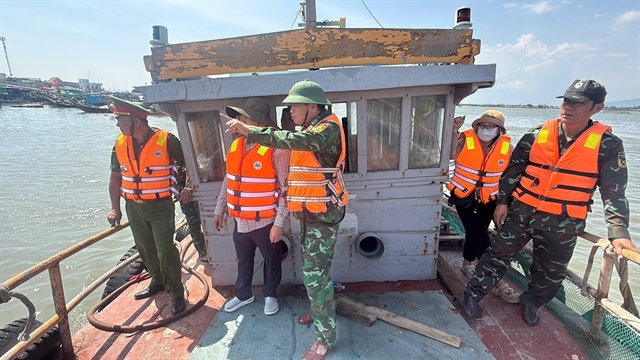 |
| Authorities in HCM City closely monitor fishing vessels that do not meet the requirements to go out to sea and need to remain on shore. — VNA/VNS Photo |
Strengthening control at fishing ports
Alongside vessel management, the city has also tightened supervision of fishing ports, which play a key role in ensuring seafood traceability.
HCM City has nine fishing ports, four of which are authorised to certify the origin of seafood.
Their managements closely monitor vessels entering and leaving the ports, which are required to declare their information at both junctures.
The electronic catch documentation and traceability system (eCDT) is applied to all fishing vessels operating at the ports to enhance transparency of catch data and help authorities verify and certify seafood origins in accordance with EC requirements.
Nguyễn Như Sơn, an official at the Lộc An Fishing Port, said port authorities regularly provide guidance and information to fishermen on IUU regulations.
Fishing vessels must notify the port at least one hour before departure and carry all required documents. For vessels longer than 15 metres, the installation and continuous operation of VMS equipment is mandatory.
At Incomap Fishing Port, vessel movements are also monitored through the eCDT system.
According to Bùi Quốc Bảo, head of the port’s management, all vessels entering or leaving the port must complete electronic declarations, ensuring transparency in fishing activities.
The port also issues seafood catch certificates required for export.
During the verification process, fishing logbooks are cross-checked with VMS data, and any discrepancy is reported to competent authorities for investigation.
Camera surveillance systems have been installed at the port to monitor seafood unloading activities and ensure transparency in catch volumes.
Authorities have also stepped up communication campaigns, including training sessions, information materials and direct outreach at fishing ports and coastal communities.
The result is that all fishing vessels in the city now maintain fishing logbooks.
Besides, the number of vessels losing VMS connection or showing signs of entering foreign waters has declined significantly.
So far this year authorities have not detected any vessels crossing maritime boundaries or losing monitoring connections for more than 10 days.
No fishing vessels from the city have been detained by foreign authorities for illegal fishing.
Dư Trọng Hòa of Vũng Tàu Ward said fishermen like him understand the importance of complying with regulations and operating within Việt Nam’s waters to enable the country to get rid of the EU yellow card.
Phạm Thị Na, deputy director of the city Department of Agriculture and Environment, said local authorities would continue to be entrusted with combating IUU fishing and coastal localities would intensify awareness campaigns and work closely with enforcement forces to crack down on violations.
With strong commitment from its authorities and cooperation from fishermen, HCM City is striving to eliminate IUU fishing. — VNS
Society
 Society
 Society
 Society
 Society
 Society
 Society
 Society
 Society
 Society
 Society
 Society
 Society
 Society
 Society