 Society

HKSTP Partners with Leading Science and Technology Company Merck to Open a New Chapter in I&T Collaboration
1.
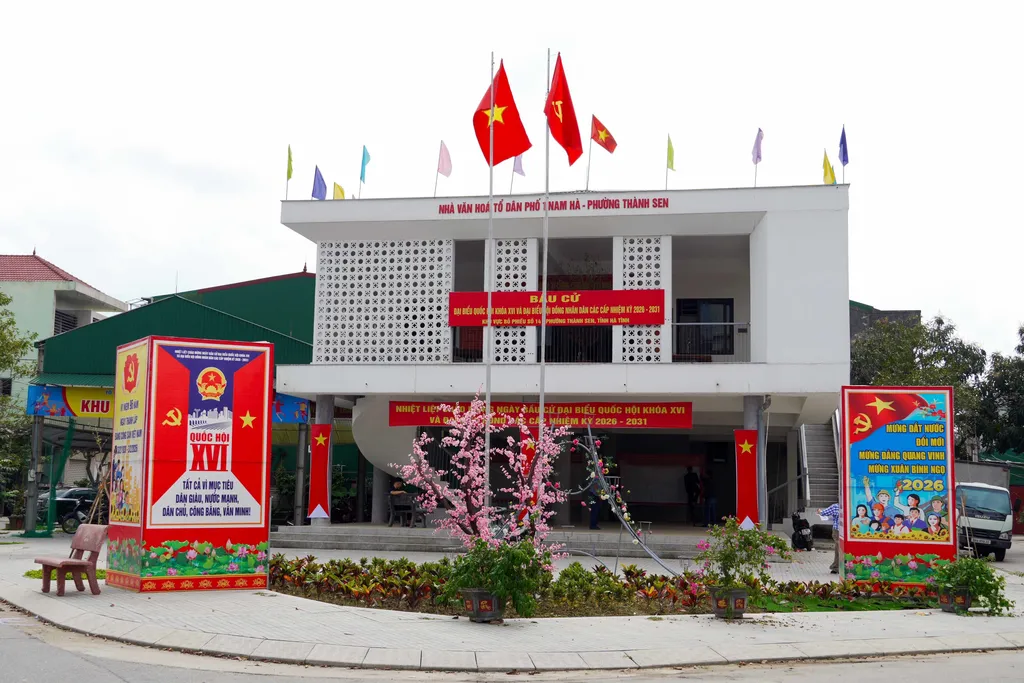 |
| A polling station in Thành Sen Ward, Hà Tĩnh Province, is decorated with banners, panels and posters. VNA/VNS Photos |
HÀ TĨNH — The election of deputies to the 16th National Assembly and People’s Councils for the 2026–2031 term is being rolled out across Hà Tĩnh Province with notable innovations.
Alongside full compliance with central guidelines, local authorities are stepping up the use of digital technology in voter communication, voter list reviews and public meetings, helping improve transparency, accuracy and convenience.
In previous elections, information was mainly delivered through loudspeaker systems, banners and in-person meetings. This year, many communes and wards are complementing traditional methods with social media and online platforms to reach residents more effectively.
In the mountainous commune of Sơn Tây, where the population is scattered across a wide area, authorities have developed an AI-powered virtual assistant and produced short communication videos. Key information on the Law on Election of Deputies, eligibility criteria and citizens’ rights and responsibilities has been presented in concise, visual formats suited to modern information habits.
Local resident Trần Thị Thân from Hoàng Nam Village said that in the past, voters had to travel to community halls to check voter and candidate lists. For elderly people, this was often difficult. This year, information can be accessed via smartphones with assistance from younger family members, making it far more convenient and allowing voters to learn more carefully about candidates before making their choice.
According to Cao Văn Đức, Vice Chairman of the Sơn Tây Commune People’s Committee, the locality has intensified communication through its fanpage and community Zalo groups, while also building software to update election timelines and candidate standards. Even residents working far from home can now stay informed.
In Hà Huy Tập Ward, a digital transformation team has been set up to support election communication. Materials that were once lengthy and technical have been turned into short video clips and infographics, making them easier to understand and remember. For elderly voters, visual information boards are placed at neighbourhood cultural houses to ensure accessibility.
Local leaders said AI tools have also been used to summarise and edit communication content in a more engaging and concise way, generating strong public interaction online.
A key highlight of this election is the use of the National Population Database and VNeID digital identification in reviewing and compiling voter lists. Previously, local officials had to visit households to collect information manually. Now, data extraction from the national database enables faster, more accurate voter list preparation while saving time and manpower.
In Thành Sen Ward, the province’s central administrative unit with a population of more than 90,000, police officers extract voter data and coordinate with the ward’s election committee to verify and update information. This process ensures openness and timely adjustments in cases of population changes.
Nguyễn Văn Chung, Chairman of the Thành Sen Ward People’s Committee, said the locality considers digital transformation a crucial solution in organising the election. Voter data has been standardised, progress is monitored in real time and a virtual assistant has been deployed to answer residents’ questions. Candidate biographies, action plans and voter meeting schedules are publicly available online and at polling stations, while a hotline remains open for feedback.
Practical implementation shows that digital tools not only save time and resources but also enhance accuracy and transparency. More importantly, they make it easier for voters to access information, better understand their rights and responsibilities and contribute to a democratic, open and law-compliant election. VNS
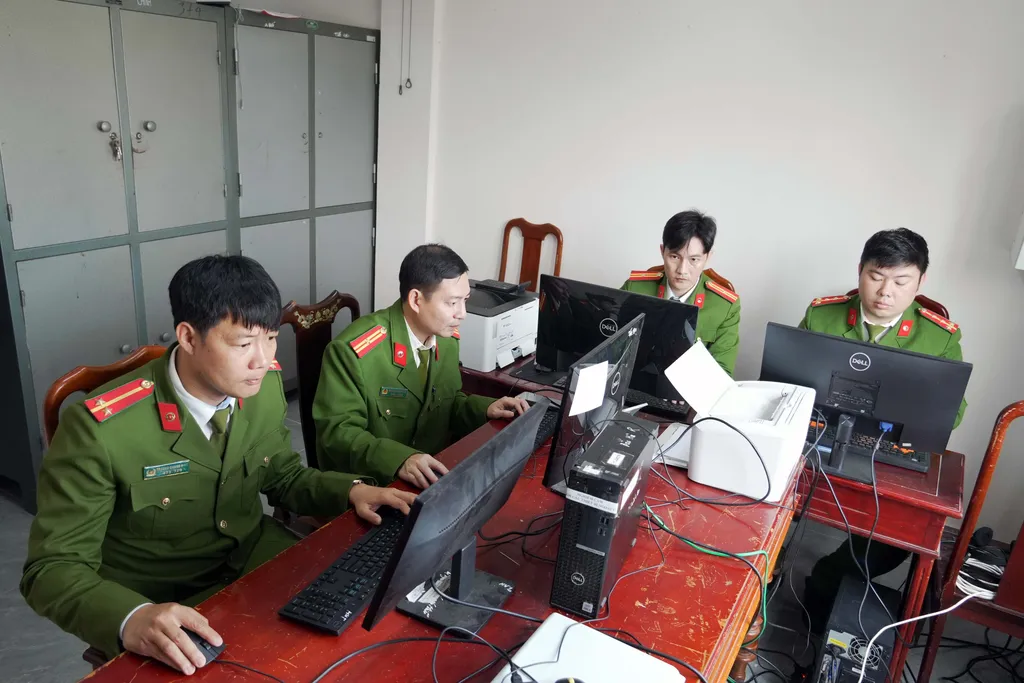 |
| Police officers in Thành Sen Ward, Hà Tĩnh Province, review population data in preparation for the election. |
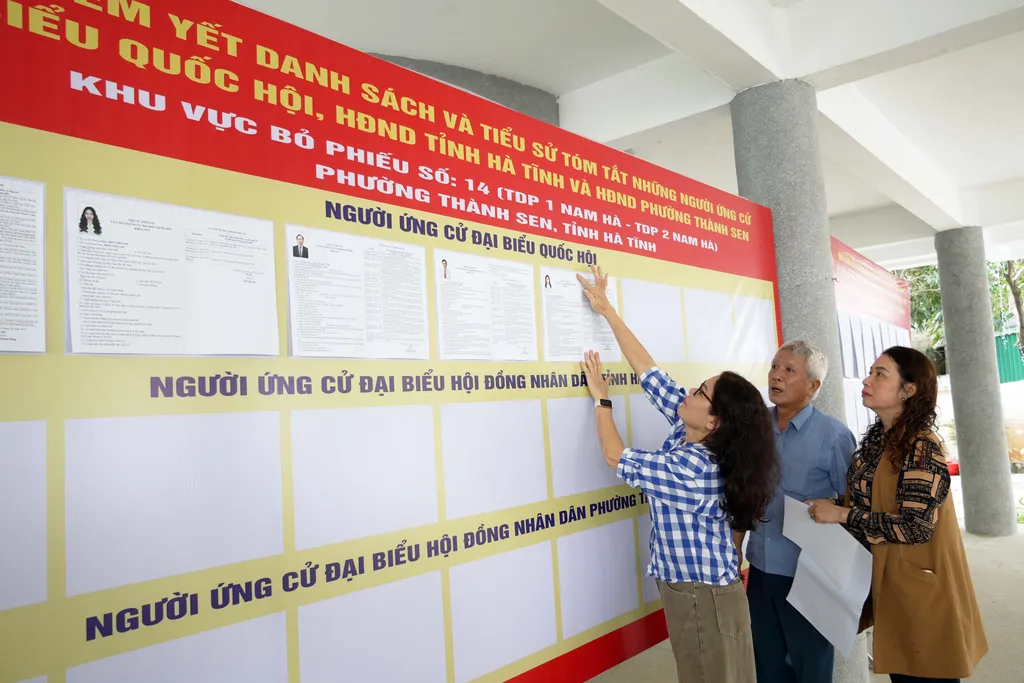 |
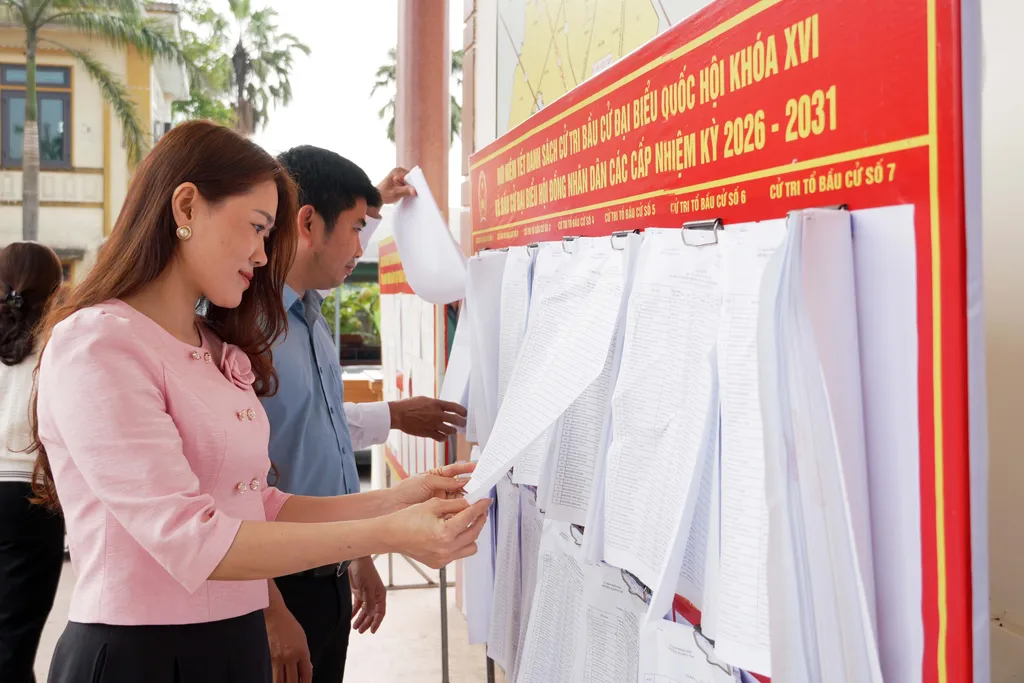
| The list of candidates for the National Assembly and People’s Councils at all levels is publicly posted at a polling station in Thành Sen Ward, Hà Tĩnh Province. |
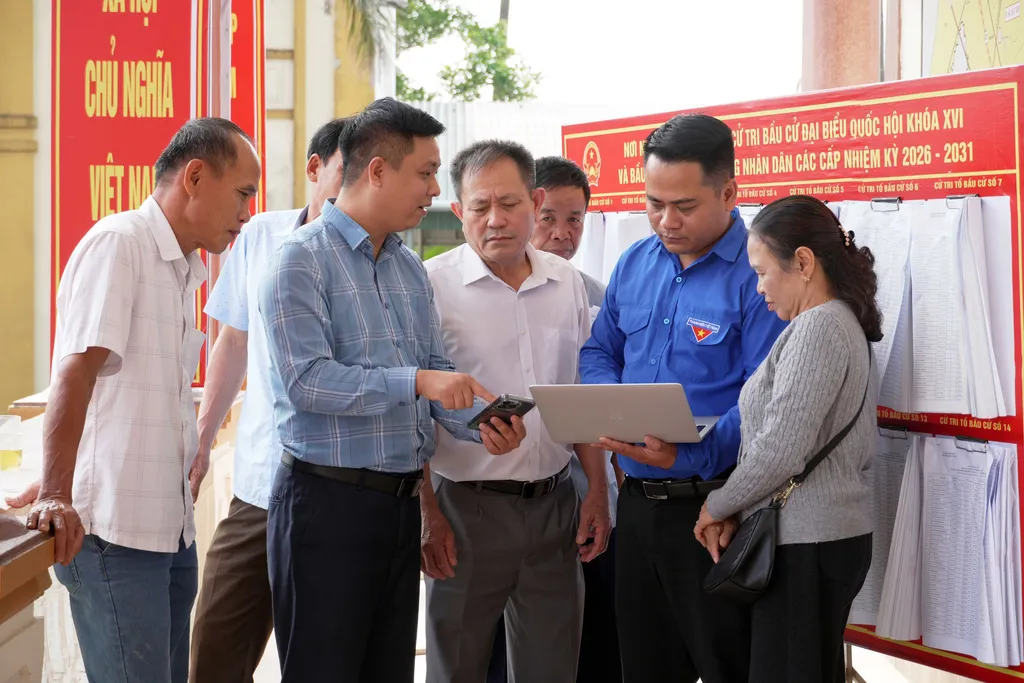 |
| Voters in Hà Huy Tập Ward, Hà Tĩnh Province, access election information through smartphone applications. |
 |
| A polling station in Thành Sen Ward, Hà Tĩnh Province, is decorated with banners, posters and election slogans. |
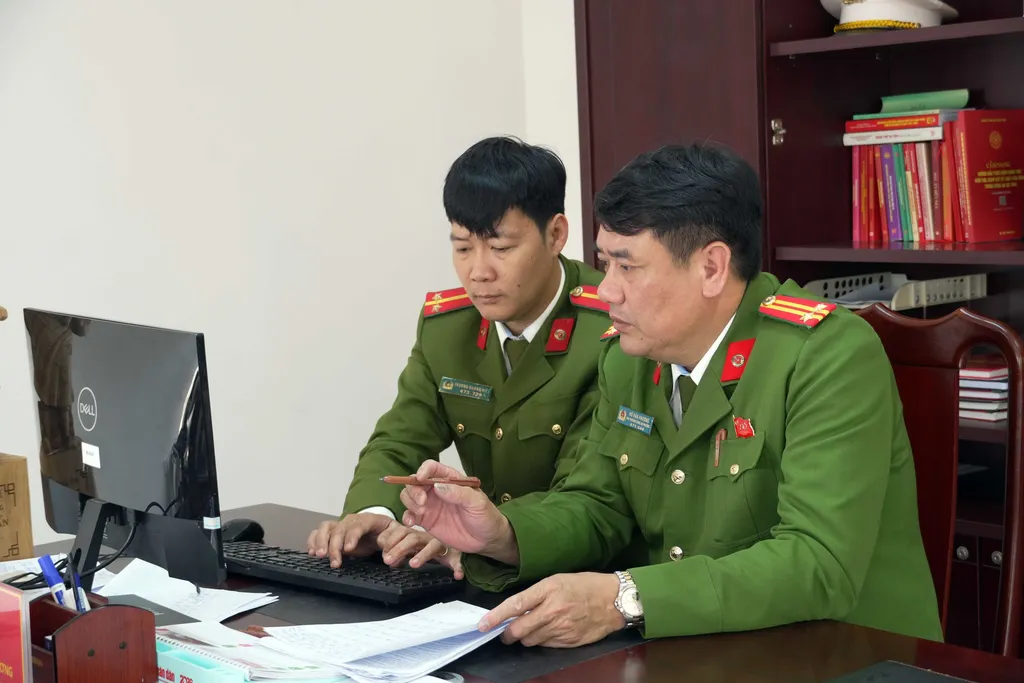 |
| Police officers in Thành Sen Ward, Hà Tĩnh Province, review population data in preparation for the election. |
.jpg) |
| Residents carry out administrative procedures at Thành Sen Ward Police in Hà Tĩnh Province. |
Society
 Society
 Society
 Society
 Society
 Society
 Society
 Society
 Society
 Society
 Society
.jpg) Society
Society
 Society
 Society
 Society