 Society

Top leader Tô Lâm’s EU visit to focus on trade, investment, energy security: ambassador
1.
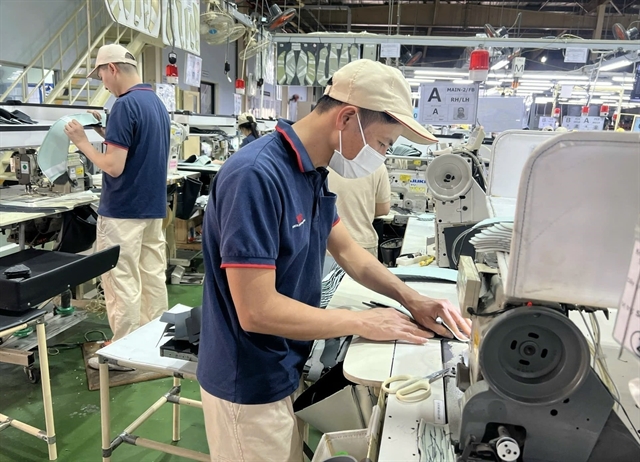 |
| Workers at an automotive interior manufacturing factory in Hà Nội. Việt Nam’s labour market is seeing an increasing demand for skilled workers. — VNA/VNS Photo Minh Nghĩa |
HÀ NỘI — With hiring demand rebounding and competition for talent intensifying in early 2026, worker retention has become a growing priority for employers.
The HCM City Employment Service Centre has recorded more than 13,000 job postings. However, the centre noted that the labour market has entered a phase of tighter screening, with many companies moving away from mass hiring toward more selective recruitment, prioritising “the right person, with the right skills, at the right time.”
Meanwhile in the capital city, recruitment demand has risen sharply, mostly in trade, services and manufacturing, said Hà Nội Employment Service Centre Deputy Director Vũ Quang Thành, adding that skilled workers are increasingly in demand.
Thành said the market is not short of labour but of qualified workers, making high-quality talent the focal point of competition among employers.
The challenge for businesses now extends beyond recruitment to retaining workers, especially those with strong skills and qualifications, by offering a stable working environment, appropriate incentives and long-term development opportunities.
According to Thành, Việt Nam’s labour market in 2026 will see a major qualitative shift, driven by the Government’s push for high economic growth with GDP targeted at double-digit levels.
“Pressure for exponential growth is forcing companies to change their HR strategies from expanding headcount to optimising operation based on high-quality personnel and technology.
“In that context, retaining workers is not just an HR issue. It has become a matter of survival for businesses,” Thành told Voice of Vietnam (VOV).
To stabilise the workforce, companies need to proactively expand production and business activities while building a sustainable working environment and psychological safety among employees.
“After rounds of layoffs or restructuring, employee trust often declines. Companies need transparency about operations and development directions to turn anxiety into consensus,” Thành noted.
As a result, worker retention strategies must be rolled out from the start of the year, especially after the Tết (Lunar New Year) holiday – a period when many workers consider changing jobs.
Competitive pay remains important, but it is no longer the sole factor. Workers increasingly value flexible working models, genuine attention to mental health and clear career pathways.
Investment in training and skills transformation is seen as one of the most effective measures. When companies proactively equip workers with new capabilities to adapt to modern technologies and processes, employees can see their future aligned with the organisation’s growth.
A culture of empowerment and fair recognition also helps shift mindsets from short-term employment to long-term commitment.
At the same time, retention also depends on employees’ ability to meet the rising demands of the 2026 labour market, said Thành, noting that the ability to work with artificial intelligence (AI) tools will become essential.
Preparation in terms of digital profiles and legal compliance is also increasingly important for workers as the revised Law on Employment takes effect and national databases become interconnected. Workers need to ensure transparency in their employment history, qualifications and tax and social insurance obligations.
Looking more broadly, Dr Bùi Sỹ Lợi, former deputy chairman of the National Assembly’s Social Affairs Committee, said 2026 will see a sharp rise in labour demand.
Việt Nam experienced significant disruptions in 2025, particularly from natural disasters and floods that heavily affected agriculture and rural areas, which will drive a wave of labour migration to the service sector this year, said Lợi.
Combined with the impact of the digital era, services and key economic sectors will demand higher workforce quality, he added. Without early preparation, the market could therefore run into skills shortages.
Based on these factors, Lợi stressed that both businesses and workers must prepare early, starting at the beginning of the year.
For companies, the task is not only to attract but also to retain workers. To bring employees back after Tết, firms must ensure full policy implementation regarding wages, bonuses and social security.
They must also accurately forecast manpower needs, recruit in a timely manner and provide supplementary and retraining programmes to secure a strong workforce for the year.
For workers, upgrading skills, discipline and responsibility are becoming increasingly critical to secure their place in the labour market.
“In an era of flexible labour relations with no ‘life-long employment,’ only those with skills, good health and adaptability can remain resilient and move proactively when needed,” Lợi said. — VNS
Society
 Society
 Society
 Society
 Society
 Society
 Society
 Society
 Society
 Society
 Society
 Society
 Society
 Society
 Society