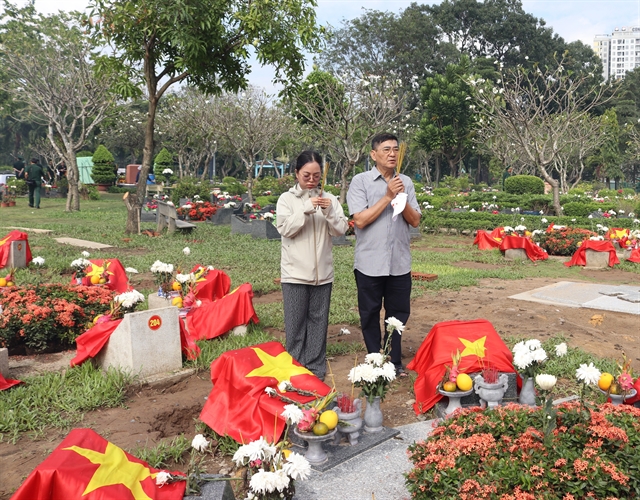
Incense for the fallen: Visitors honour fallen soldiers at the HCM City Martyrs’ Cemetery
1.
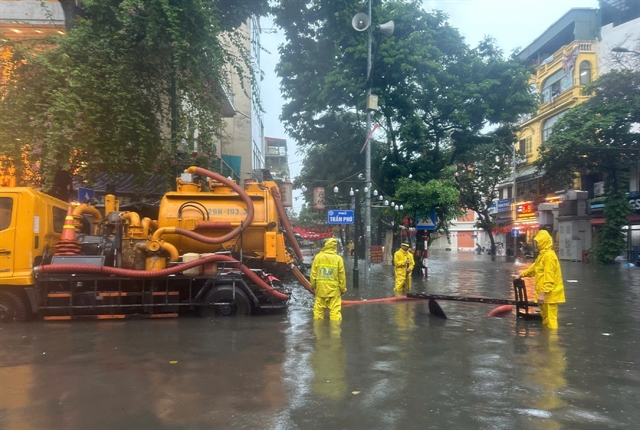 |
| Hà Nội experiences flooding after prolonged heavy rain. Workers from the Hà Nội Drainage One Member Co Ltd operate the main pumping stations according to procedure to lower the water levels and carry out cleaning. — VNA/VNS Photo Nguyễn Thắng |
HÀ NỘI — Experts gathered on Thursday to discuss the current situation, challenges and sustainable solutions for non-traditional security in Hà Nội urban governance, highlighting the urgent need for the capital to adapt to rapid changes and emerging risks.
The event was co-organised by the Institute of Non-Traditional Security under Việt Nam National University, Hà Nội, in coordination with the Việt Nam Government Portal and the Hà Nội Institute for Socio-Economic Development Studies.
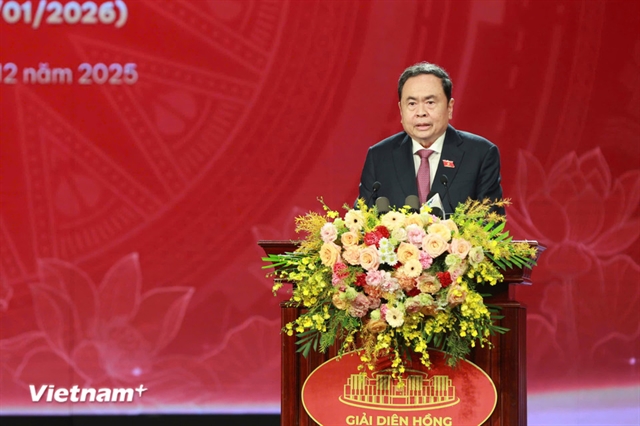
In his speech at the seminar, Professor Lieutenant General Trần Vi Dân, Member and Deputy Secretary General of the Central Theoretical Council, stated that Hà Nội was simultaneously facing two groups of non-traditional security challenges.
The first group consists of challenges arising from natural sources, including natural disasters, land issues, water resources, air quality and epidemics.
The second group comprises challenges directly created by human activities, such as crime and new risks to security and order.
“These challenges are emerging with entirely new causes and conditions, many of which could not have been fully anticipated previously,” he said.
“Some issues are not new, but they are now more complex in nature, with greater severity and consequences, particularly as the pace of developments accelerates, demanding more timely and appropriate approaches and solutions.”
Khuất Việt Hùng, Chairman of the Board of Directors of Hà Nội Railway One-Member Co Ltd and former Vice Chairman in charge of the National Committee for Traffic Safety, proposed recommendations on a data-based urban governance model.
“A city, in general, is a space for human activities. For these activities to proceed, infrastructure is key, shaping and defining the urban form, providing the space and conditions to support human activities such as transport, energy, water, telecommunications and more,” he said.
“Social infrastructure requires technical infrastructure first. But, Hà Nội currently lacks a transport model and should assess whether models exist for hydrology, air quality and waste management. In the context of rapid digital transformation, Hà Nội should prioritise building these models, given its strong capabilities in information technology and digital technology. This would enable special mechanisms for these models, aiming to produce drafts by 2026."
Drainage capacity
Associate Professor Lê Văn Chín, Head of the Water Resources Engineering Department and Director of the Water Resources Engineering Institute, noted that according to planning, the total area of regulatory lakes in Hà Nội should reach nearly 5,500ha.
Of this, the inner city area requires a drainage capacity of approximately 503cu.m per second. However, to date, the total capacity of newly invested and constructed pump stations has only reached about 432cu.m per second, equivalent to roughly 32 per cent of the planned requirement.
The current regulatory lake area stands at about 18 per cent, or just over 1,000ha. For the inner city, the current drainage capacity is about 234cu.m per second, or 46 per cent of the required level. These figures clearly reflect the current limitations of the urban drainage system.
Hà Nội established a Monitoring and Operations Centre for the drainage system, utilising HSDC Maps software to monitor rainfall at 44 stations and automated water levels at 50 stations. Nevertheless, this system still has many limitations, directly impacting the effectiveness of flood prevention efforts.
On that basis, Associate Professor Chín proposed several groups of solutions, comprising two main categories: engineering solutions and non-engineering solutions.
For engineering solutions, focus on accelerating investment in drainage system construction; complete and implement projects to address localised flooding hotspots; synchronise planning and management of ground levels and drainage up to 2030, with a vision to 2050; and pilot the application of a sustainable urban drainage model.
For non-engineering solutions, first prioritise planning the drainage system with a working with nature mindset, leveraging natural advantages, enhancing adaptability, reducing risks, and respecting water spaces. Additionally, strengthen urban drainage management through smart flood governance systems to optimise overall operations.
At the same time, implement innovative projects for flood prevention and control under the model: State – scientists – businesses, to maximise societal resources.
Lieutenant Colonel Đào Việt Long, Deputy Head of the Traffic Police Department under the Hà Nội City Police, said that the police identified seven key solution groups, including innovating the content and methods of publicising traffic order and safety laws; addressing traffic volumes exceeding infrastructure capacity, where many routes carry two or three times the design load; and strictly managing construction activities on operational transport works.
Besides, reorganise traffic to reduce conflicts at complex, key intersections; respond quickly to traffic incidents, especially in adverse weather or flooding.
In addition, strictly and thoroughly handle violations that directly cause congestion; and, by assigning forces in a coordinated manner, enhance cooperation and strengthen oversight of implementation. — VNS
Society
 Society
 Society
 Society
 Society
 Society
 Society
 Society
 Society
 Society
 Society
 Society
.jpg) Society
Society
 Society