 Society

AIMCONNECT 2026 Held in Singapore, Bringing Global Automotive Leaders Together to Explore the Future of AI, Trust and Connected Mobility
1.
|
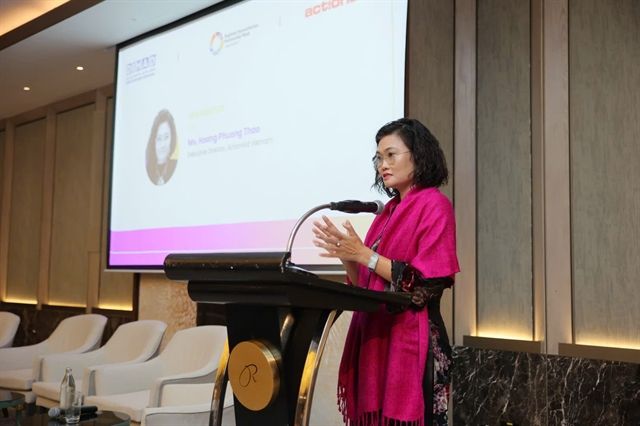
| Hoàng Phương Thảo, Executive Director of ActionAid Việt Nam, speaks at the event. — Photo courtesy of the ActionAid |
BANGKOK — Under the theme ‘Reframing humanitarianism for a changing world’, the Regional Humanitarian Partnership Week (RHPW) – Asia-Pacific 2025 is taking place in Bangkok, Thailand, from Monday to Wednesday.
The event was jointly organised by the International Council of Voluntary Agencies (ICVA), Asia Disaster Reduction and Response Network (ADRRN), Community World Service Asia (CWSA), and the United Nations Office for the Coordination of Humanitarian Affairs (UNOCHA).
It convenes hundreds of humanitarian leaders, experts and activists from governments, the private sector, media, academia, as well as civil society across Asia and the Pacific to address pressing challenges and chart a new course for humanitarian action in the region.
RHPW 2025 provides space for strategic dialogues to deepen collaboration and co-create locally led solutions that move beyond rigid aid systems.
Key themes include power redistribution to local actors; climate–development–humanitarian nexus; financing innovation (including private capital and blended finance); people-centred technology and digital transformation with ethical safeguards; and conflict-sensitive programming.
Approximately 70 thematic and networking sessions at RHPW 2025 focus on localisation – empowering local actors to lead humanitarian response – and resilience, ensuring communities can withstand and recover from crises.
With climate disasters, geopolitical conflicts, and pandemic aftershocks reshaping the humanitarian landscape, participants emphasised the urgent need for a humanitarian reset: a shift toward locally managed, anticipatory, and integrated approaches that link humanitarian aid with development and peacebuilding.
Martin Griffiths, Under-Secretary-General for Humanitarian Affairs and Emergency Relief Coordinator at UNOCHA, stated that the Asia-Pacific region faces unprecedented challenges, but also unprecedented opportunities.
"By putting local actors at the center and investing in resilience, we can create a humanitarian system that is faster, fairer, and more effective for those who need it most," Martin remarked.
During this week, ActionAid partnered with Dubai International Humanitarian Aid and Development (DIHAD) Sustainable Organisation to co-host a pivotal discussion on “Revisiting Humanitarian Partnerships in the Era of Humanitarian Reset”, exploring strategies to strengthen regional and global collaboration to support community-centric systems and calling for anticipatory action and Triple Nexus integration to prevent crises and build sustainable recovery.
Hoàng Phương Thảo, Executive Director of ActionAid Việt Nam, underscored the importance of transformation in the humanitarian reset, “Global and regional collaboration is no longer just a plea, it is an essential course of action. The situation demands a reset that is human rights–based, feminist, and youth-led, ensuring power, resources, and decision-making shift to crisis-affected communities and local actors – especially women and young people.”
|
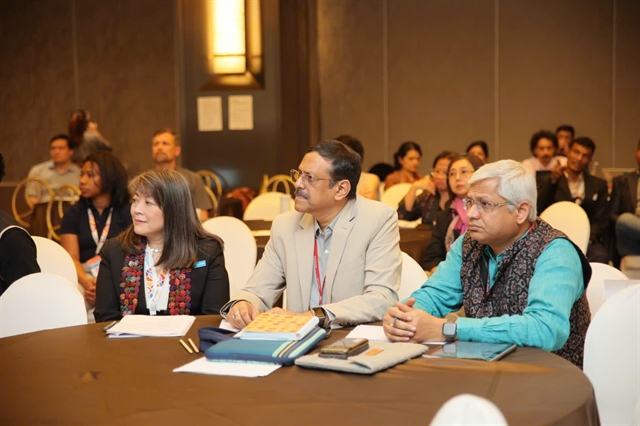
| Participants at the pivotal discussion on revisiting humanitarian partnerships. — Photo courtesy of the ActionAid |
Throughout the session co-hosted by ActionAid and DIHAD on Tuesday, participants emphasised that humanitarian reset requires decolonisation of disaster risk reduction (DRR) and response, which means restructuring partnerships, funding, and accountability, so local and national actors exercise genuine leadership and authority – moving beyond tokenistic participation to real power-sharing.
It also covers applying a human right–based approach (HRBA): embedding rights standards across preparedness, response, and recovery – prioritising dignity, non-discrimination, participation, transparency, and accountability in every programme decision.
In addition, nurturing feminist leadership: elevating women’s movements and frontline women leaders in governance of humanitarian action, financing decisions, and agenda-setting – recognising gender justice as core to resilience and recovery.
Besides, advancing youth agency: creating structured pathways for youth to co-design early warning, anticipatory action, technology solutions, and community accountability, with dedicated resourcing and representation.
Participants called for decisive action to deliver locally led impact across Asia and beyond.
In contexts facing escalating climate-induced disasters, protracted conflicts, and widening humanitarian funding gaps, RHPW 2025 highlighted the urgency of innovative, blended financing; anticipatory action; digital equity; and conflict-sensitive programming – areas where ActionAid and partners will co-invest to scale locally led models. — VNS
Society
 Society
 Society
 Society
 Society
 Society
.jpg) Society
Society
 Society
 Society
 Society
 Society
 Society
 Society
 Society
 Society