 Politics & Law

Việt Nam qualify for 2027 AFC U17 Women’s Asian Cup
1.
|
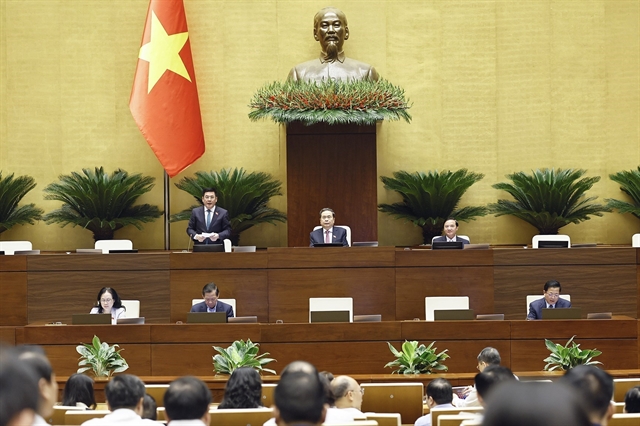
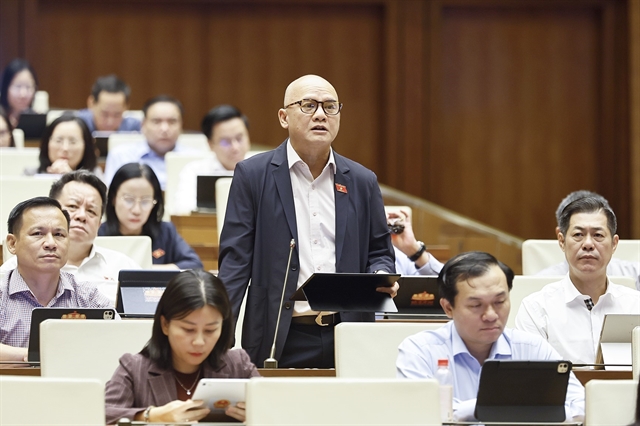
| Vice Chairman of the National Assembly Nguyễn Hồng Diên chairs the first extraordinary session of the 16th-tenure National Assembly (NA) discussing establishing Quảng Ninh and Bắc Ninh as centrally-governed cities. VNA/VNS Photo Doãn Tấn |
HÀ NỘI — Lawmakers on Wednesday voiced broad support for establishing Quảng Ninh and Bắc Ninh as centrally-governed cities, saying the move could create new development space, strengthen regional connectivity and generate new growth drivers.
Continuing the first extraordinary session of the 16th National Assembly (NA), NA deputies debated the Government’s proposal to transform the two provinces into centrally governed municipalities.
Under the proposal, Quảng Ninh City and Bắc Ninh City would be established on the basis of the existing provinces’ land areas, populations and commune-level administrative units.
The two localities meet all five conditions set out in the Law on Organisation of Local Government 72/2025/QH15 and all seven criteria for establishing centrally governed cities under Resolution 112/2025/UBTVQH15 of the NA Standing Committee.
Most deputies expressed strong support for the proposals, while stressing that the transition must be accompanied by modern governance, stronger regional links and balanced development.
Deputy Trần Thị Hồng Thanh of Ninh Bình Province called for financial mechanisms to redistribute revenue from economically dynamic areas to support infrastructure and social welfare in disadvantaged areas.
Such mechanisms would help prevent urbanisation and investment from being concentrated in a few growth poles while leaving less-developed areas behind, she said.
The two new cities should also strengthen planning and construction management, environmental protection and the preservation and promotion of historical sites, cultural heritage and local identities, Thanh said.
She also urged greater investment in training and improving the capacity of urban management officials, particularly in innovation and digital transformation, noting that urban governance requires different skills and approaches from those used in rural administration.
Deputy Hoàng Văn Nghĩa of Quảng Ngãi Province said the transition should be accompanied by a fundamental change in governance thinking, with residents and businesses placed at the centre.
Quảng Ninh and Bắc Ninh should shift towards modern, efficient and results-oriented urban governance, including the use of key performance indicators (KPIs) and objectives and key results (OKRs) to measure performance down to the local level, he said.
The two localities should also review their administrative apparatuses and ensure that administrative procedures become more convenient, without disrupting people's lives or business operations.
Nghĩa called for greater use of big data and digital technologies at smart operation centres, from the city level to communes and wards. Digital transformation should help improve transparency, automate public services and deliver faster, higher-quality services to residents and businesses, he said.
Deputy Nguyễn Thị Thu Nguyệt of Đắk Lắk Province stressed that the creation of the two centrally governed cities should not lead to isolated development.
She urged the Government, ministries and sectors to strengthen regional connectivity and link the new growth poles with neighbouring localities that have development potential but face limitations in infrastructure, technology and market access.
“The significance of establishing a new growth pole is not to allow localities to develop in isolation, but to create a network in which the development of one locality creates opportunities for many others,” she said.
Lawmakers also highlighted the need to ensure that rapid urbanisation does not come at the expense of natural resources, the environment, heritage landscapes and cultural identity.
Nghĩa said urban development must not erode the distinctive cultural and heritage spaces of Quảng Ninh and Bắc Ninh.
He called for planning to be carried out proactively, with synchronised infrastructure development in remaining communes based on realistic roadmaps for their potential conversion into wards.
At the same time, the new cities need to address major urban challenges, including environmental pollution, waste and wastewater treatment, he said.
Thanh warned that rapid urbanisation and the expansion of economic and industrial zones, if poorly controlled, could put pressure on the environment and landscapes and disrupt traditional cultural spaces.
She therefore urged the new cities to strengthen planning and construction management and environmental controls while preserving and promoting their distinctive cultural identities.
Deputy Trần Hoàng Ngân of HCM City proposed practical measures to ease the transition for residents and businesses.
Local authorities should strengthen communications, provide active support to residents and businesses, offer services outside regular administrative hours where necessary and waive fees for essential procedures related to the administrative transition, he said.
Authorities should also take proactive measures to stabilise prices and ensure that people's living standards improve, Ngân said.
He warned that rapid urbanisation could bring challenges such as traffic congestion, shortages of social housing, pressure on schools and hospitals, waste and wastewater problems, and more complex public security issues.
Quảng Ninh should therefore promptly review and adjust its planning based on higher standards, particularly for socio-economic infrastructure, to ensure effective linkages among different growth drivers, he said.
Responding to lawmakers' concerns, Minister of Home Affairs Nguyễn Tiến Hải said the Government would direct Quảng Ninh and Bắc Ninh to implement coordinated measures to fully tap their potential and achieve the targets set out in their development plans.
Particular attention would be paid to ensuring balanced and harmonious development among different areas within the two new cities, he said. — VNS
Politics & Law
 Politics & Law
 Politics & Law
 Politics & Law
 Politics & Law
 Politics & Law
 Politics & Law
 Politics & Law
 Politics & Law
 Politics & Law
 Politics & Law
 Politics & Law
 Politics & Law
.jpg) Politics & Law
Politics & Law
 Politics & Law