 Politics & Law
Việt Nam, Singapore promote cooperation through Party-to-Party channel
1.
|
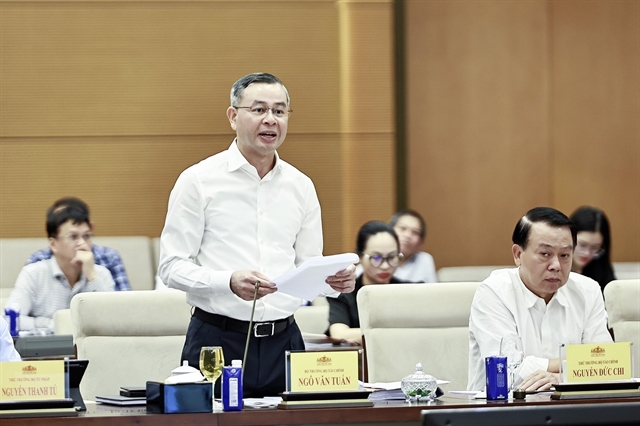
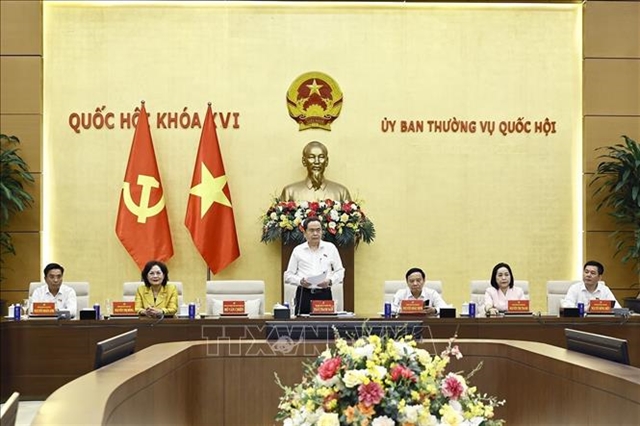
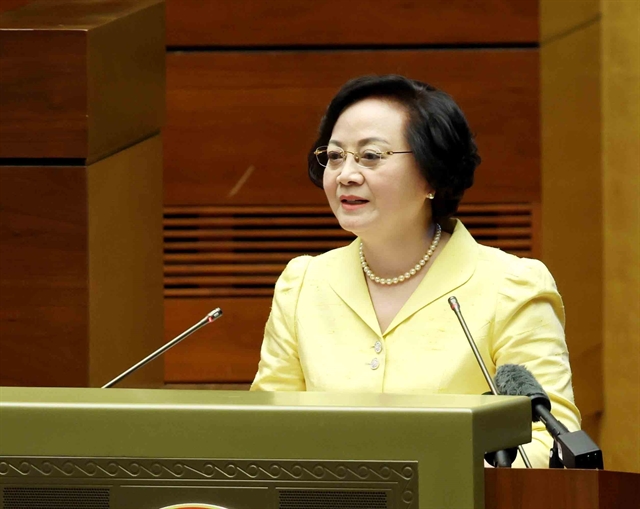
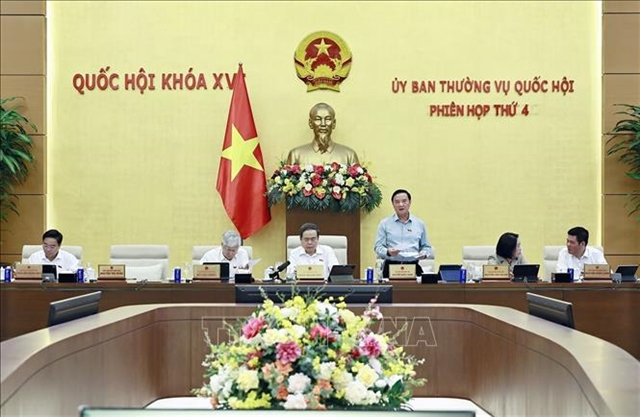
| Minister of Finance Ngô Văn Tuấn speaks at the fourth session of the National Assembly (NA) Standing Committee meeting on Monday. VNA/VNS Photo |
ĐÀ NẴNG — Lawmakers on Monday broadly agreed on the need to introduce a Government decree establishing special mechanisms and policies for a major sea reclamation urban development project in the central city of Đà Nẵng.
Speaking at the fourth session of the National Assembly (NA) Standing Committee meeting on Monday, Minister of Finance Ngô Văn Tuấn said the project is envisioned under the city's master plan as a world-class modern coastal urban area designed to attract global talent to live and work on a long-term basis.
The project is expected to cover about 1,500 hectares and require investment of more than VNĐ400 trillion (US$15.2 billion), with a long capital recovery period.
Given its scale and strategic significance, Tuấn said special mechanisms are needed in areas including planning, investment, finance, taxation, land management, natural resources, environmental protection, import-export policies and administrative procedures.
The proposed framework is intended to address existing constraints in urban development and management, mobilise investment resources, provide a legal basis for new policy issues and maximise Đà Nẵng's development potential and competitive advantages.
Presenting the verification report, Chairman of the NA's Economic and Financial Committee Phan Văn Mãi said the committee and other NA bodies broadly agreed on the necessity of issuing the decree.
The NA Standing Committee also endorsed the proposal, saying the decree would help fully implement the Party Central Committee's policies and strategic orientations for the development of Đà Nẵng. It would establish a legal framework to unlock resources, maximise the city's strengths and create new momentum for rapid and sustainable socio-economic growth, with spillover benefits for the central and Central Highlands regions, while contributing more significantly to national economic growth.
The committee urged the Government to instruct the drafting agencies, the Đà Nẵng People's Committee and relevant ministries and agencies to promptly review and incorporate comments from Standing Committee members and the Economic and Financial Committee to finalise the draft decree for promulgation under the Government's authority.
Concluding the discussion, NA Vice Chairman Nguyễn Hồng Diên stressed that the drafting process must strictly comply with the Politburo's Regulation 178-QĐ/TW on controlling power and preventing corruption and misconduct in lawmaking.
He said the decree should both facilitate project implementation and ensure effective oversight, strengthen accountability, prevent corruption, waste and other misconduct, and guard against the influence of vested or local interests.
Diên also called for further review of the proposed special mechanisms to ensure they remain within the Government's legal authority and comply with the hierarchy of legal documents.
He noted that if any proposed special policy departs from existing legislation and is deemed genuinely necessary, the Government must seek approval from relevant authorities before proceeding.
Also on Monday, lawmakers agreed on the need to merge the Law on the State Budget and the Law on Public Investment to create a unified public finance management framework that better supports the country's economic growth objectives.
Minister of Finance Ngô Văn Tuấn said merging the two laws has become an urgent necessity. The draft law was developed to retain provisions that have proven effective while streamlining and integrating regulations to reduce administrative procedures.
The draft merged Law on the State Budget comprises 10 chapters and 107 articles.
Key proposals include integrating the five-year financial plan with the five-year medium-term public investment plan, incorporating annual public investment plans into the annual public investment expenditure budget and delegating authority to allocate detailed medium-term public investment plans and annual local budget-funded public investment spending estimates from People's Councils to People's Committees at all levels.
The draft also authorises the Government to issue detailed implementing regulations, while consolidating the principles, criteria and expenditure norms for both development investment and recurrent spending under a single resolution of the NA Standing Committee.
It also proposes amendments to the existing State Budget Law to provide greater flexibility in fiscal management, including allowing additional budget revenues collected during the fiscal year to be allocated as needed and permitting the use of budget contingencies and financial reserve funds to respond to urgent situations affecting national interests or macroeconomic stability.
Concluding the discussion, NA Vice Chairwoman Nguyễn Thị Hồng said the committee broadly agreed on the necessity of enacting the merged Law on the State Budget to institutionalise the Party's policies and resolutions, eliminate fragmentation between State budget management and public investment management, and establish a unified legal framework for managing, allocating and using public financial resources.
She said the new law should also strengthen decentralisation, transparency, accountability and the efficiency of public investment. At the same time, she urged the Government to conduct a thorough impact assessment to ensure the law would remain stable after its adoption, avoiding a situation in which the two laws are merged only to be separated again later. — VNS
Politics & Law
 Politics & Law
 Politics & Law
 Politics & Law
 Politics & Law
 Politics & Law
 Politics & Law
 Politics & Law
.jpg) Politics & Law
Politics & Law
 Politics & Law
 Politics & Law
 Politics & Law
 Politics & Law
 Politics & Law
 Politics & Law