 Politics & Law
Vietnamese Prime Minister meets Cambodian National Assembly President
1.
|
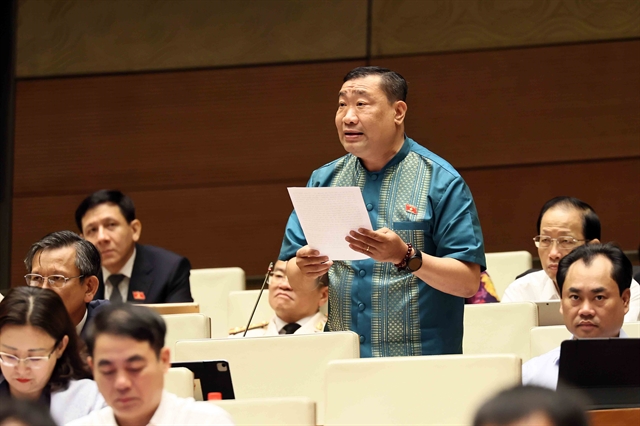
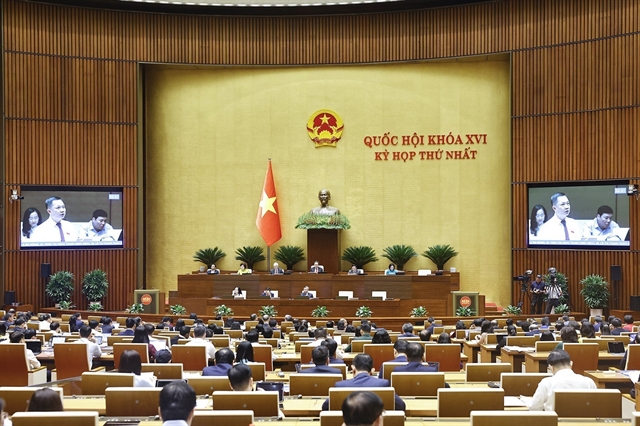
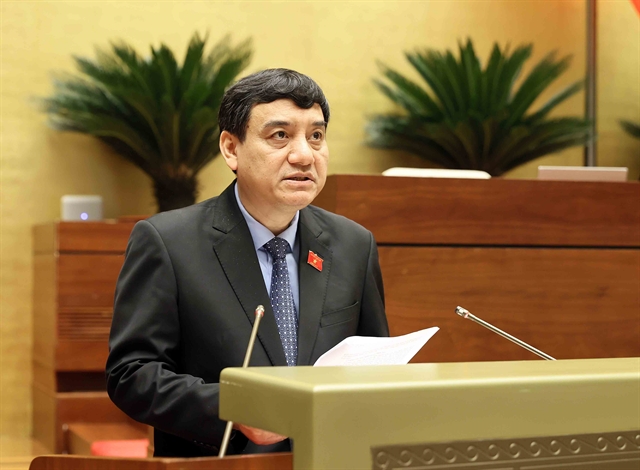
| National Assembly deputy Thạch Phước Bình delivers his speech on Tuesday morning. — VNA/VNS Photo An Đăng |
HÀ NỘI — A more substantial pay rise is needed to ensure public-sector workers can meet basic living standards, a National Assembly (NA) deputy has said, warning that current proposals fall short of what is required to keep pace with rising costs.
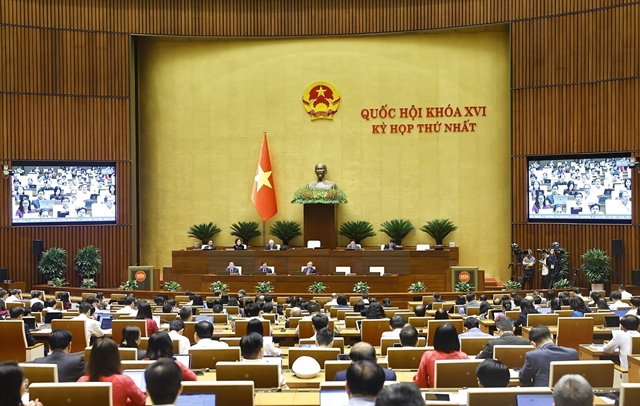
The view was put forward by lawmaker Thạch Phước Bình representing the Mekong Delta province of Vĩnh Long during Tuesday morning’s sitting, part of the first session of the 16th National Assembly in Hà Nội.
The session reviewed a supplementary assessment of the implementation of the 2025 socio-economic development plan and State budget, alongside progress in the early months of this year.
Deputy Bình argued the issue is no longer whether salaries should be increased, but by how much to meet living needs while remaining within budget constraints and maintaining motivation across the public service.
He said adjustments to the base salary are not merely technical, but have a direct and decisive impact on livelihoods, work motivation and the overall quality of the civil service workforce.
In recent years, the State has raised the base salary from VNĐ1.49 million (US$60) to VNĐ1.8 million ($72), then to VNĐ2.34 million ($94) per month, with a further increase to VNĐ2.53 million ($101) scheduled from July 1.
However, Bình said the proposed VNĐ2.53 million level, while technically reasonable, is not sufficient to ensure a decent standard of living for most public-sector workers.
He cited the example of a newly recruited civil servant with a salary coefficient of 1.86, whose monthly income would be roughly VNĐ4.7 million ($188) before insurance deductions.
Meanwhile, basic living costs in urban areas typically range from VNĐ6 million to VNĐ7 million ($240–280) per month, highlighting a significant gap between income and essential expenditure.
As a result, many employees are unable to live independently on their salaries alone and must rely on supplementary income, affecting both motivation and quality of life.
In this context, the VNĐ2.53 million level may help stabilise incomes but falls short of ensuring adequate living standards.
From January 1, 2026, regional minimum wages in the private enterprise sector rose to VNĐ5.31 million ($212) in Region I, VNĐ4.73 million ($189) in Region II, VNĐ4.14 million ($166) in Region III and VNĐ3.70 million ($148) in Region IV, averaging around VNĐ4.47 million ($179) per month nationwide.
Based on the new base salary of VNĐ2.53 million, a typical entry-level coefficient of 1.86 would yield approximately VNĐ4.7 million per month, while a coefficient of 2.1 would generate about VNĐ5.31 million ($213).
In other words, those at the lowest levels earn only marginally above the average regional minimum wage, while those at a 2.1 coefficient barely reach the Region I threshold.
Against the backdrop of urban living costs, such income levels are considered sufficient only to get by rather than ensure a stable livelihood.
Spending pressures remain considerable, he said.
In 2025, several categories of essential expenditure rose faster than the overall consumer price index, including housing, electricity, water and construction materials, which increased by 8.3 per cent, while pharmaceuticals and healthcare services rose by 12.92 per cent.
These are largely unavoidable costs for public-sector households.
Consequently, despite an 8.12 per cent rise in the base salary, many workers report only modest improvement rather than genuine financial security, particularly those supporting children, paying rent, commuting, covering education costs and accessing healthcare.
Based on these factors, Bình proposed raising the base salary to between VNĐ2.65 million ($106) and VNĐ2.70 million ($108) per month as a more appropriate and feasible option.
At this level, those with a coefficient of 1.86 could earn around VNĐ4.9 million to VNĐ5.0 million ($196–200) per month, while those at 2.1 would receive more than VNĐ5.5 million ($220), an increase of roughly VNĐ200,000 to VNĐ400,000 ($8–16) compared with the VNĐ2.53 million scenario.
Although modest, such gains would be meaningful for lower-income groups, helping narrow the gap with regional minimum wages in the private sector and easing pressure on essential household spending.
From a social and psychological perspective, while a base salary of VNĐ2.65 million to VNĐ2.7 million would not fully allow workers in major cities to live solely on their wages, it would still represent a significant step forward.
It would reduce reliance on supplementary income, provide a tangible sense of improvement rather than a nominal increase and contribute to greater stability and work motivation, he said.
This is particularly important as prices for essential goods and services such as housing, healthcare and utilities continue to rise faster than the general consumer price index, making it crucial that pay increases are substantial enough to be felt.
In terms of fiscal balance, Bình added that a base salary in the VNĐ2.65 million to VNĐ2.7 million range would not place excessive strain on the State budget, provided it is accompanied by measures such as streamlining the payroll, restructuring public expenditure and cutting inefficient spending.
“The key is to strike a balance between affordability and the need to improve living standards,” he said.
|
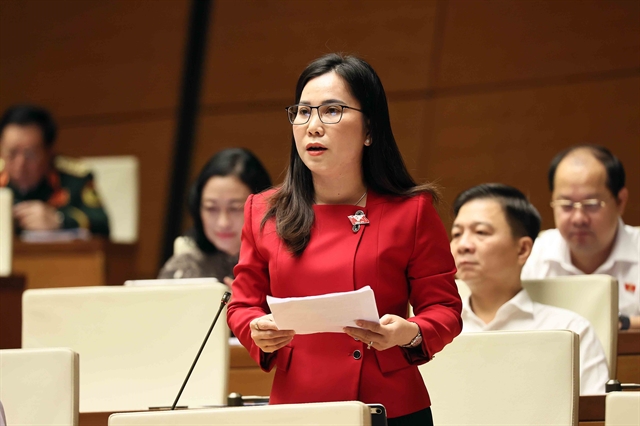
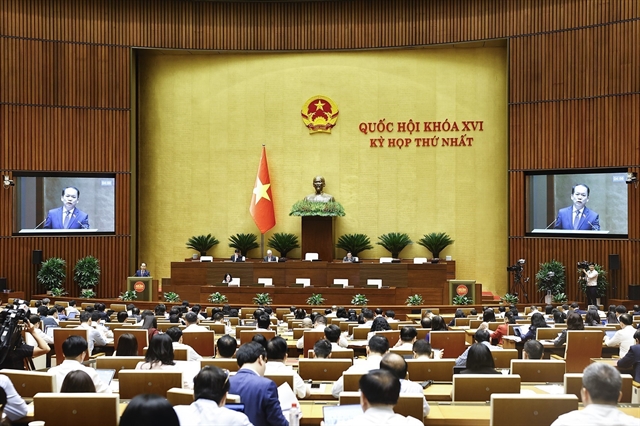
| NA deputy Lê Ngọc Linh delivers her speech on Tuesday morning. — VNA/VNS Photo An Đăng |
Encouraging families to have two children
Also addressing the session, National Assembly deputy Lê Ngọc Linh of the southern province of Cà Mau called for policies to encourage couples to have two children, describing this as a social responsibility linked to the country’s sustainable development.
She urged a shift towards proactive, comprehensive and long-term pro-natal policies centred on families and women, while respecting reproductive choice and creating conditions that enable people both to want and to be able to have children.
Linh said Việt Nam’s total fertility rate has fallen to around 1.91 children per woman, below the replacement level of 2.1.
This reflects a trend towards smaller family sizes, with the number of births insufficient to sustain long-term population stability.
The fertility rate stood at around 2.1 in 2022, declined to approximately 1.96 in 2023 and fell further to 1.91 in 2024.
These figures point to a renewed and rapid decline over the past two years, with urban fertility rates lower than those in rural areas, she said.
At the same time, Việt Nam is transitioning rapidly from a golden population phase to an ageing society, with the proportion of people aged 60 and above steadily increasing while the young labour force is expected to shrink significantly.
To address low fertility and its consequences, Linh proposed that the Government and National Assembly recalibrate population policy, shifting decisively from family planning towards maintaining replacement-level fertility in a sustainable manner. Policies should be regionally differentiated, with priority given to areas with low birth rates, including major cities and industrial zones.
She also called for long-term financial support for families raising young children, including subsidies for childbirth and childcare, expanded healthcare cost exemptions for children and preferential tax policies for households with young dependants.
In addition, the State should invest in a comprehensive and high-quality service system, expanding nursery and pre-school networks, particularly in urban and industrial areas, and developing flexible childcare services, including after-hours provision.
Parallel measures should include housing support, stable employment opportunities and higher incomes for young couples, enabling them to feel secure in starting families and having children. — VNS
Politics & Law
 Politics & Law
 Politics & Law
 Politics & Law
 Politics & Law
 Politics & Law
 Politics & Law
 Politics & Law
 Politics & Law
 Politics & Law
 Politics & Law
 Politics & Law
 Politics & Law
 Politics & Law
 Politics & Law