 Politics & Law
Vietnamese Prime Minister meets Cambodian National Assembly President
1.
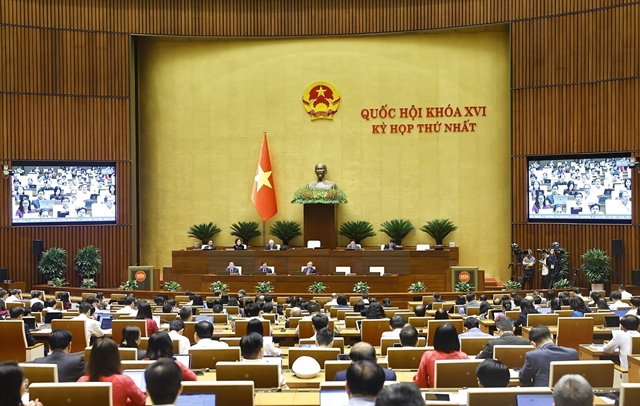 |
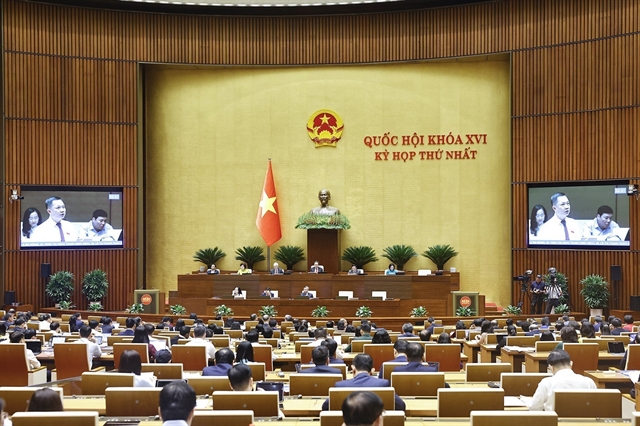
| A view of the 16th National Assembly's first session. — VNA/VNS Photo |
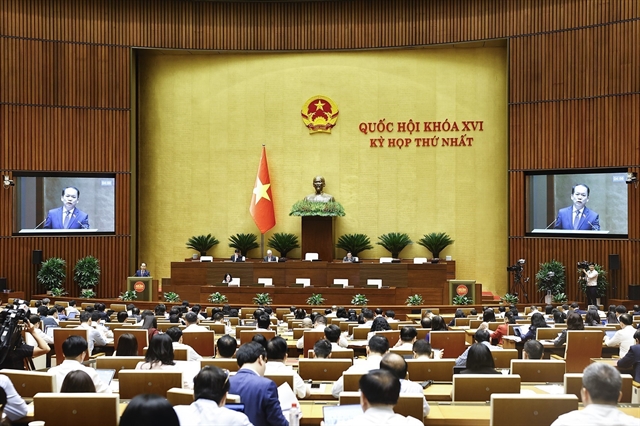
HÀ NỘI — The 16th National Assembly (NA) convened a plenary sitting on Tuesday morning as part of its first session, continuing deliberations on a wide range of socio-economic and fiscal issues, and discussing amendments and supplements to four tax-related laws.
Accordingly, lawmakers are expected to discuss the supplementary assessment of the implementation of the 2025 socio-economic development plan and state budget, as well as performance in the early months of 2026. They will also review the five-year socio-economic development plan for 2026–2030, thrift practices and anti-wastefulness efforts in 2025, and progress in achieving national gender equality targets. The session is broadcast live on radio and television, enabling voters and the public to follow proceedings.
In the afternoon, the legislature will hear a proposal on supplements to the session’s agenda and subsequently adopt the revised programme. Deputies will then debate key financial and investment frameworks, including the medium-term public investment plan for 2026–2030, the national five-year financial plan, the public debt management strategy for the same period, and the final settlement of the 2024 state budget.
Toward the end of the day, legislators will examine a report and a verification report on amendments and supplements to the Law on Personal Income Tax, the Law on Value-Added Tax, the Law on Corporate Income Tax, and the Law on Special Consumption Tax.
The draft amendments aim to support business households, individuals, and enterprises, particularly small-scale entities, while ensuring fairness in income tax policies and encouraging the transition from household businesses to formal enterprises. Based on impact assessments, the draft refrains from stipulating specific revenue thresholds for personal income tax and VAT exemptions, delegating such authority to the Government.
In addition, the draft proposes extending preferential special consumption tax rates for battery-powered vehicles with fewer than 24 seats through 2030, in line with environmental protection goals, sustainable development objectives, and efforts to reduce urban pollution and dependence on fossil fuels. — VNA/VNS
Politics & Law
 Politics & Law
 Politics & Law
 Politics & Law
 Politics & Law
 Politics & Law
 Politics & Law
 Politics & Law
 Politics & Law
 Politics & Law
 Politics & Law
 Politics & Law
 Politics & Law
 Politics & Law
 Politics & Law