 Politics & Law
Vietnamese Prime Minister meets Cambodian National Assembly President
1.
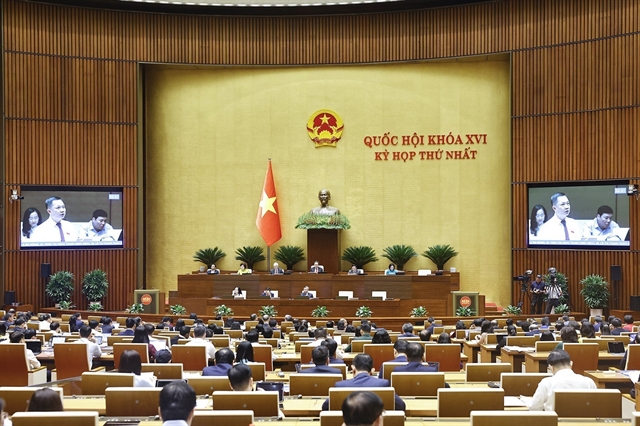 |
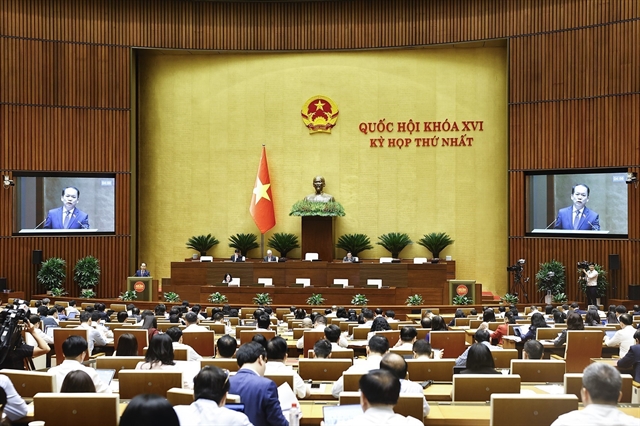
| A view of the first session of the 16th National Assembly (NA) on Monday afternoon reviewing the implementation of the 2025 socio-economic development and State budget plans, early 2026 performance, and the draft five-year plan for 2026–2030. VNA/VNS Photo |
HÀ NỘI — Lawmakers have identified administrative reform, particularly the simplification of procedures, as a key solution to unlock resources, enhance competitiveness and strengthen market confidence.
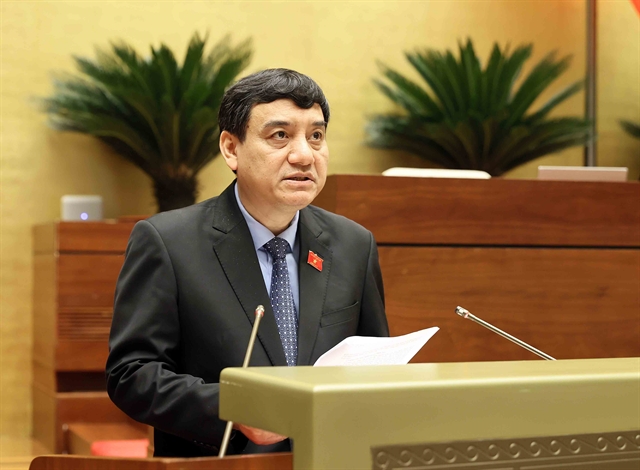
Speaking at the first session of the 16th National Assembly (NA) on Monday afternoon, deputies reviewed the implementation of the 2025 socio-economic development and State budget plans, early 2026 performance, and the draft five-year plan for 2026–2030.
They broadly agreed that during the 2021–25 period, the Government had maintained macro-economic stability, kept inflation under control and ensured major economic balances, while safeguarding national financial security. Public borrowing and debt repayment remained within limits approved by the NA.
Defence and security were strengthened, social welfare improved, and external relations from Party diplomacy to State and people-to-people diplomacy continued to achieve significant results, helping maintain a peaceful environment and mobilise resources for development.
Endorsing the Government’s proposed orientations, targets and solutions for the 2026–30 plan, Deputy Dương Khắc Mai from Lâm Đồng Province put forward recommendations to help achieve double-digit growth and meet long-term development goals.
He noted that agriculture remains insufficiently sustainable, with slow progress in shifting from a production mindset to an agricultural economy based on large-scale, standardised commodity output. Processing industries for agricultural, forestry and fishery products remain underdeveloped, particularly in preservation and deep processing, while reliance on imported inputs and post-harvest losses remain high. Despite growth in the sector, incomes for many farmers are still modest.
To address these challenges, Mai urged the Government to focus on developing high-quality, value-added agricultural products, with sustainability embedded across economic, social and environmental dimensions. He also called for stronger production linkages to mobilise resources and align production, processing and consumption.
At the same time, priority should be given to supporting industries and agro-processing, alongside measures to improve product value and gradually reduce reliance on raw exports. Increased public investment in agriculture and rural development, as well as mechanisms to attract private capital, especially in remote areas, were also recommended.
On labour productivity, Mai highlighted that average growth over the past five years stood at 5.21 per cent, below the 6.5 per cent target. Workforce quality, particularly in emerging and high-tech industries, has yet to meet demand or drive breakthroughs in productivity and competitiveness.
He stressed that improving labour productivity depends on developing a skilled workforce aligned with market needs, urging stronger efforts to expand vocational training in both scale and structure.
Meanwhile, Deputy Hoàng Minh Hiếu from Nghệ An Province pointed out that the Government has approved plans to cut and simplify about 63 per cent of administrative procedures related to business activities, with expected reductions of 32 per cent in processing time and 40 per cent in compliance costs. These figures, as he described, was ‘impressive’.
However, he cautioned that many cumbersome procedures remain. According to the 2024 Provincial Competitiveness Index, nearly 24 per cent of businesses still spend more than 10 per cent of their working time dealing with administrative procedures, indicating that regulations remain unclear and difficult to access.
Studies also show that provincial public service portals still face usability issues, including suboptimal interfaces, repeated data entry requirements and, in some cases, the continued need for both paper and electronic submissions. Bottlenecks persist in inter-agency procedures, while digital transformation remains slow and uneven.
Government reports further indicate delays in completing key national and sectoral databases, as well as limited data connectivity and sharing. In some localities, infrastructure and digital capacity remain inadequate, while the digital skills of some officials and citizens are still limited, reducing the effectiveness of administrative reform.
In response, Hiếu called for a shift from simplification to substantive reduction of procedures. This would involve clearly identifying which procedures should be simplified, which are outdated and should be abolished.
In the short term, he urged prioritising procedures that directly affect businesses and citizens and have broad economic impact, such as those related to land, investment, construction and the environment.
He also proposed developing a set of concrete indicators to assess administrative reform based on real outcomes rather than formal reporting. These should include actual processing time, the number of visits required, compliance costs, on-time resolution rates and satisfaction levels among citizens and businesses.
For new procedures, thorough impact assessments are needed, alongside continuous review. Any procedures that fail to meet objectives within two to three years should be promptly revised or abolished.
Hiếu emphasised that digitalisation must go hand in hand with process redesign.
“Administrative digital transformation is not about putting paper documents online, but about re-engineering procedures to suit the digital environment,” he said, citing examples such as location-independent services and proactive administrative processes. — VNS
Politics & Law
 Politics & Law
 Politics & Law
 Politics & Law
 Politics & Law
 Politics & Law
 Politics & Law
 Politics & Law
 Politics & Law
 Politics & Law
 Politics & Law
 Politics & Law
 Politics & Law
 Politics & Law
 Politics & Law