 Politics & Law

Tighter controls on livestream sales
1.
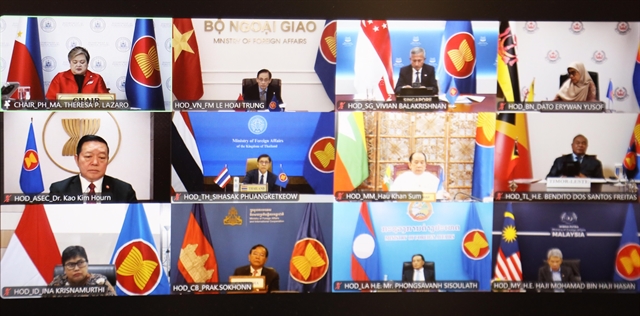 |
| ASEAN foreign ministers convene their second special meeting in an online format on Monday. VNA/VNS Photo |
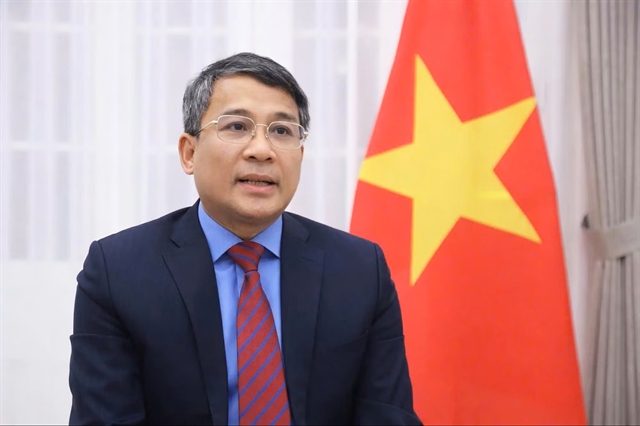
HÀ NỘI — Foreign ministers of the ASEAN convened their second special meeting in an online format on Monday to discuss and coordinate responses to the rapidly evolving and complex situation in the Middle East. Vietnamese Minister of Foreign Affairs Lê Hoài Trung attended the meeting.
Addressing the session, Trung shared assessments of the far-reaching impacts of the conflict, noting that the meeting presents an opportunity for the bloc to review and adjust its strategies towards building a more resilient and sustainable community.
He stressed that, in the current context, ASEAN unity and centrality are decisive factors, calling on the bloc to uphold a unified stance in engagements with relevant parties to ensure the safety of member states’ vessels and citizens in the region. He also highlighted the need to enhance strategic autonomy, strengthen cross-pillar and cross-sectoral coordination, and improve the bloc’s capacity to respond to and anticipate future challenges.
On economic and energy issues, the Vietnamese minister urged faster implementation of key connectivity projects such as the ASEAN Power Grid (APG) and the Trans-ASEAN Gas Pipeline (TAGP), as well as readiness to activate emergency support mechanisms under the ASEAN Petroleum Security Agreement (APSA). He proposed a cross-sectoral approach linking energy and food security, including exploring the expansion of the ASEAN Plus Three Emergency Rice Reserve (APTERR) to cover other essential goods and agricultural inputs, while boosting cooperation with bloc partners to mitigate supply risks.
He also called for enhanced social welfare measures to support vulnerable groups.
Participants welcomed Việt Nam’s initiative on a common ASEAN response strategy to developments in the Middle East and other extra-regional crises, and agreed to develop a leaders’ statement on a unified response, expected to be submitted to the 48th ASEAN Summit in May for adoption.
The meeting emphasised the effective utilisation of existing mechanisms such as APSA, APG and TAGP. On consular protection, ministers commended timely support among member states and reaffirmed their commitment to mutual assistance in times of crisis.
At the conclusion of the meeting, the Philippines, as ASEAN Chair for 2026, issued the Chairman’s Statement summarising key outcomes, including proposals to strengthen supply chain resilience, energy and food security, and crisis response mechanisms.
Also on Monday, ASEAN foreign ministers released a statement on developments in the Middle East, welcoming the recently agreed ceasefire and calling on all parties to exercise restraint, act responsibly and pursue peaceful, diplomatic solutions towards sustainable peace. The statement underscored the importance of maintaining maritime and aviation security, safety and freedom in accordance with international law, including the 1982 United Nations Convention on the Law of the Sea (UNCLOS), and called for ensuring smooth navigation through the Strait of Hormuz.
The ministers also reaffirmed obligations to protect civilians and civilian infrastructure, as well as to ensure the safety of humanitarian personnel and United Nations peacekeeping forces.
The first special meeting on the Middle East situation was held on March 13. — VNA/VNS
Politics & Law
 Politics & Law
 Politics & Law
 Politics & Law
 Politics & Law
 Politics & Law
 Politics & Law
 Politics & Law
 Politics & Law
 Politics & Law
 Politics & Law
 Politics & Law
 Politics & Law
 Politics & Law
 Politics & Law