 Politics & Law
Sơn La holds second coffee festival, targeting stronger businesses in future
1.
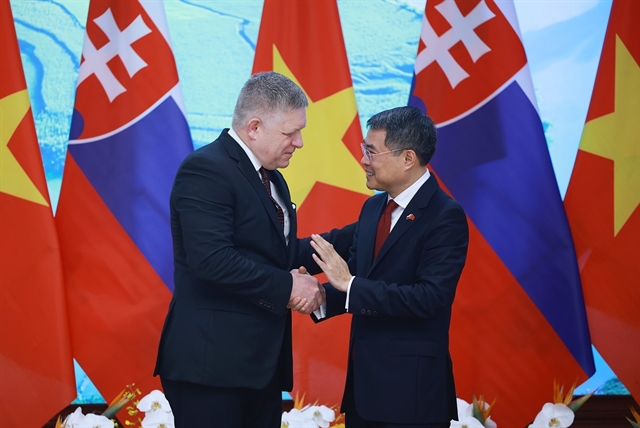 |
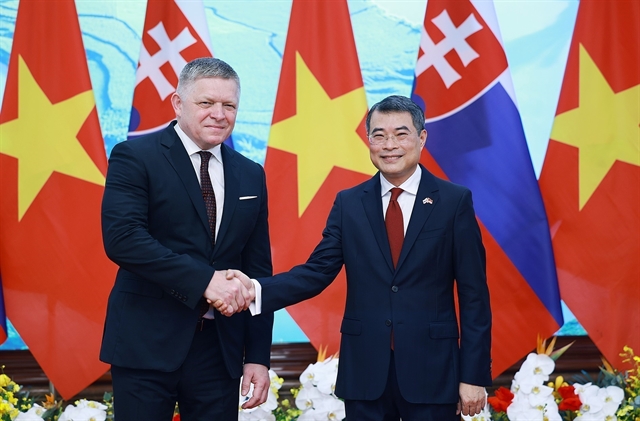
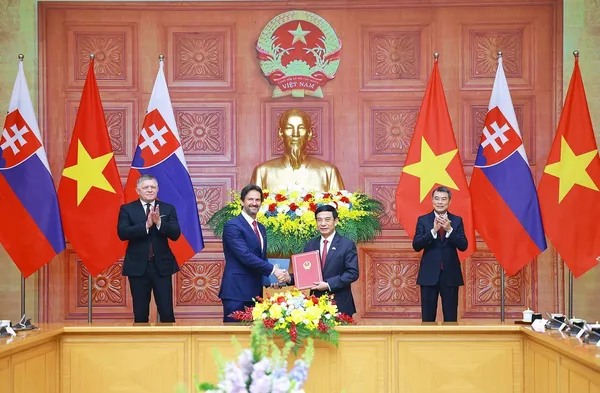
| Prime Minister Lê Minh Hưng (right) and Slovak Prime Minister Robert Fico in Hà Nội. VNA/VNS Photo |
HÀ NỘI – Việt Nam and Slovakia have issued a joint statement on the establishment of a strategic partnership on the occasion of the official visit to Việt Nam from April 12 to 14 by Slovak Prime Minister Robert Fico.
The following is the full text of the joint statement.
JOINT STATEMENT ON THE ESTABLISHMENT OF A STRATEGIC PARTNERSHIP BETWEEN THE SOCIALIST REPUBLIC OF VIỆT NAM AND THE SLOVAK REPUBLIC
At the invitation of H.E. Lê Minh Hưng, Prime Minister of the Socialist Republic of Việt Nam, H.E. Robert Fico, Prime Minister of the Slovak Republic, paid an official visit to Việt Nam from 12 to 14 April 2026.
Since the establishment of diplomatic relations in 1950, Việt Nam and Slovakia have developed a traditional friendship and multifaceted cooperation based on trust, equality and mutual respect, for the benefit of their peoples.
Recognising the growing geopolitical, economic and technological importance of the Indo-Pacific, the two sides acknowledged the value of a stronger partnership between Việt Nam and Slovakia in support of regional connectivity, open international trade and a rules-based international order.
The ties between Việt Nam and Slovakia are grounded in shared interests and commitment to the general principles of international law and the Charter of the United Nations, and the common principles set out in the Framework Agreement on Comprehensive Partnership and Cooperation between the European Union (EU) and its Member States, of the one part, and the Socialist Republic of Việt Nam, of the other part. These principles include respect for the independence, sovereignty and territorial integrity of all States, respect for each country’s political system, non-interference in each other’s internal affairs, commitment to open, fair and rules-based trade, and strengthening the role of international law and multilateralism, as well as the promotion of peace, security and prosperity in line with the UN Charter. Building on 75 years of bilateral relations, the Prime Minister of the Socialist Republic of Việt Nam and the Prime Minister of the Slovak Republic agreed to adopt this Joint Statement on upgrading Việt Nam–Slovakia relations to a Strategic Partnership.
The Strategic Partnership aims to elevate bilateral relations to a new level, strengthen existing cooperation mechanisms, and explore new avenues for deepening cooperation, both bilaterally and multilaterally.
Within this framework, Việt Nam and Slovakia will continue to deepen cooperation in areas of mutual interest in order to deliver tangible benefits to their peoples and contribute to peace, stability, cooperation and prosperity in the region and beyond, with a focus on the following:
I. Strengthening political and diplomatic cooperation
1. The two sides reaffirmed the important role of high-level visits in consolidating the traditional friendship and opening prospects for effective and substantive cooperation between Việt Nam and Slovakia for the benefit of the peoples of both countries and for peace, stability and development in the region. The two sides agreed to enhance delegation exchanges and political dialogue at all levels, particularly at the high level, and to explore the establishment of new cooperation mechanisms between ministries, agencies and localities of the two countries.
2. The two sides agreed to strengthen contacts across all appropriate channels, including between relevant agencies of the Communist Party of Việt Nam, the Government, the National Assembly and localities of Việt Nam and the relevant institutions and authorities of the Slovak Republic, in order to enhance political, socio-economic and foreign-policy cooperation and mutual understanding. The two sides agreed that regular political consultations between the Ministries of Foreign Affairs of the two countries would serve as a key mechanism for reviewing cooperation and exchanging updates on bilateral, regional and international issues.
3. The two sides expressed their desire to further strengthen relations between their legislative bodies, including through delegation exchanges and bilateral and multilateral engagement, particularly between leaders, specialised committees and parliamentary friendship groups of both sides, in line with the new partnership framework between the two countries.
4. The two sides reiterated their commitment to multilateralism, underscored the central role of the United Nations, and reaffirmed the importance of a rules-based international order based on international law. The two sides reaffirmed the principle of refraining from the threat or use of force and supported the efforts of the international community to promote dialogue, reconciliation and peaceful, comprehensive and sustainable solutions to ongoing crises, with a view to achieving comprehensive, just and lasting peace and the promotion and protection of human rights on the basis of the fundamental principles of the Charter of the United Nations and international law.
5. The two sides will continue to strengthen cooperation, exchange views and, where appropriate, seek coordination in regional and international frameworks, support each other’s candidacies at international organisations, particularly at the United Nations, the Inter-Parliamentary Union, ASEAN–EU, ASEM and other relevant cooperation forums. The two sides will also continue to exchange views on regional and international issues and seek cooperation in addressing traditional and non-traditional security challenges, including pandemics, climate change, terrorism, water security, energy security and food security, while promoting sustainable development, trade liberalisation and stronger regional economic connectivity.
6. The two sides reaffirmed the importance of maintaining peace, stability, security, safety, and freedom of navigation and overflight in seas and oceans, and of resolving disputes by peaceful means, on the basis of international law, in particular the 1982 United Nations Convention on the Law of the Sea (UNCLOS).
7. The two sides noted the importance of the full and effective implementation of the 2002 Declaration on the Conduct of Parties in the South China Sea (called East Sea in Việt Nam) (DOC). The two sides also welcomed progress towards the early conclusion of an effective and substantive Code of Conduct in the South China Sea (COC), in accordance with international law, including the 1982 United Nations Convention on the Law of the Sea (UNCLOS).
II. Expanding economic, trade, and investment cooperation
8. The two sides identified economic, trade, and investment cooperation as one of the key pillars of bilateral relations. Based on existing bilateral and multilateral economic agreements and the complementary nature of the two economies, the two sides agreed to further deepen economic, trade and investment cooperation, while ensuring an open, fair, transparent, equitable and non-discriminatory business environment in each other’s markets.
9. The two sides reaffirmed their commitment to enhancing the role and effectiveness of the Việt Nam–Slovakia Intergovernmental Committee on Economic Cooperation, co-chaired by the Ministry of Industry and Trade of Việt Nam and the Ministry of Economy of Slovakia, as a key mechanism for identifying and promoting areas of cooperation and discussing sectors with significant potential for further development. The two sides also agreed to encourage the establishment of specialised subcommittees under the Intergovernmental Committee to review and assess the implementation of existing agreements and to propose measures to promote trade and investment, with a view to contributing to a more balanced bilateral trade relationship and further strengthening economic cooperation.
10. The two sides agreed to facilitate private investment in each other’s markets by promoting relevant activities in both countries and strengthening cooperation in areas of mutual interest, taking into account the respective strengths and needs of both sides, including the automotive industry, electronics, transport, energy, including nuclear energy, green technologies, pharmaceuticals, mechanical engineering, specialised machinery, science and technology, digital transformation, and artificial intelligence.
11. The two sides emphasised the importance of an open, fair and transparent trade and investment environment based on international law and rules, and of maximising cooperation opportunities within the broader framework of Việt Nam–EU relations. They reiterated their support for the full and effective implementation of the EU–Việt Nam Free Trade Agreement (EVFTA) and acknowledged the importance of advancing the ratification of the EU–Việt Nam Investment Protection Agreement (EVIPA), with a view to strengthening legal certainty and fostering a predictable and transparent business environment. The two sides also expressed their readiness to further strengthen economic cooperation and promote stronger trade and business links with partners in the EU and ASEAN, while promoting sustainable fishery trade in compliance with international standards.
III. Strengthening defence and security cooperation
12. The two sides agreed to strengthen defence cooperation through delegation exchanges at all levels, including in such areas as personnel training, military education, United Nations peacekeeping operations, unexploded ordnance clearance, and response to non-traditional security challenges. The two sides agreed to explore possibilities for regular consultations between their defence authorities and to strengthen defence cooperation in areas of mutual interest, in accordance with the needs and strengths of each side.
13. The two sides expressed their desire to expand cooperation in cybersecurity, information security, and the prevention of and fight against cybercrime. The two sides will also make efforts to complete internal procedures related to the United Nations Convention against Cybercrime, recognizing that its early entry into force would further strengthen regional and international cooperation in this field.
14. The two sides would also enhance cooperation in combating transnational organized crime and exchange criminal information through INTERPOL and ASEANAPOL channels, in line with Agreement between the Ministry of Public Security of the Socialist Republic of Việt Nam and the Ministry of Interior of the Slovak Republic on Cooperation in preventing and in the fight against crime, signed on 06 March 2017.
IV. Promoting practical cooperation in science and technology, education, culture, tourism, labour, agriculture, climate, and healthcare
Science and technology
15. The two sides agreed to further deepen cooperation in science, technology, and innovation, including digital transformation and digital economy development. The two sides agreed to seek to mobilise resources for the phased implementation of cooperation programmes, support research, innovation, and technology transfer projects between higher education institutions, research institutes, and businesses in areas of mutual strength and interest, while encouraging the participation of technology enterprises, as well as development and innovation funds. The two sides would also encourage the sharing of knowledge, experience, and good practices for capacity building in management, planning, and formulation of national policies on science, technology, and innovation.
Education and training
16. The two sides agreed to support strengthening cooperation in education and training, including higher education and postgraduate education through partnerships between higher education institutions, research institutes, and enterprises to provide training, conduct research, and develop highly applicable digital products and solutions. The two sides would step up exchanges of experts, academic staff and students, establish joint projects, and explore opportunities for cooperation, particularly in emerging scientific and technological fields such as semiconductors, artificial intelligence, robotics, automation, quantum technology, data science, computer science, smart technology, and fintech. The two sides agreed to consider promoting scholarship schemes to support student mobility.
17. The two sides will continue to cooperate in education and training by providing scholarships, promoting student and lecturer exchange programmes, and encouraging the participation of educational institutions in EU programmes such as ERASMUS+, and enhancing the relevance of training cooperation in line with evolving labour market needs.
Culture, sports, and tourism
18. The two sides reaffirmed their commitment to promoting deeper mutual understanding between the peoples of both countries and to encouraging the establishment and expansion of networks to strengthen connections and cooperation in culture and the arts. The two sides would work with each other to promote cultural cooperation in various fields, including strengthening direct contacts between cultural institutions and utilizing existing cooperation mechanisms through the hosting of cultural and arts exchanges, exhibitions, musical, cinematic, and sports events, especially on the occasion of major celebrations such as National Days and milestone anniversaries of diplomatic relations.
19. The two sides would bolster exchanges and connectivity among partners in tourism and sports, share each other’s experiences and strengths, promote tourism cooperation, and facilitate participation in annual tourism events organized in each country, thereby promoting tourism exchanges and making effective use of existing travel facilitation policies and mechanisms, including visa facilitation measures introduced by Việt Nam for citizens of the Slovak Republic, in accordance with applicable laws and regulations.
20. The two sides will consider the early negotiation of a possible Agreement between the two Governments on visa exemption for holders of official passports, in accordance with their respective laws and regulations.
Labour
21. The two sides stand ready to explore more effective and mutually beneficial cooperation in the field of labour mobility in accordance with national laws, labour-market needs, and relevant social protection standards. In this context, the two sides will focus on the more effective implementation of the Memorandum of Understanding between the Ministry of Labour, War Invalids and Social Affairs of the Socialist Republic of Việt Nam and the Ministry of Labour, Social Affairs and Family of the Slovak Republic, dated 27 October 2008, concerning cooperation in the field of labour mobility. Regarding the social protection of mobile workers, the two sides stand ready to start negotiations on an agreement on social security.
Agriculture
22. The two sides agreed to promote cooperation in agriculture, agricultural processing and water management with a view to facilitating trade expansion, including through technical exchanges between plant protection and quarantine authorities, the sharing of best practices in food safety and sanitary and phytosanitary standards, cooperation in agricultural technologies and innovation, exchanges of experience in water resource management, and the strengthening of links between relevant institutions and business entities in both countries.
Climate change and environmental affairs
23. The two sides agreed to strengthen cooperation with a view to achieving net-zero emissions, including through the exchange of information, experience and best practices on CO₂ reduction, carbon pricing and other relevant policy instruments. The two sides would also cooperate in diversifying energy sources, thereby enhancing energy security and supporting the transition to sustainable and low-emission energy sources such as nuclear, solar, hydro, geothermal and wind power. The governments, research institutes, universities and private sector entities of both sides would be encouraged to actively participate in these areas of cooperation.
The two sides agreed to step up cooperation and the exchange of experience in the circular economy and waste management. The two sides would also enhance collaboration in green technologies.
Healthcare
24. The two sides agreed to promote cooperation in the development of human resources in the healthcare sector, with a view to strengthening bilateral cooperation in the area of the healthcare workforce. The two sides also agreed to promote collaboration through the exchange of information, experience and best practices. They further expressed their desire to promote cooperation in balneology, including the protection and use of natural healing resources, expert exchanges, and rehabilitation and physical medicine. The two sides also expressed readiness to cooperate in regulated health tourism, particularly in services integrating tourism and healthcare, including the use of traditional medicine.
Legal and judicial cooperation
25. The two sides exchanged views on the possibility of signing a Memorandum of Understanding on legal and judicial cooperation between the Ministry of Justice of Việt Nam and the Ministry of Justice of Slovakia, to replace the Memorandum of Understanding signed in 2014, in line with the priorities of both sides in the new context.
Local cooperation and people-to-people exchanges
26. The two sides agreed to strengthen cooperation between localities and promote people-to-people exchanges, recognising these as important pillars of the social foundation of bilateral relations. The two sides welcomed cooperation between HCM City and Košice on the basis of the Memorandum of Understanding signed in 2016. They would also promote new cooperation frameworks between localities and foster the conclusion of further cooperation documents to unlock the potential of this Strategic Partnership. The two sides would also support closer ties with the Vietnamese community in Slovakia through cultural events and community organisations, while promoting travel and people-to-people contacts among civil society and friendship organisations of both countries, in accordance with their respective laws and regulations.
27. Based on the contents of this Joint Statement, the Ministries of Foreign Affairs of the two countries will coordinate with relevant ministries and agencies on the development of a joint action plan to implement the aforementioned objectives. — VNA/VNS
Politics & Law
 Politics & Law
 Politics & Law
 Politics & Law
 Politics & Law
 Politics & Law
 Politics & Law
 Politics & Law
 Politics & Law
 Politics & Law
 Politics & Law
 Politics & Law
 Politics & Law
 Politics & Law
 Politics & Law