 Politics & Law
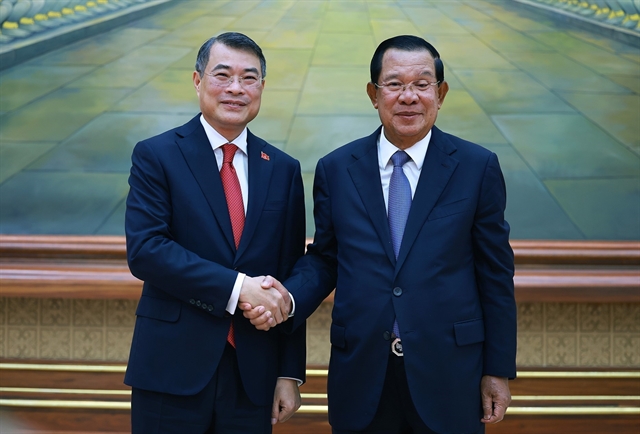
Vietnamese Prime Minister meets Cambodian National Assembly President
1.
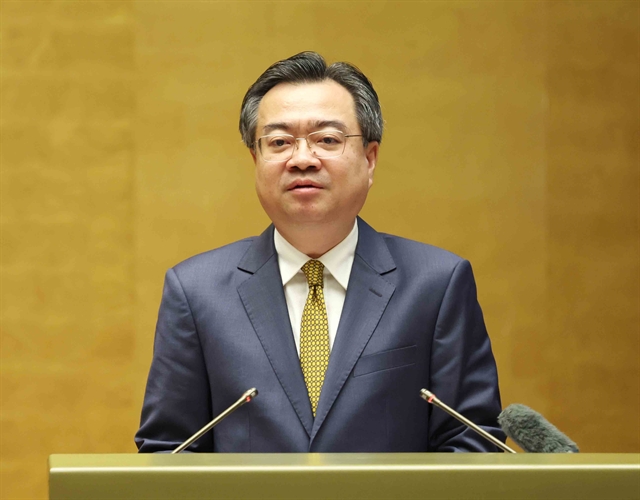 |
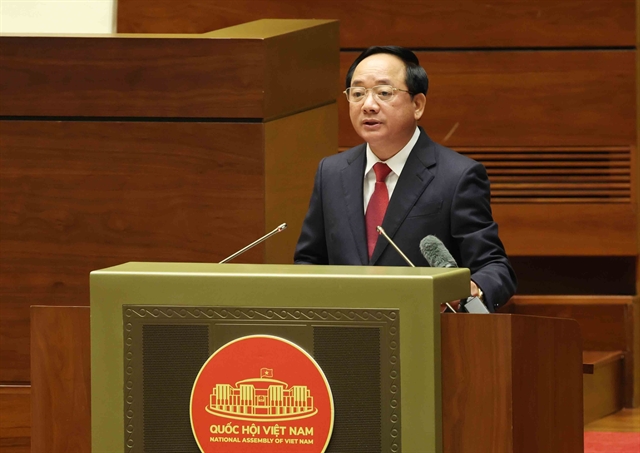
| Chairman of the Party Central Committee's Commission for Policies and Strategies Nguyễn Thanh Nghị addresses the national conference on April 13. — VNA/VNS Photos Phương Hoa |
HÀ NỘI — The five-year plan for socio-economic development, national finance, public debt management, and medium-term public investment for the 2026–30 period was highlighted at a national conference held on Monday to study, disseminate and implement the documents of the second meeting of the 14th Party Central Committee.
Addressing the conference, Politburo member, Secretary of the Party Central Committee, and Chairman of its Commission for Policies and Strategies Nguyễn Thanh Nghị presented key contents of the 14th Party Central Committee's Conclusion No 18-KL/TW, issued on April 2, on the plan. The conclusion outlines major orientations aligned with the goal of achieving double-digit economic growth in the coming period.
He noted that the 2021–2025 period unfolded amid a complex global environment marked by intertwined opportunities and challenges, with difficulties prevailing. However, under the Party’s close leadership, the coordinated oversight of the National Assembly, and the decisive, flexible governance of the Government and the Prime Minister, Việt Nam achieved important and comprehensive results. The country met or exceeded 22 out of 26 key socio-economic targets, including all social indicators.
Macroeconomic stability was basically maintained, major economic balances were ensured, and growth rebounded strongly. The country's gross domestic product (GDP) expanded by 8.02 per cent in 2025, with an average growth rate of 6.2 per cent over the five-year period.
The size of the economy increased from US$346 billion in 2020 to $514 billion in 2025, ranking 32nd globally. GDP per capita reached $5,026, placing Việt Nam among upper middle-income economies. Inflation, budget deficits, and public debt indicators remained under control.
Significant progress was also recorded in implementing strategic breakthroughs, resolving long-standing inefficiencies in investment projects and weak financial institutions, and advancing infrastructure development.
Human resources development, science and technology, innovation, and digital transformation made positive strides. Social welfare was ensured, living standards were improved, and national defence, security, and foreign affairs were enhanced.
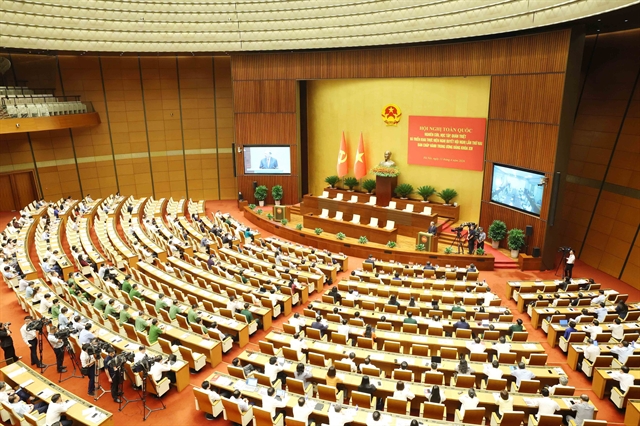 |
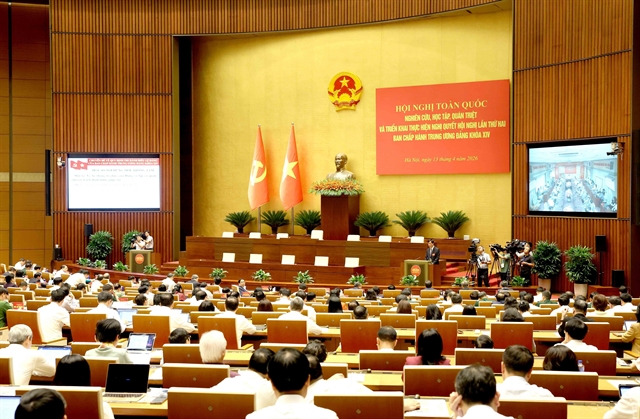
| Delegates in Hà Nội on Monday attend the national conference on disseminating and implementing the documents of the 14th Party Central Committee's second meeting. |
However, Nghị acknowledged that macroeconomic foundations are not yet truly solid, while productivity, competitiveness, and resilience of the economy remain limited. Contributions from science, technology, innovation, and digital transformation to growth remain modest.
Institutional frameworks to effectively mobilise private and foreign investments are yet to be fully developed. Public investment planning has not consistently prioritised comprehensive socio-economic efficiency, and environmental challenges persist. Implementation capacity at various levels has not fully kept pace with development requirements.
Looking ahead to the 2026–2030 period, the global situation is forecast to become increasingly complex and unpredictable, including ongoing conflicts in the Middle East that disrupt supply chains and drive up energy and transport costs. These factors pose direct challenges to Vietnam’s development objectives.
On the basis of a comprehensive assessment, the Party Central Committee has agreed on key targets aimed at achieving double-digit growth, contributing to the realisation of the country’s long-term strategic goals of becoming a developing country with modern industry, upper middle-income status and securing a position among the world’s top 30 economies by 2030.
To this end, the conclusion sets out 51 key indicators and identifies four overarching groups of tasks and solutions, covering socio-economic development, national finance, public debt management, and medium-term public investment.
For socio-economic development, priority measures include strengthening unity in mindset, awareness, aspiration and action, improving governance and implementation, advancing institutional reform, and transitioning to a growth model driven by science, technology, innovation, and digital transformation.
Efforts will also focus on restructuring industries, developing new economic models, ensuring macroeconomic stability, diversifying supply chains and capital flows, enhancing education and human resources, promoting cultural development, and modernising infrastructure.
In terms of national finance, the strategy emphasises effective budget management, the development of a transparent and modern tax system, and the mobilisation of diverse financial resources. The efficient use of public assets and cost-saving measures in administrative infrastructure are also highlighted.
Public debt management is identified as a long-term, cross-cutting priority to ensure national financial security. Measures include strengthening risk management, enhancing transparency, and adopting flexible borrowing strategies aligned with fiscal management.
Medium-term public investment is described as a critical driver of growth. The plan calls for more focused allocation of resources to key national projects, a reduction of at least 30 per cent in the number of projects compared to the previous period, and stronger public-private partnerships. Improving investment efficiency and preventing wastefulness and corruption are also key objectives.
Nghị also stressed that the effective implementation of Conclusion No 18 will require proactive, flexible, and results-oriented actions, alongside the active participation of the business community and the public, in order to drive rapid and sustainable socio-economic development in the years ahead. — VNA/VNS
Politics & Law
 Politics & Law
 Politics & Law
 Politics & Law
 Politics & Law
 Politics & Law
 Politics & Law
 Politics & Law
 Politics & Law
 Politics & Law
 Politics & Law
 Politics & Law
 Politics & Law
 Politics & Law
 Politics & Law