 Politics & Law
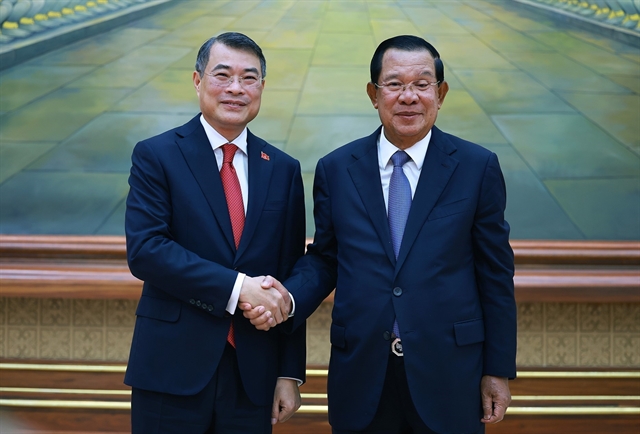
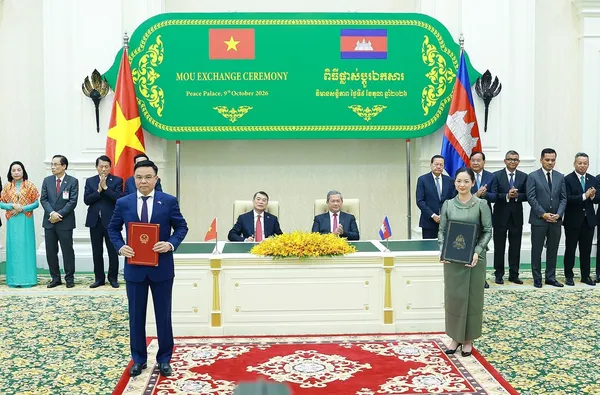
Vietnamese Prime Minister meets Cambodian National Assembly President
1.
|
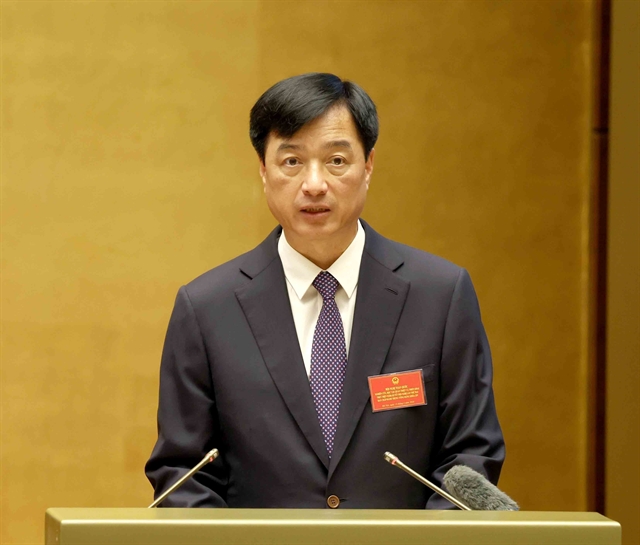
| Chairman of the Party Central Committee's Organisation Commission Nguyễn Duy Ngọc addresses the national conference on the documents from the second meeting of the 14th Party Central Committee. — VNA/VNS Photos Phương Hoa |
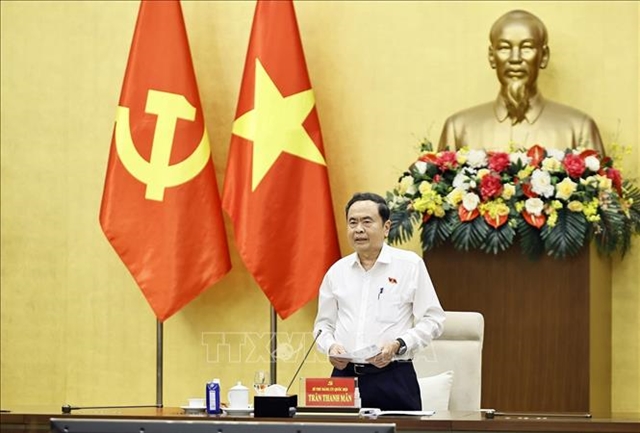
HÀ NỘI — Politburo member, Secretary of the Party Central Committee and Chairman of its Organisation Commission Nguyễn Duy Ngọc presented a thematic report on the regulation on the implementation of the Party Statutes at a national conference held on Monday to disseminate and implement the resolution and regulation of the second meeting of the 14th Party Central Committee.
Ngọc stressed that the new regulation, signed off by Party General Secretary Tô Lâm on behalf of the Party Central Committee on April 8, was developed in line with key principles, including strict adherence to the Party Statutes, selective amendments and supplements to several provisions, and the addition of new and important contents reflecting both directions set during the 13th tenure and emerging practical requirements.
Comprising 33 items, the regulation retains 12 provisions from the previous version while revising and supplementing a number of areas, including educational requirements for Party membership, timelines for admission ceremonies and recognition of full membership, handling of irregular admissions, management and use of Party membership cards, procedures for exemption from Party activities, settlement of complaints related to removal from Party membership, working regulations of Party committees, and the organisation of Party congresses.
It also addresses matters such as the number of standing committee members at each level, the composition of congress presidiums, Party badge awards, and Party finances.
|
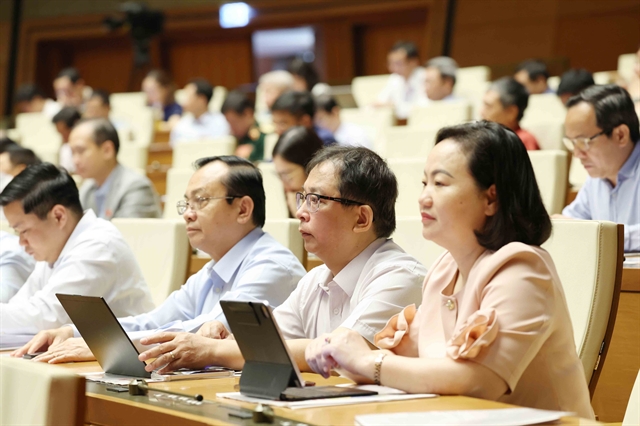
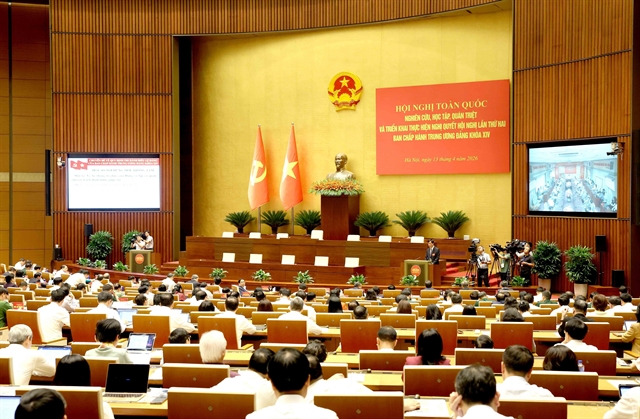
| Delegates at the national conference of the Party on Monday. |
Ngọc highlighted five key new and focal areas of the regulation. First, regarding the Party’s organisational system, the Party Central Committee has introduced pilot mechanisms to better align with the evolving structure of the political system. These include piloting the establishment of Party organisations in clusters of non-state enterprises at the grassroots level, with a view to reducing administrative burdens on commune-level Party committees and enhancing leadership effectiveness.
Second, the regulation creates a foundation for accelerating digital transformation within the Party. New provisions address the digitisation and electronic management of Party member records, the development and operation of Party member data, and the conduct of Party activities in the digital environment. These measures aim to modernise Party member management, improve transparency and efficiency, and facilitate data connectivity across different levels.
Third, adjustments have been made to regulations on the appointment and designation of Party committee members to ensure continuity in leadership and enhance operational efficiency and effectiveness. Pilot provisions have also been introduced to streamline procedures when assigning personnel to multiple concurrent positions, thereby reducing administrative steps and improving timeliness.
Fourth, the regulation promotes stronger decentralisation and delegation of authority, particularly to standing bodies of Party committees, enabling more timely and flexible decision-making in response to increasing workloads and complex governance demands.
Fifth, it standardises the five-year term for grassroots Party cells beginning with the 2025-2030 tenure, ensuring alignment across the Party system and facilitating long-term planning linked to socio-economic development goals.
Ngọc emphasised that the implementation of the regulation requires serious study and consistent application across all levels. The Secretariat and relevant central bodies will issue detailed guidance to ensure uniform implementation.
Party committees and organisations were tasked with strengthening inspection and supervision, promptly addressing emerging issues, and reporting issues beyond their authority to the Party Central Committee.
Central advisory bodies and Party committees at all levels were urged to complete the institutionalisation and concretisation of the regulation into specific rules and guidelines within the second quarter of 2026. Priority areas include personnel work, organisational models, delegation mechanisms, and digital transformation processes, ensuring clarity in responsibilities, authority, and accountability while maintaining strict control over the exercise of power.
The official noted that the promulgation of the regulation represents a significant preparatory step for the comprehensive review and potential amendment of the Party Statutes and the Political Platform for national construction in the transitional period toward socialism at the 15th National Party Congress on the occasion of the Party’s centenary in 2030. — VNA/VNS
Politics & Law
 Politics & Law
 Politics & Law
 Politics & Law
 Politics & Law
 Politics & Law
 Politics & Law
 Politics & Law
 Politics & Law
 Politics & Law
 Politics & Law
 Politics & Law
 Politics & Law
 Politics & Law
 Politics & Law