 Politics & Law
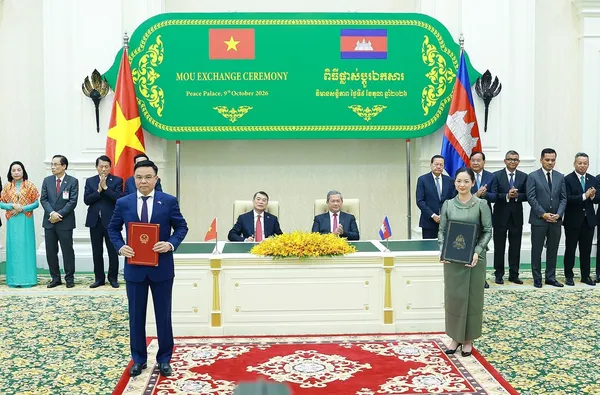
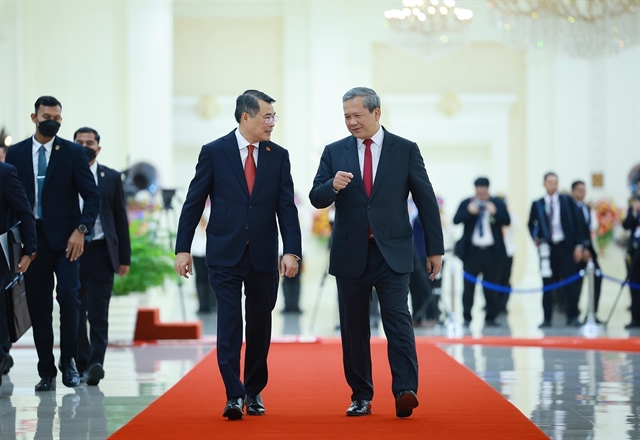
Vietnamese Prime Minister meets Cambodian National Assembly President
1.
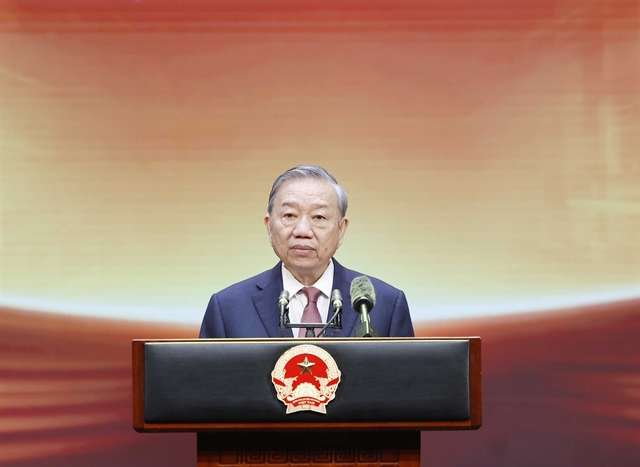 |
| Party General Secretary and State President Tô Lâm. VNA/VNS Photo Thống Nhất |
Party General Secretary and State President Tô Lâm, who is also the Secretary of the Central Military Commission, has emphasised the need to strongly reform leadership methods, tighten execution discipline, strengthen political and ideological work, increase inspection and supervision, and roll out decisive actions to swiftly translate the Resolution of the 14th Party Congress into reality in a recent interview granted to the Quân đội Nhân dân (People’s Army) newspaper.
The Resolution of the 14th National Party Congress has set out a historic vision. Public opinion and the people are particularly concerned about how these major decisions can soon be translated into practice. You have repeatedly stressed the need to eliminate 'delays' and shift strongly from 'talking' to 'doing' and 'doing effectively'. Could you elaborate on this action-oriented mindset in the current context?
The Resolution of the 14th National Party Congress embodies the wisdom, will and aspiration to rise of the entire nation. The value of the Resolution can only be fully affirmed when it is implemented through decisive, coordinated and effective action. The practice of Việt Nam’s revolution shows that every achievement of the country has been associated with periods in which correct policies were translated into concrete results, with the implementation stage playing a decisive role.
We must frankly acknowledge that the current bottleneck does not lie in the lack of sound policies, but in the capacity to translate those policies into tangible development outcomes. The enforcement and effectiveness of national governance, administrative discipline and the quality of policy implementation in some areas still fall short of the country’s development requirements. Therefore, the overarching spirit of this term is to turn will into action and decisions into results; to say and do, to act immediately, to act correctly, decisively and thoroughly, and to deliver real effectiveness.
The next five to ten years will be decisive for the strategic goals of the Party and the country. If we waste even a short period due to hesitation, avoidance, outdated working styles or the shifting of responsibility, the price to pay will at the very least be the loss of development opportunities for the entire nation.
The imperative now is to move decisively from 'correct awareness' to 'effective implementation', and from 'issuing policies' to 'producing tangible products and outcomes'. Party committees, Party organisations and every cadre and Party member, especially leaders, must take the lead, act thoroughly and deliver substantive results so that the people can benefit from the very beginning of the term.
During this term, how will reforms in implementation methods help shift from command-based administration to results-based governance, thereby addressing bottlenecks in policy execution?
The 14th National Party Congress identified institutions as the 'breakthrough of breakthroughs', paving the way for development. Institutions must not only serve as tools of State management but also become a driving force for development, unleashing productive forces, mobilising social resources and creating a favourable environment for innovation. To remove bottlenecks, the first step is to renew thinking and implementation methods.
First, the legal system, mechanisms, procedures and administrative processes must be thoroughly reviewed and improved to remove all obstacles. The principle is that problems arising at any level must be addressed at that level, without waiting or shifting responsibility. Governance thinking must shift from control and licensing to development facilitation and service provision; from excessive pre-check to stronger post-check in eligible areas; and from procedure-based approaches to result-oriented approaches.
Second, evaluation of criteria must change. The thickness of reports or the number of meetings can no longer serve as the primary indicators of performance. The performance of an organisation or an official must be measured by concrete development outcomes, work progress, social effectiveness and the level of satisfaction of people and businesses. All action programmes must be quantified, measurable and accompanied by clear roadmaps.
Third, organisational structures must continue to be streamlined to enhance effectiveness and efficiency, in line with reforms in the Party’s leadership methods. The Party Central Committee’s decision to transfer Việt Nam Television, Voice of Việt Nam, the Vietnam News Agency, the Việt Nam Academy of Social Sciences, and the Việt Nam Academy of Science and Technology from agencies under the Government to public service units under the Party Central Committee, and their Party Organisations from the Government Party Committee to the Party Committee of Central Party Agencies represents an important organisational adjustment. This move is not merely an administrative rearrangement but also a change in leadership methods to strengthen direct and regular guidance from the Party Central Committee over key areas of ideology, communications and strategic science.
Fourth, every major programme, project or initiative must clearly define objectives, timelines, responsible individuals, resources and mechanisms for inspection and supervision. Only in this way can the situation of 'heat at the top, cold at the bottom' or 'agreement in principle but stagnation in implementation' be resolved.
You have emphasised that implementing the resolution must go hand in hand with reforming the Party’s leadership methods, with the human factor and political and ideological work playing a particularly important role. What are the key requirements in this regard?
In the new stage, reforms in leadership methods must aim at building a modern national governance system that is disciplined, transparent, effective and people-centred. The decisive factor remains people, especially the contingent of cadres and Party members, particularly leaders. What is required today is not only general competence and qualities, but also the ability to execute, a practical action-oriented mindset, the capacity to organise work thoroughly, and the courage to take responsibility for the common good.
At the same time, political and ideological work in the Party must be given special attention. The second plenum of the Party Central Committee has issued new regulations on political and ideological work in the Party. This is particularly important in the current context, as the country is implementing multiple major policies simultaneously, strong reforms and bold renovation. Without a solid political foundation and unity in the Party and consensus in society, even correct policies may fail to deliver the expected results.
Political and ideological work must truly go ahead and pave the way. It must not be conducted merely in a formal manner or limited to studying and disseminating resolutions for procedural purposes. The key is to translate political and ideological requirements into the responsibility of every Party committee, Party organisation and Party member; maintain strict discipline in public statements; strengthen confidence, enhance political steadfastness; improve combativeness; and encourage cadres to think boldly, act boldly and innovate for the common good.
For the contingent of officials, it is necessary to resolutely overcome the situation where individuals are good at giving advice but weak in implementation. Implementation must ensure six clarities: clear personnel, clear tasks, clear timelines, clear responsibilities, clear authority and clear results. Collective responsibility must not be used to conceal individual accountability, while mechanisms must also be in place to protect those who dare to innovate and take responsibility. As the ruling Party, it must firmly uphold the principle that 'the people are the root', taking the happiness and satisfaction of the people as the measure of the effectiveness of Party organisations and the entire political system.
To ensure that Resolution of the 14th National Party Congress and new resolutions of the Party Central Committee are implemented in a serious and effective manner, how should Party inspection, supervision and discipline be reformed?
Inspection and supervision are not tasks to be carried out at the final stage, nor are they merely about handling violations after they have occurred. They are a very important mode of leadership of the Party, a tool to control power, uphold discipline and order and ensure that all guidelines and resolutions are implemented strictly and in the right direction.
First, it is essential to thoroughly grasp and effectively implement new resolution of the Party Central Committee on reforming and enhancing the effectiveness of Party inspection, supervision, and discipline. The issuance of this new resolution reflects the high demands of the current development stage: rapid development must go hand in hand with stricter discipline and order; more open mechanisms require tighter power control; and stronger decentralisation and delegation of authority must be accompanied by clearer political accountability.
Second, inspection and supervision must be shifted towards early and afar prevention, detecting risks during implementation, so that shortcomings and weaknesses do not accumulate into major violations. Each Party committee, Party organisation, Party cell and Party member must regard this as their political responsibility, rather than leaving it entirely to inspection bodies. Inspection must be closely linked with each action programme, key task, project, and the commitments of leaders.
Third, the Politburo and the Secretariat have established inspection and supervision delegations led by members of the Politburo and Secretariat to oversee the implementation of the Resolution of the 14th National Party Congress and other resolutions and directives of the Party Central Committee across all Party organisations under the Party Central Committee, including Party committees at the central level and provincial and municipal Party Committees.
The spirit is to combine inspection and supervision with guidance, the removal of obstacles, and the identification of innovative practices for replication, rather than conducting formalistic or perfunctory checks.
I myself have directly worked with and attended implementation conferences with the Central Military Commission and the Central Public Security Party Committee. I have also directly led inspection and supervision delegations for the Standing Board of the National Assembly Party Committee and the Standing Board of the Hanoi Party Committee.
This clearly demonstrates the requirement for exemplary leadership: having identified inspection and supervision as a method of Party leadership, high-ranking leaders must directly participate, listen, inspect, direct and bear direct responsibility for the results.
The ultimate goal is to ensure that the entire system operates with greater discipline, transparency, determination, and effectiveness. Discipline is to enable better action; supervision is to deliver clearer results; and inspection must help remove obstacles, tighten accountability, and ensure that the Resolution of the 14th National Party Congress and the resolutions of the Central Committee are implemented in a serious, consistent and effective manner across the Party.
2026 marks the first year of implementing the Resolution of the 14th National Party Congress and the Resolution of the 12th Congress of the Party Organisation of the Việt Nam People's Army. What message would you like to convey to officers and soldiers of the Việt Nam People's Army?
The Việt Nam People’s Army has always been a pioneering, exemplary force that matches words with action. In the country’s new stage of development, the Army must further uphold this tradition, serving as a model in political mettle, spirit of action, discipline, operational effectiveness, and the quality of implementing Party resolutions.
First and foremost, the entire army must thoroughly grasp the Resolution of the 14th National Party Congress, the Resolution of the 12th Army Party Congress, and the action programmes of the Central Military Commission. However, this understanding must not stop at awareness; it must be translated into concrete actions at every level, across every sector, unit, and position. Each Party committee, organisation, commander, political commissar and political officer must clearly identify what needs to be done immediately, what constitutes a breakthrough, who is responsible, and how to monitor progress immediate priorities, breakthrough tasks, responsibilities, and how the inspection will be conducted.
The entire army must place special emphasis on political and ideological work, and on building a truly clean and strong Army Party Organisation. It must firmly maintain and strengthen the Party’s absolute, direct leadership over the military; preserve the noble qualities of 'Uncle Hồ’s soldiers'; and build a politically strong force as the foundation for enhancing overall quality, combat strength, combat readiness, discipline, regularity, and advancing digital transformation, towards modernisation.
I would like to stress the exemplary role of the officer corps. The higher the rank, the greater the responsibility to set standards in working style, discipline and the spirit of thinking boldly, acting decisively, taking responsibility, and matching words with action. Each cadre must dare to think, to act, to take responsibility, and to innovate for the common good. They must be comprehensive trained to meet the requirements of building the Army in the new situation. At the same time, inspection and supervision must be strengthened to ensure strict discipline and that all policies and resolutions are implemented effectively.
The results of implementing these resolutions must be measured by tangible improvements in training, combat readiness, unit-building, discipline, and, importantly, the people’s trust in the Army. Strong determination must translate into clear outcomes; actions must be precise, effective, and carried through to completion.
The Army must continue to be a leading force in action, exemplary in discipline, matching words with action, and turning determination into results, contributing together with the entire Party and people to successfully implement the Resolution of the14th National Party Congress and to firmly build and defend socialist Vietnamese Fatherland in a new era of development. — VNA/VNS
Politics & Law
 Politics & Law
 Politics & Law
 Politics & Law
 Politics & Law
 Politics & Law
 Politics & Law
 Politics & Law
 Politics & Law
 Politics & Law
 Politics & Law
 Politics & Law
 Politics & Law
 Politics & Law
 Politics & Law