 Politics & Law
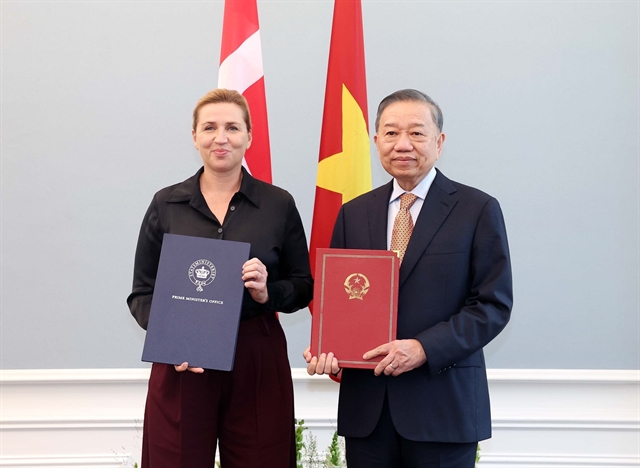
Việt Nam, Denmark elevate ties to Comprehensive Strategic Partnership
1.
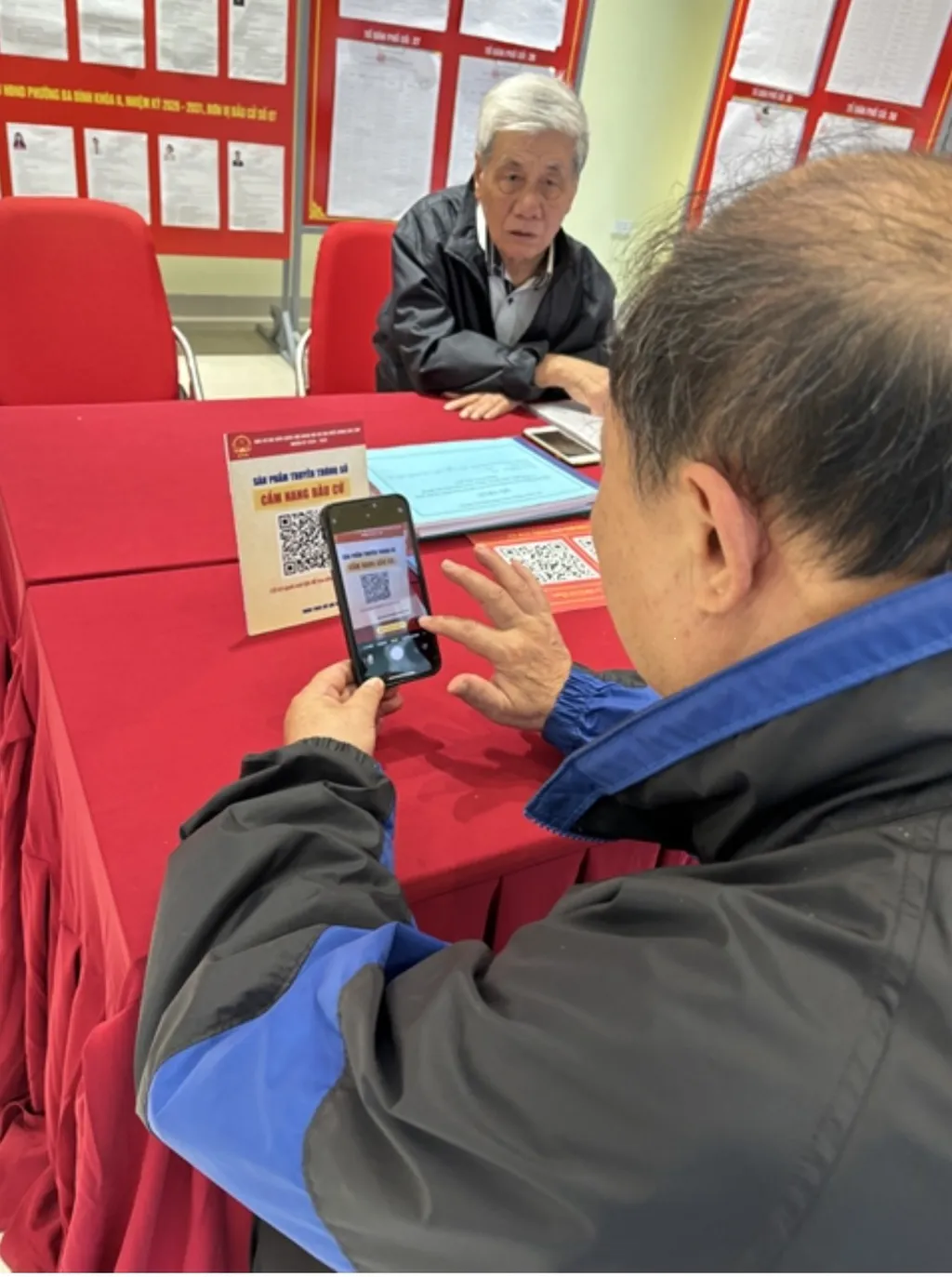 |
| A voter in Ba Đình Ward scans a QR code to learn about the candidates' profiles and lists of voters. — VNS Photo Khánh Dương |
HÀ NỘI — One of the notable features of this year’s general election is the increasing application of technology to share information about candidates and voting procedures with the public.
Several wards in Hà Nội have taken the lead in applying digital solutions to support election communication in the digital era.
The Youth Union of Ba Đình Ward recently launched a digital election handbook, designed as an online platform integrated with QR codes that allows residents to easily access information via smartphones or other internet-connected devices.
The electronic handbook is designed to be easy to read and search, featuring AI-generated videos explaining the voting process, the criteria for deputies to the National Assembly and people’s councils, as well as the list and brief biographies of candidates.
By scanning the QR codes, voters can also find information about the polling stations where they are assigned to cast their ballots.
The QR codes linking to the handbook have been placed at 69 locations across the ward, including 22 sites displaying voter lists and 47 neighbourhood information boards.
Members of the local Youth Union have also visited these locations to guide grassroots officials and residents on how to use the handbook.
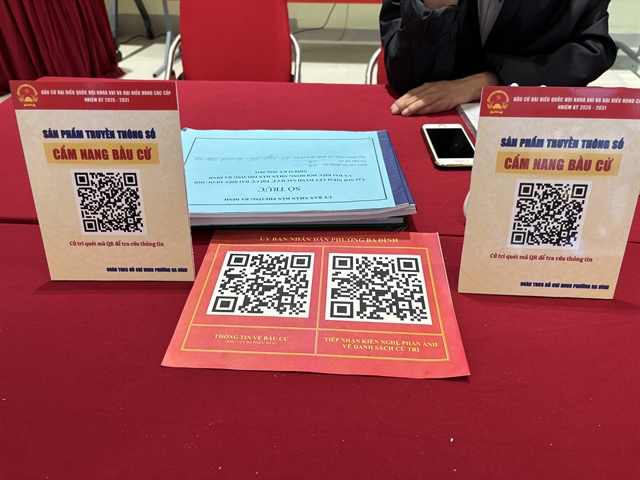 |
| QR codes are placed at 69 locations across Ba Đình Ward. — VNS Photo Khánh Dương |
Nguyễn Thiên Lý, a resident living on Trúc Bạch Street, told Việt Nam News that the QR codes are useful to citizens who are busy to visit physical sites displaying voter lists.
“I’m away from home at work all day long so by scanning QR codes they send on our local community’s Zalo group, I can learn candidates’ profiles easily without reading printed papers,” she said.
Đinh Hoàng Tùng, a resident living on Phạm Hồng Thái Street, expected that disseminating information via QR codes and online platforms would attract the attention of more young people in the election.
According to Phạm Thu Phương, secretary of the Ba Đình Ward Youth Union, digital transformation is playing a very important role in election communication today. The application of digital platforms helps information spread more quickly, widely and transparently.
“For young people, this is also an opportunity to demonstrate their proactive and creative spirit in developing new communication products, contributing to the renewal of grassroots political communication methods,” she said.
Digital maps
In the suburban Gia Lâm Commune, the local Youth Union has developed a digital map of election information, enabling residents to easily look up polling locations, election information and voting guidelines by scanning a QR code.
Similarly, Long Biên Ward has introduced a digitised election information map to help voters quickly and conveniently search for polling stations using digital technology.
 |
| Long Biên Ward's digital map. —Photo from Long Biên Ward's administration |
With a simple QR code scan, voters can access an online map system to find detailed information about polling stations in the ward’s five electoral units. Through the digital map, residents can identify the nearest polling location, track the locations of electoral areas and obtain necessary information related to the election.
According to local officials, the application of the digital map not only saves time when searching for information but also enables voters to access it conveniently via smartphones, computers or other smart devices.
Nguyễn Thị Thu Hằng, permanent deputy secretary of the Long Biên Ward Party Committee, said that in addition to in-person meetings, local authorities also organised online voter meetings, connecting with neighbourhood meeting points.
The combination of in-person and online formats helped expand access to information and allowed more voters to follow and learn about the action programmes of candidates before making their choices, she said.
The national identification app VneID has also facilitated citizens in learning election information.
The Ministry of Public Security said in addition to checking polling locations on their voter cards and following the lists of candidates and voters publicly posted at polling stations, citizens could also use the National Assembly Election feature on the VNeID application to view their polling locations and candidate lists.
If voters wish to change their polling location for convenience in line with their living or working arrangements on election day, they could submit a request directly through the VNeID application. — VNS
Politics & Law
 Politics & Law
 Politics & Law
 Politics & Law
 Politics & Law
 Politics & Law
 Politics & Law
 Politics & Law
 Politics & Law
 Politics & Law
 Politics & Law
 Politics & Law
 Politics & Law
 Politics & Law
 Politics & Law