 Politics & Law
Deputy PM urges stronger commercialisation of sci-tech research
1.

|
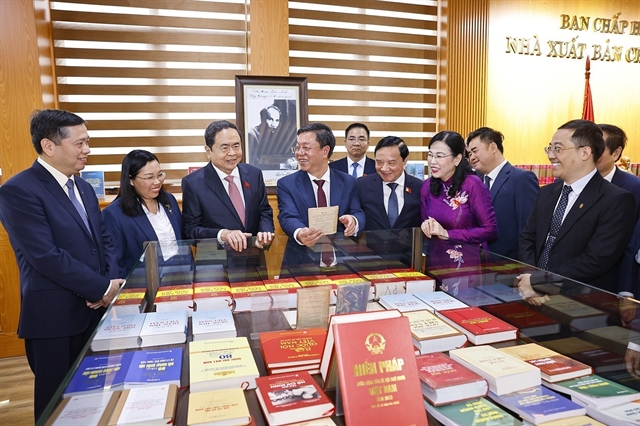
| Prime Minister Phạm Minh Chính and delegates visit an exhibition space on Hán–Nôm studies at the Vietnam Academy of Social Sciences. VNA/VNS Photo Dương Giang |
HÀ NỘI — Prime Minister Phạm Minh Chính has called on the Vietnam Academy of Social Sciences to step up the training of highly qualified social science professionals to meet the country’s development demands, while reaffirming its central role in strategic research and policy advice for the Party and the State in the years ahead.
He made the remarks on Tuesday at a working session with the academy’s leadership, researchers and leading scholars and experts in the social sciences and humanities.
At the meeting, academy leaders and scientists outlined key priorities to enhance the effectiveness of research in the current context, stressing the need to provide stronger scientific evidence to underpin policymaking, institutional reform and sustainable national development.
The academy also proposed improvements to mechanisms and policies governing social sciences and humanities, particularly financial frameworks, recruitment and remuneration for researchers and research commissioning mechanisms linked more closely to practical needs. Such measures, it said, would improve both the quality and real-world application of research outcomes.
In addition, the academy urged the Prime Minister to direct increased investment in research infrastructure, modernise facilities and support major research programmes.
PM Chính commended generations of academy scientists for their contributions over more than seven decades and said the Government would carefully consider their recommendations in an open, thoughtful and decisive manner.
Emphasising the importance of social sciences, he said the field was not only an essential academic discipline but also a foundation for strategic thinking and a guiding force for policymaking and national development across sectors.
He noted that the Party and the State have consistently regarded social sciences and humanities as closely interconnected and indispensable pillars of the national scientific system, playing an important role in national development and defence.
In the new era of national advancement, the Prime Minister said social sciences and humanities are crucial in strengthening ideological foundations, shaping national values, advancing culture and knowledge, reinforcing national unity and promoting international cooperation. Social scientists, he added, are a key force in preserving national identity, strengthening internal capacity and enhancing Việt Nam’s soft power.

|
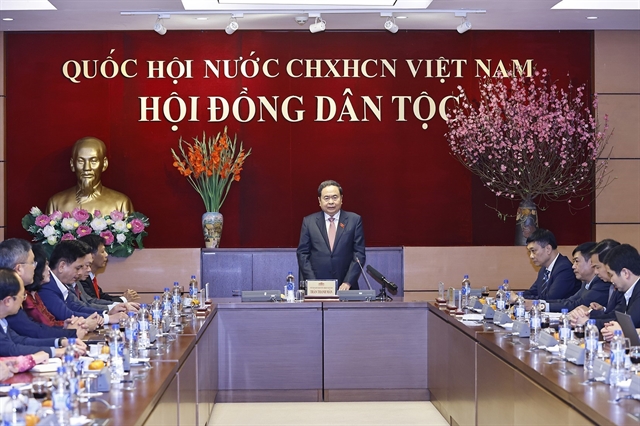
| Prime Minister Phạm Minh Chính with the academy’s leadership, researchers, and leading scholars and experts in the social sciences and humanities. VNA/VNS Photo Dương Giang |
He affirmed that the academy serves as the Party and State’s leading strategic research centre in social sciences, playing a core role in theoretical research, reviewing practical developments and providing scientific evidence for policymaking, while contributing to preserving and promoting Vietnamese cultural, intellectual and human values.
The Prime Minister noted that the academy has successfully fulfilled its core tasks, including producing high-quality socio-economic analysis and forecasts for Government meetings, conducting valuable research on growth model reform, institutional development, administrative restructuring, local governance and cultural and human development. The academy has also actively implemented plans to strengthen its capacity and develop into a leading research centre on a par with advanced international institutions, while expanding cooperation with reputable academic and research organisations worldwide.
Looking ahead, he called on the academy to achieve breakthrough development and reinforce its role as a strategic advisory body for the Party and the State in social sciences and humanities.
PM Chính outlined several key priorities for the academy. These include effectively implementing the Party’s 14th National Congress Resolution and relevant Politburo directives, strengthening foundational research linked to safeguarding the Party’s ideological foundation and actively contributing to major research milestones, including the centenary of the Party’s leadership of the Vietnamese revolution and the 40th anniversary of the national development platform during the transition to socialism.
He also called for improving the quality and effectiveness of policy advisory work, expanding training programmes for highly qualified social science professionals and strengthening domestic and international cooperation, particularly collaboration among the State, scientists and businesses.
The academy was urged to take the lead in digital transformation and green transition in research and management, modernise infrastructure and governance models and invest in advanced research facilities to support specialised studies.
The Prime Minister further emphasised the need to develop a strong, capable scientific workforce aligned with national priorities and to build a transparent, cohesive and high-performing institution.
To support the academy’s development, the Government and relevant ministries will review mechanisms and policies to grant greater autonomy and accountability in operations, resource mobilisation and workforce development. The Government also pledged to promptly address the academy’s recommendations within its authority and escalate unresolved issues to higher levels where necessary.
PM Chính assigned the Ministry of Home Affairs to coordinate with the academy in developing mechanisms to attract, recruit and provide appropriate incentives for high-quality personnel.
He also tasked the Ministry of Science and Technology and the Ministry of Justice with continuing to improve policies and mechanisms for the development of social sciences and humanities, focusing on greater institutional autonomy alongside strengthened accountability, as well as research commissioning based on deliverables and expanded public–private partnerships.
The Ministry of Finance was instructed to allocate adequate resources to enable the academy to invest in high-quality research and modern technical infrastructure.
Meanwhile, the Government Inspectorate was directed to review and assist the academy in resolving long-standing issues that have remained beyond its capacity to address independently. — VNS
Politics & Law
 Politics & Law
 Politics & Law
 Politics & Law
 Politics & Law
 Politics & Law
 Politics & Law
 Politics & Law
 Politics & Law
 Politics & Law
 Politics & Law
 Politics & Law
 Politics & Law
 Politics & Law
 Politics & Law