 Politics & Law
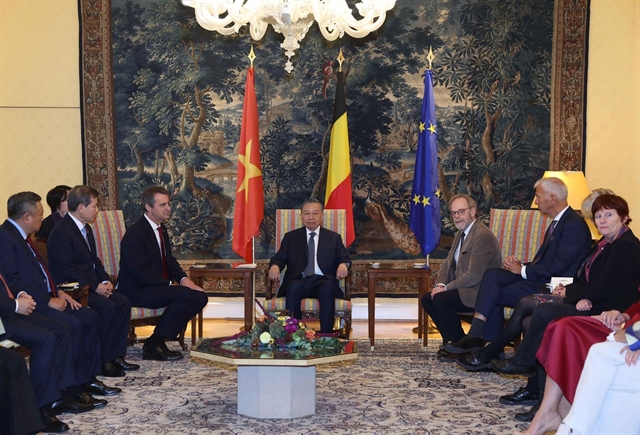
Top Vietnamese leader meets with Belgian Senate Speaker, House President
1.
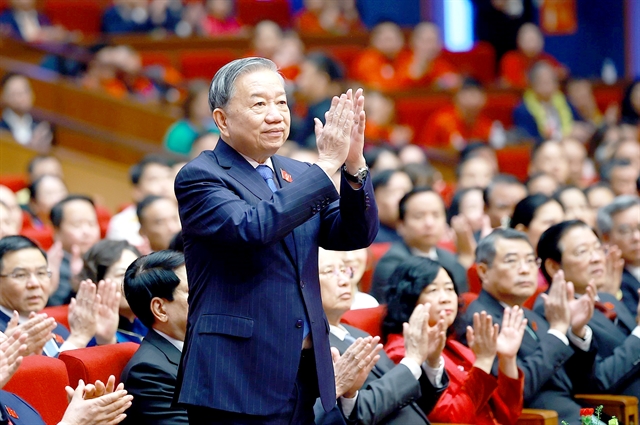 |
| General Secretary Tô Lâm. — VNA/VNS Photo |
On the eve of the new year 2026, the first year of the 14th National Party Congress term, General Secretary Tô Lâm granted an exclusive interview to the Vietnam News Agency (VNA).
General Secretary, during the 2020–2025 term, the country faced unprecedented difficulties and challenges. Yet under the Party’s leadership, with the concerted efforts of the entire political system, the people and the armed forces, Việt Nam achieved many important and fairly comprehensive results in implementing the Resolution of the 13th National Party Congress. Could you share the most notable achievements of this period?
First of all, it must be affirmed that the achievements recorded over the past term are the crystallisation of the Party’s astute leadership, the resolute engagement of the entire political system and above all the unity, determination, resilience and compassion of our people during the most testing moments.
The 13th Party Congress term was an exceptionally difficult period. Pandemic, natural disasters, climate change, international turbulence, economic headwinds, supply-chain disruptions, employment challenges and pressures on finance and banking, etc. came in rapid succession, posing complex problems that demanded swift, accurate and decisive policy responses. The obstacles were formidable, yet we overcame them and reached the finish line. What is particularly noteworthy is that amid such adversity, the country maintained stability, society preserved order and confidence and the vital arteries of the economy, production and circulation, were restored in time for us to move forward.
Economically, we made great efforts to recover from the pandemic while maintaining major balances, ensuring that the economy did not falter in the face of external shocks. Many sectors, localities and enterprises demonstrated agility, innovated, sought out markets, created jobs and sustained production. In the end, our economy proved its resilience, endurance and refusal to back down.
Socially, we remained steadfast in the orientation that development is not merely about growth, but about ensuring that people’s lives are secure and steadily improving. In hardship, the spirit of solidarity and mutual support, the quiet yet immense sacrifices of frontline forces, including the military, public security, health care workers, teachers and workers, offered profound lessons on the power of unity. Social welfare, poverty reduction and care for vulnerable groups and disadvantaged areas continued to be pursued with a clear objective: leaving no one behind.
In foreign affairs, we upheld the line of independence and self-reliance, being a friend, a reliable partner and a responsible member of the international community. Amid a world marked by polarisation and intense competition, maintaining a peaceful and stable environment, expanding cooperative ties and mobilising resources for development are achievements of great value. Our diplomacy is not only about making more friends and fewer adversaries, but more importantly about broadening development space and enhancing national standing, so that we may grow together in peace, friendship, cooperation and equality.
Regarding Party building and the political system, we stood by unwaveringly the core principles: upholding discipline and integrity, purifying the ranks and consolidating public trust. The fight against corruption, wastefulness and misconduct continued with greater vigour, pursued thoroughly, without evasion, without forbidden zones and without exceptions. The objective is not merely to handle violations, but to sound cautions, to build and refine institutions, to protect what is right, to encourage good conduct and to enable officials to serve, with peace of mind, the people and the nation.
In short, if I were to summarise the key achievements of the term, I would say this: we overcame trials through willpower, resilience and solidarity; we preserved stability as a foundation for development; and we persisted in rectification and improvement so as to move faster and more steadily. These achievements are significant and worthy of recognition, yet we must remain modest and vigilant, never resting on our laurels. The road ahead is laid with major and difficult tasks. To traverse the long distance and reach our destination, the most essential requirement is to uphold confidence and discipline and to place the national interest and the people’s happiness above all else.
How would you assess the efforts to prevent and combat corruption, wastefulness and misconduct during the past term and what are the orientations for the coming term?
Preventing and combating corruption, wastefulness and misconduct is a matter of utmost importance. It safeguards the Party’s prestige, upholds the discipline of the State and above all preserves the people’s trust.
Looking back at the past term, it can be affirmed that the battlefront against internal enemies has seen clear and substantive progress. Efforts have gone deeper, become more systematic, resolute, scientific and determined. What began as political resolve has become routine action across the entire system, with broad public support. At the same time, our focus has expanded from corruption alone to include wastefulness and misconduct, as waste may not be conspicuous but its consequences are severe, eroding national resources and slowing development.
Encouragingly, through this process we have come to understand a fundamental truth more clearly: cleansing the apparatus does not hinder development; rather, it enables healthier and more sustainable growth. Addressing wrongdoing does not weaken the system; it strengthens discipline and order, empowers upright individuals, supports those who act correctly and expunges the rot from the political system.
That said, we must also be candid: corruption, wastefulness and misconduct are inherent defects and internal adversaries hidden within the system. In some places and at certain times, early warning signs were not promptly recognised; there remain instances of evasion, buck-passing and fear of responsibility; loopholes in mechanisms persist; and management of public assets, investment projects, land and bidding processes, if not tightly controlled, can easily give rise to violations. In other words, while the results are commendable, complacency is unacceptable. We need "preventive vaccines", "antibiotics" and "preventive medicine" and "public health measures" to prevent, detect and stop problems early and effectively.
As for orientations in the next term, I wish to highlight several key points, guided by the spirit of being both resolute and persistent, ensuring firm progress at every step:
First, national interest and people’s interests must come first. The struggle must be resolute, persistent and continuous; enforcement must be strict yet reasonable and humane; there must be no forbidden zones and no exceptions. At the same time, mechanisms must protect officials who dare to think, act and innovate for the common good, so that those who do right are not disadvantaged and those who perform well are not isolated.
Second, shift decisively towards prevention, treating it as the root. Punishment is necessary, but more important is preventing wrongdoing from taking hold. This requires continued refinement of institutions, regulations and procedures; clear delineation of responsibilities and authority; stronger oversight; and greater transparency, especially in areas prone to misconduct.
Third, focus on improving the legal framework, closing loopholes and establishing firm standards for integrity. Sound Party guidelines and policies must be fully and coherently institutionalised into law. Decentralisation must go hand in hand with power checks and balances; authority must be matched with accountability, leaving no grey areas to become dark corners. Comprehensive measures are needed so that no one can, dares or needs to commit corruption, embezzlement or other negative deeds.
Fourth, treat the fight against wastefulness as a crucial front. Waste is not only about money, but also about time, opportunities, resources and trust. Therefore, long-delayed, behind-schedule and inefficient projects must be reviewed and resolved; fiscal and budgetary discipline must be strengthened; and public governance quality improved, so that every unit of currency, every piece of land and every public asset truly serves development and the people. While we prioritise resources for development, this is also an area where waste can arise, making vigilance and preventive measures essential.
Fifth, strengthen the role of grassroots Party organisations and public oversight. Where Party organisations are strong, discipline is firm and people are informed, consulted and empowered to supervise, misconduct finds little ground. Preventing corruption, wastefulness and misconduct cannot be left to specialised authorities alone; it must become a mindset and a cultural norm across the entire system, with exemplary leadership at the top being decisive.
Let me emphasise: as we enter a new phase of development, we need an apparatus that is clean to earn public trust, strong to deliver results and humane to unite forces. This work demands clarity of judgement: firmness against wrongdoing while creating conditions for what is right to flourish; strict handling for deterrence must go with institutional improvement so that good people can work effectively and society functions transparently and orderly.
Ahead of the 14th National Party Congress, could you share your views on its significance, guiding ideas, strategic vision and the aspiration for a prosperous, strong, civilised and happy Việt Nam?
Every Party Congress marks an important milestone, but the 14th Congress carries particularly profound significance. We convene it amid a rapidly changing, unstable and unpredictable global context, while domestically, after decades of renewal, Việt Nam has attained new stature, capacity and standing, alongside higher and more demanding development requirements. This is a moment to face reality squarely, correctly identify opportunities and challenges, review achievements, pinpoint remaining bottlenecks and most importantly unify will and action to move forward with confidence.
I believe there are three major themes that this Congress must clearly articulate and strongly disseminate.
First is unity and confidence. Unity is not merely a slogan or a call; it must become a way of conduct throughout the system and among all Vietnamese: unity within the Party, unity among the people, unity between the Party’s will and the people’s aspirations; placing collective interests above individual ones when necessary. In tandem with unity is confidence: confidence in the chosen path, in the nation’s strength and in the belief that good outcomes will follow persistent, for-the-nation and for-the-people efforts.
Second is discipline and breakthrough. To move fast, breakthroughs are required; to go far, discipline is essential. Accordingly, the Congress’s guiding motto is clearly defined as: Unity - Democracy - Discipline - Breakthrough - Development. Breakthroughs here are not limited to introducing a few new initiatives, but involve renewing thinking to dare touch on demonstrated bottlenecks – institutions, organisational structures, human resource quality, governance capacity and public service discipline – so that the country operates more smoothly, fairly, transparently and effectively.
Third is development for people and driven by knowledge. The aspiration for a prosperous, strong, civilised and happy nation must be measured by everyday realities: whether people get better jobs, more stable incomes, whether people have more decent housing, improved access to education for children, better healthcare in times of sickness, greater security for the elderly, timely support for disadvantaged regions, etc. To achieve better outcomes across the board, knowledge, science and technology, innovation and digital transformation must serve as key drivers of a new growth model, while mobilising all social resources, with the private sector as an important engine.
The Congress’s strategic vision is also anchored to clear milestones: achieving targets by 2030 and realising the vision to 2045. These milestones serve as guiding beacons, enabling every sector, locality, institution and citizen to see their specific role in the shared journey.
According to plan, the 14th National Party Congress will be held from January 19 to January 25, 2026, in Hanoi. This is a momentous political event for the Party and the nation, a historic milestone in the Hồ Chí Minh era, marking the convergence of millennia-old cultural traditions as the country rises into a new era. Officials, Party members and the people are closely following, eagerly anticipating and placing high expectations on the Congress’s success. I am confident that the 14th National Party Congress will truly embody collective wisdom, resolve and aspiration: a Congress that speaks truthfully, deliberates on the right issues and makes the right decisions.
On the occasion of the New Year 2026, what message would you like to send to the Vietnamese people and the international community?
On the occasion of the new year 2026, I would like to convey a brief and sincere message.
To the Vietnamese people, I express my deepest gratitude for your trust, quiet sacrifices, patience and compassion towards one another and the nation during years of great change. I hope every family welcomes the new year in peace and that each person enters the year with a simple aim: to do their work better and to see their material and spiritual lives improve day by day. When millions of such better efforts accumulate, the nation will grow stronger in a sustainable way.
I also urge officials and Party members at all levels to remember: the higher the position, the heavier the responsibility; the greater the authority, the stronger the need for self-restraint through discipline, integrity and exemplary conduct. What benefits the people must be pursued wholeheartedly; what inconveniences them must be avoided; what is wrong must be corrected; what is right must be protected.
To friends and the international community, Việt Nam values goodwill, trust and cooperation. We seek to work with nations, organisations and peoples worldwide to build a peaceful, stable environment for shared development. Việt Nam stands ready as a reliable partner and responsible member, joining hands to address common challenges such as climate change, non-traditional security issues, inclusive development, digital transformation and innovation. We believe that the best outcomes begin with mutual respect, sincere dialogue and cooperation that benefits the peoples and nations of the world.
I wish compatriots, armed forces personnel nationwide and friends around the world a new year 2026 of good health, peace, cooperation and development.
Happy New Year 2026. — VNS
Politics & Law
 Politics & Law
 Politics & Law
 Politics & Law
 Politics & Law
 Politics & Law
 Politics & Law
 Politics & Law
 Politics & Law
 Politics & Law
 Politics & Law
 Politics & Law
 Politics & Law
 Politics & Law
 Politics & Law




