 Politics & Law

AITO Looks Ahead to Europe, Building a Thriving Automotive Ecosystem
1.

|
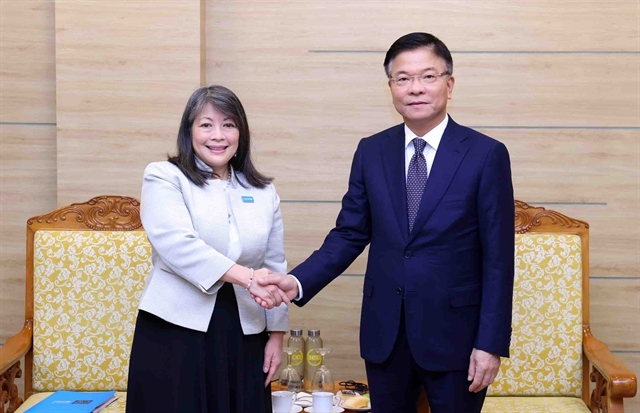
| Professor Dr. Nguyễn Xuân Thắng, President of the Hồ Chí Minh National Academy of Politics, had a meeting with Carlos Felipe Jaramillo, WB Vice President for the East Asia and Pacific Region. – VNA/VNS Photo |
HÀ NỘI – Professor Dr. Nguyễn Xuân Thắng, President of the Hồ Chí Minh National Academy of Politics (HCMA) and Chairman of the Central Theory Council, has urged the World Bank (WB) to continue assisting Việt Nam in tapping global expertise to tackle major challenges, including climate change, water resources management in the Mekong Delta, and ecological agricultural development.
At a meeting on Wednesday with Carlos Felipe Jaramillo, WB Vice President for the East Asia and Pacific Region, Thắng highlighted that cooperation between the HCMA and the WB produced substantive outcomes, improving the academy’s training and research capacity.
He affirmed that Việt Nam’s development requires not only financial resources but also knowledge, governance skills, experience, and stronger integration with the global economy. The country is currently pursuing three strategic breakthroughs: institutional reform, infrastructure development and human resources advancement.
On institutional reform, Việt Nam is working to remove existing obstacles while creating new frameworks to spur innovation, circular economy development, green growth and a just energy transition. Infrastructure priorities, he said, now extend beyond transportation and energy to include social and technological infrastructure and data centre development.
Thang stressed that human resources development must focus on quality, emphasising the need for a well-trained, skilled workforce that meets practical and developmental needs. He proposed deepening expert exchanges for strategic-level cadre training and jointly promoting forums linked to the Việt Nam 2045 Report.
Jaramillo commended Việt Nam’s development achievements, particularly the Việt Nam 2035 Report, which has been used as a reference in the bank’s advisory work with other countries. While Việt Nam’s loan demand has eased, he said the WB’s role remains pivotal in providing knowledge, technical expertise and support.
He suggested that future cooperation prioritise two areas where the WB can make strong contributions: human capital development and financial mobilisation for complex projects such as high-speed rail, urban infrastructure and climate-resilience initiatives.
Jaramillo also noted the bank’s interest in supporting Việt Nam's transition to a modern, future-oriented education system aligned with trends such as artificial intelligence and automation. He affirmed the bank’s commitment to strengthening its partnership with the HCMA to expand the dissemination of governance and policymaking expertise across the political system.
Both sides agreed to further enhance cooperation in research, policy consultancy, cadre training and the organisation of international conferences and seminars in the near future.– VNA/VNS
Politics & Law
 Politics & Law
 Politics & Law
 Politics & Law
 Politics & Law
 Politics & Law
 Politics & Law
 Politics & Law
 Politics & Law
 Politics & Law
 Politics & Law
 Politics & Law
 Politics & Law
 Politics & Law
 Politics & Law




