 Opinion
84 individuals investigated for transnational online frauds
1.
 |
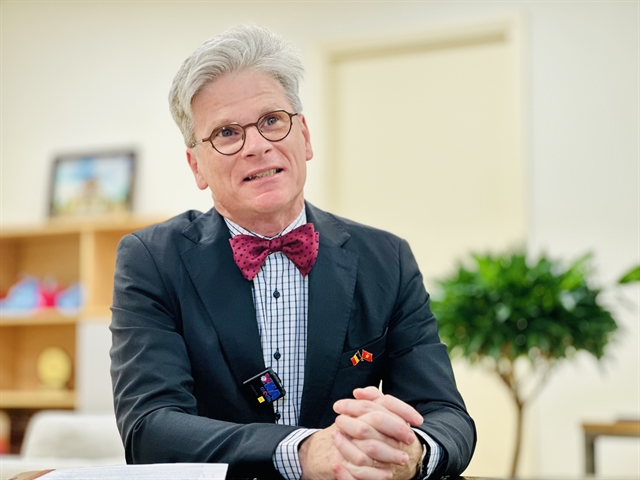
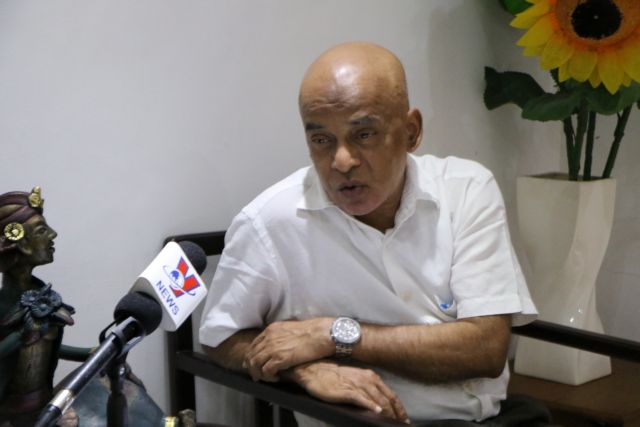
| Kwon Sung Taek, Chairman of the Korea–Việt Nam Economic and Cultural Association (KOVECA) talks to Vietnam News Agency correspondent in Seoul, South Korea.— VNA/VNS Photo Trường Giang |
SEOUL — The 14th National Congress of the Communist Party of Việt Nam is drawing particular attention from the business community of the Republic of Korea (RoK), which views Việt Nam as a reliable, flexible yet principled partner amid an increasingly complex global environment.
Speaking to a Vietnam News Agency (VNA) correspondent in Seoul on this occasion, Kwon Sung Taek, Chairman of the Korea–Việt Nam Economic and Cultural Association (KOVECA), highlighted the success of Việt Nam’s foreign policy.
He described Việt Nam’s diplomatic approach as flexible and adaptive while remaining firmly grounded in principles, noting that this strategy is well-suited to current realities and capable of delivering sustainable outcomes.
Its effective implementation has not only strengthened Việt Nam’s international standing but also enhanced its credibility on the global stage.
As concrete evidence, he pointed to Việt Nam’s elevation of relations to comprehensive strategic partnerships with major countries such as the US, Japan, Australia and the RoK over the past five years.
Việt Nam’s consistent pursuit of a balanced foreign policy, he said, has reinforced its image as a “cautious, reliable, flexible but principled nation.”
In particular, the upgrade of Việt Nam-RoK ties to a Comprehensive Strategic Partnership was a natural outcome of Việt Nam’s rising position and the cumulative results of extensive and effective bilateral cooperation across multiple fields, serving the strategic interests of both countries.
This stands as a success example of multilateral diplomacy creating momentum for economic cooperation.
Regarding Việt Nam’s economic performance in the 2020-25 period, Kwon attributed the achievements to the country’s economic policies, especially its focus on digital transformation, infrastructure development and investment in education. He expressed strong admiration for Việt Nam’s success in attracting foreign direct investment (FDI), which has positioned the country among the world’s leading FDI destinations.
This success, combined with digital transformation and infrastructure expansion, has brought about structural changes in Việt Nam’s economy.
During the same period, Việt Nam’s industrial structure has expanded beyond traditional manufacturing into advanced industries such as semiconductor packaging, electronics, electric vehicles and supporting industries.
This transformation, he noted, underscores Việt Nam’s role as a manufacturing, assembly and export hub, rather than merely a low-cost processing base.
Amid global economic slowdown and heightened supply chain risks driven by competition among major powers, Việt Nam has further consolidated its image as a safe alternative market, underpinned by political stability, an improving and more predictable policy environment, and an open trade structure.
These factors, Kwon said, have strengthened investor confidence and encouraged businesses seeking long-term development opportunities in Việt Nam.
In economic relations with the RoK, bilateral cooperation has undergone qualitative changes, expanding beyond traditional investment in manufacturing facilities to advanced sectors such as semiconductors, green energy, smart cities and even defence-related industries that require strong foundational conditions.
He also noted that RoK - Việt Nam economic and cultural exchanges have consistently generated positive impacts, citing the inspirational “Park Hang-seo phenomenon” in football, followed by continued success by his successor Kim Sang Sik, which has elevated Vietnamese football to the continental level.
As Việt Nam is preparing for the 14th National Party Congress, Kwon stressed that it is far more than a routine political event held every five years. Each congress, he said, is a critical juncture for redefining national development pathways and shaping Việt Nam’s domestic and foreign policy orientations.
At a time of unpredictable geopolitical shifts, the upcoming congress carries historic significance in maintaining stability, consolidating recent achievements, and enabling breakthroughs in the next development phase.
He expressed confidence that the congress will mark an important milestone in orienting Việt Nam’s socio-economic development toward its 2030-45 national vision.
Recent administrative restructuring and efforts to improve the effectiveness of both central and local governments in 2025 have laid a solid foundation for this direction.
Against this backdrop, the congress is expected to serve as a practical starting point for “Việt Nam Vision 2045” and reaffirm effective state governance.
Given Việt Nam’s recent institutional reforms, the 14th National Party Congress is also expected to create more favourable political and institutional conditions for Việt Nam and RoK to fully realise the potential of their Comprehensive Strategic Partnership. — VNA/VNS
Opinion
 Opinion
.jpg) Opinion
Opinion
 Opinion
 Opinion
 Opinion
 Opinion
 Opinion
 Opinion
.jpg) Opinion
Opinion
 Opinion
 Opinion
 Opinion
 Opinion
 Opinion