AI and EV Boom Draws $690 Million in Advanced Materials Investment Plans to Thailand
1.
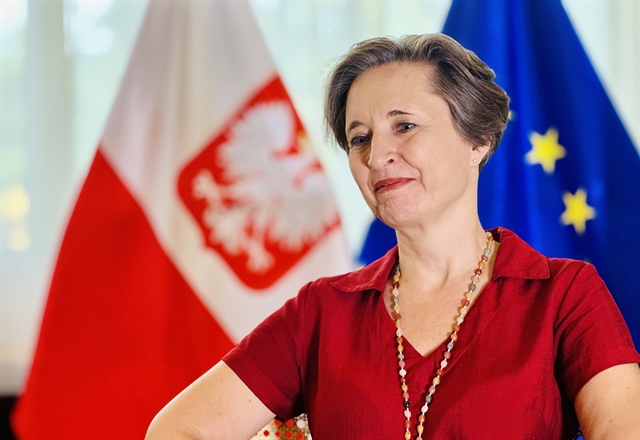
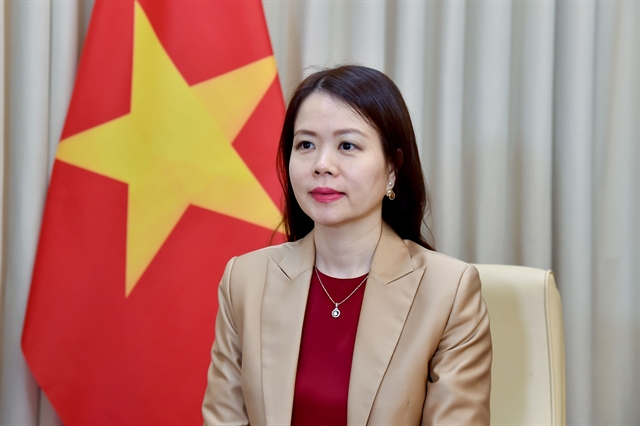
Silvia Danailov, UNICEF Representative in Việt Nam
 |
| Silvia Danailov, UNICEF Representative in Việt Nam. — Photo Courtesy of UNICEF Vietnam |
Across my years working in Việt Nam, one truth has become increasingly clear to me: when a society chooses to believe in its children, change follows.
Looking back at United Nations International Children's Emergency Fund (UNICEF)’s archival photos from the 1970s, I still remember the image of a small classroom in the mountains of Điện Biên: children seated on earthen floors, learning with broken pieces of chalk. At that time, going to school was anything but guaranteed - it was an act of hope, perseverance, and determination. But from those modest classrooms, I understood that when a society places its trust in children, sustainable progress begins.
Fifty years later, in the very same mountains, we now witness a completely different scene: ethnic minority girls and boys confidently sharing their perspectives at provincial and regional climate forums, speaking about the realities that shape their lives, from school days disrupted by flash floods to prolonged shortages of safe water and lessons affected by air pollution. Their ability to voice their experiences and to be heard reflects not only the progress of policy but also the deepening realisation of the Convention on the Rights of the Child in Việt Nam.
From essential support to building resilient systems for every child
The 50-year partnership between the Government of Việt Nam and UNICEF has transformed significantly. While early cooperation focused on life-saving interventions: immunisation, nutrition, safe water and emergency response, today the emphasis has expanded to strengthening resilient, child-centred systems: quality primary healthcare, inclusive education, child protection, social protection, climate resilience, and online safety.
These shifts do not always make headlines, but they profoundly shape the lives of millions of children. They are visible in the smallest of improvements: a commune health worker trained to detect early malnutrition; a teacher in a remote village equipped with bilingual learning materials so ethnic minority children are not left behind; a social worker able to support families through crisis; or a school reinforced to withstand storms. Each incremental change helps build a more inclusive and equitable system – one in which every child, whether in urban centres or remote highlands, has the opportunity to learn, be protected, and participate in shaping their own future.
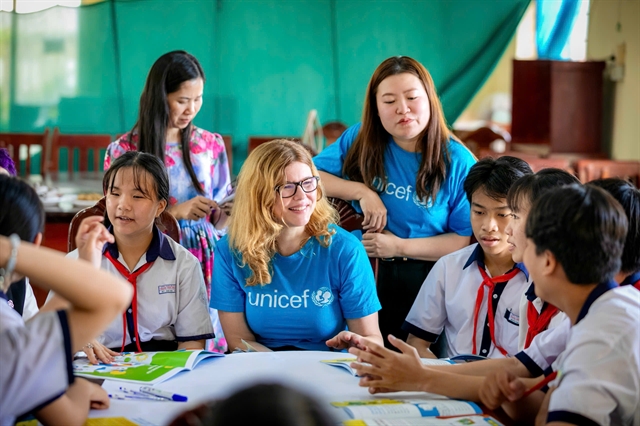 |
| UNICEF's staffs join a discussion with Vietnamese children. The 50-year partnership between the Government of Việt Nam and UNICEF has transformed significantly. —Photo Courtesy of UNICEF Vietnam |
Children at the frontline of new risks – and essential to the solutions
Today, children in Việt Nam face challenges unimaginable fifty years ago: extreme weather, environmental degradation, online risks, learning disruptions, and rising mental health pressures. Recent floods and storms have made this clear, with schools inundated, water systems damaged, and health facilities disrupted, leaving children more vulnerable to illness, malnutrition, and educational setbacks.
During field missions, I have witnessed these impacts firsthand. But I have also seen something equally important: children are not only victims of crises; they are active contributors to solutions. Initiatives such as Voices of Green, the Children’s Forum, and digital-safety programmes that UNICEF has supported for many years show that children are increasingly shaping discussions on climate and safe environments. What they observe, experience, and aspire to - from disaster risks to safe water, learning continuity, and digital safety - is gradually informing policies and decision-making. When children’s voices are meaningfully included, policies become more inclusive, more equitable, and more reflective of the realities they face.
From emergency response to climate-resilient systems
Listening to children is essential, but it is not enough. Emergency response is only the first step. What Việt Nam must strengthen further are climate resilient and child focused systems: sustainable safe water services, storm resistant schools, healthcare and education services capable of functioning even under extreme weather conditions, along with early warning mechanisms and mental health and psychosocial support for children. These are not only climate solutions, these are commitments under the Convention on the Rights of the Child in a world where risks are escalating faster than ever.
Fifty years behind us – and a promise for the next fifty
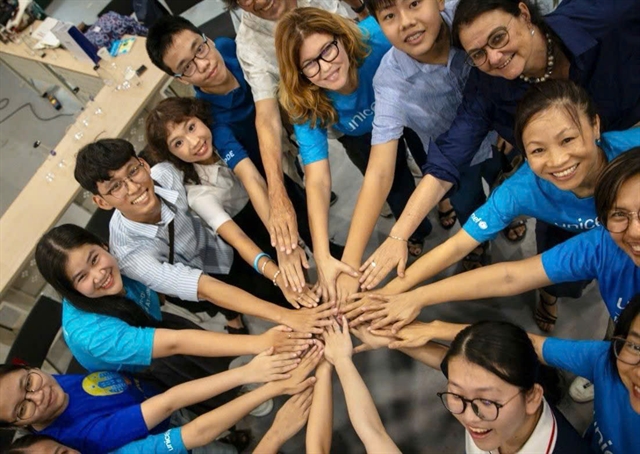 |
| The past five decades reflect a journey of expanding educational opportunity, reducing child mortality, narrowing disparities, and gradually building more resilient systems that safeguard children’s rights. — Photo Courtesy of UNICEF Vietnam |
As Việt Nam and UNICEF mark 50 years of partnership and 35 years since the ratification of the Convention on the Rights of the Child, we are reminded that national progress has always been intertwined with progress for children. The past five decades reflect a journey of expanding educational opportunity, reducing child mortality, narrowing disparities, and gradually building more resilient systems that safeguard children’s rights.
But the next fifty years will demand even more. The world children are growing up in is changing rapidly with extreme climate events, fast evolving technologies, and societies in constant transition. Our collective responsibility - Government, partners, communities, and families - is to ensure that every girl and boy is safe, educated, heard, and able to realise their full potential, no matter what the future holds.
Because in the end, there is no greater transformational power than believing in a child. — VNS
 Opinion
 Opinion
 Opinion
.jpg) Opinion
Opinion
 Opinion
 Opinion
 Opinion
 Opinion
 Opinion
 Opinion
 Opinion
 Opinion
.jfif) Opinion
Opinion
 Opinion